Direct-to-Wall Printing: The Superior Alternative to Vinyl Wraps for Commercial Spaces
Introduction: Why Businesses Are Moving Beyond Traditional Vinyl Wraps
Commercial interiors change faster than ever. Brand standards evolve, departments move, and customer expectations rise. Many facilities teams still default to vinyl wall coverings or wallpaper for speed, but they’re encountering recurring failures—seams that telegraph, edges that lift, and surfaces that never quite feel integrated with the architecture. As organizations look to do more with less disruption, a new approach has emerged: direct-to-wall printing technology.
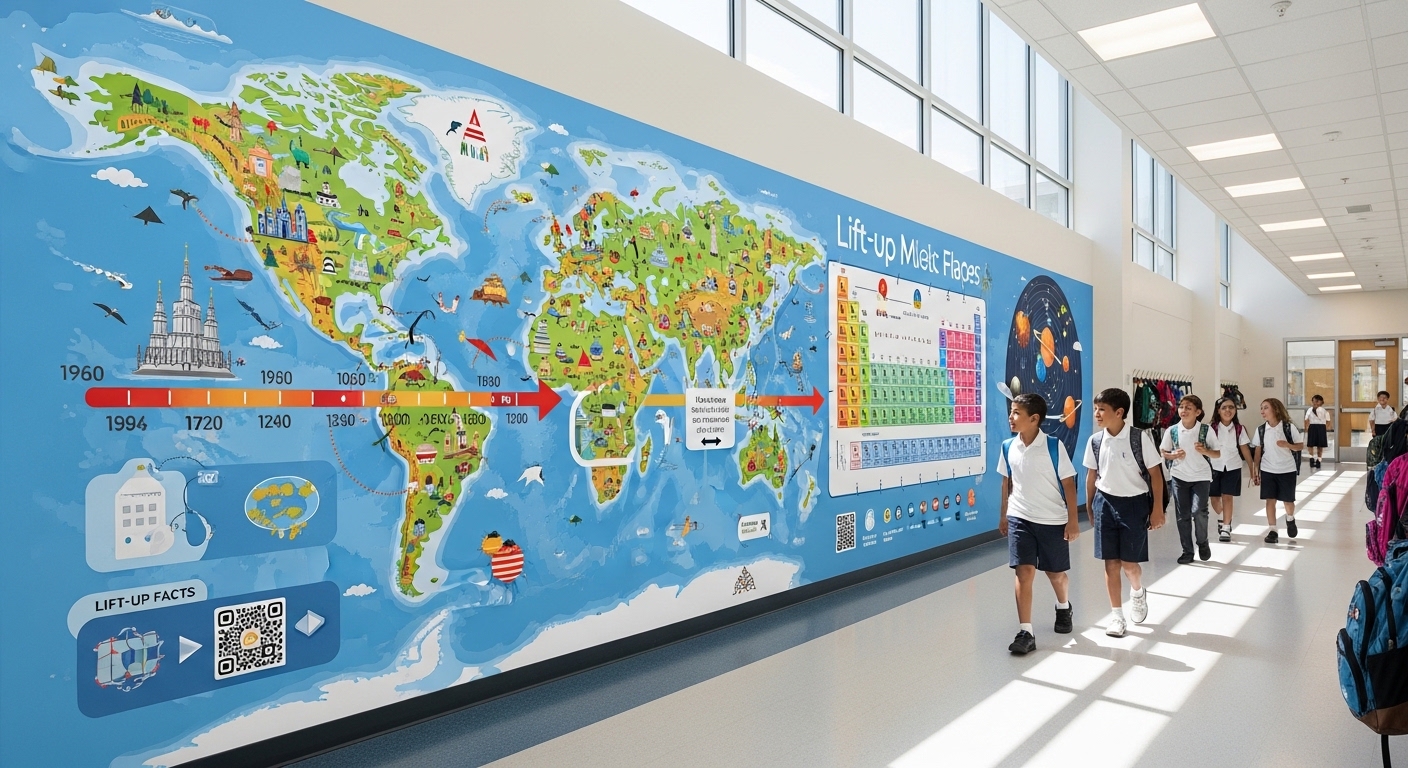
Direct-to-wall methods create high-definition murals and graphics directly on finished or unfinished substrates—without vinyl, adhesives, or panel seams. For decision-makers who value schedule certainty, durable performance, and scalable results across locations, this is a pragmatic vinyl wrap alternative for walls. It supports brand storytelling, wayfinding, and compliance graphics while reducing the downstream costs and waste of traditional coverings.
EastCoast MuralPros helps procurement, facilities, and design teams adopt this next-generation system. By printing on site—on drywall, CMU, concrete, brick, and more—teams can execute multi-wall or full-campus upgrades with minimal disruption and predictable outcomes. The result: visuals that read like part of the building, not an overlay, with the operational stability commercial environments demand.
The Limitations of Vinyl Wall Coverings in Commercial Environments
Vinyl and wallpaper have long been the default for branded walls, but in high-traffic, compliance-heavy, or multi-location contexts, their weaknesses accumulate quickly.
Failure at seams and edges: Seams telegraph through the surface and edges provide “pick points” that invite peeling. In corridors and elevator lobbies, these failures are routine and highly visible.
Adhesive problems: Adhesives can bubble over time due to humidity and temperature swings. They also off-gas, collect dust at edges, and can stain or delaminate from porous substrates.
Removal damage: During refresh cycles or tenant turnover, removal can pull paint and paper from drywall, requiring repairs, priming, and repainting—adding schedule days and unplanned cost.
Installation variables: Mis-measurements, substrate misalignment, and shipping damage force reorders and patching. Large, heavy panels require staging space, which is scarce in active facilities.
Cleaning limitations: Aggressive disinfectants and frequent wipe-downs discolor or abrade printed vinyl, especially at corners and joints.
Visual seams and glare: Bright lighting in lobbies and patient corridors highlights overlaps, glare, and gloss mismatches common in rolled materials.
Waste profile: Cutoffs, liners, and failed panels head to the landfill. Multi-location rollouts multiply these waste streams and freight emissions.
Disruption: Conventional install teams need more time on site, and odor from adhesives or primer can trigger complaints in occupied buildings.
For organizations under pressure to deliver better results, faster, and at lower total cost, these issues are more than aesthetic—they’re operational risks.
How Direct-to-Wall Printing Technology Works
Direct-to-wall printing places photoreal graphics straight onto the built surface, removing adhesives and panels from the equation. The process is engineered for predictability in active commercial environments.
Site assessment and surface prep: Teams evaluate substrate type (painted drywall, CMU, sealed concrete, brick), porosity, and flatness. Light sanding or patching addresses imperfections; masking and protection isolate adjacent finishes.
Color-managed artwork: Designers deliver scale-ready files. Color targets are defined for brand-critical hues, and proofs validate fidelity under actual site lighting.
On-site printing: A mobile direct-to-wall printer traverses the surface, laying down high-resolution imagery with consistent pass overlap. Modern systems support CMYK and light tones; some teams also employ white or clear effects for specialty looks.
Instant curing and protection: UV-LED or comparable curing sets inks rapidly, enabling same-shift turnover. Where specified, a clear protective coat enhances cleanability and abrasion resistance without adding a film-like sheen.
Seam-free continuity: Large walls print as a unified graphic. Registration is handled in software and calibrated to architectural control points for crisp edges at reveals, soffits, and millwork.
Final QC: Teams validate color accuracy, line sharpness, and coverage, then remove masking and return the space to service.
Because printing happens on site, long-lead fabrication, shipping, and rework cycles are largely eliminated. EastCoast MuralPros also offers in-studio printing for doors, tabletops, and standees to coordinate objects with the built graphic environment, and collaborative tools that help digital artists scale their work across formats and locations.
Key Performance Advantages Over Vinyl and Wallpaper Solutions
For facilities and brand leaders, direct-to-wall printing is a performance-first system designed for architecture, not merely decoration. Advantages include:
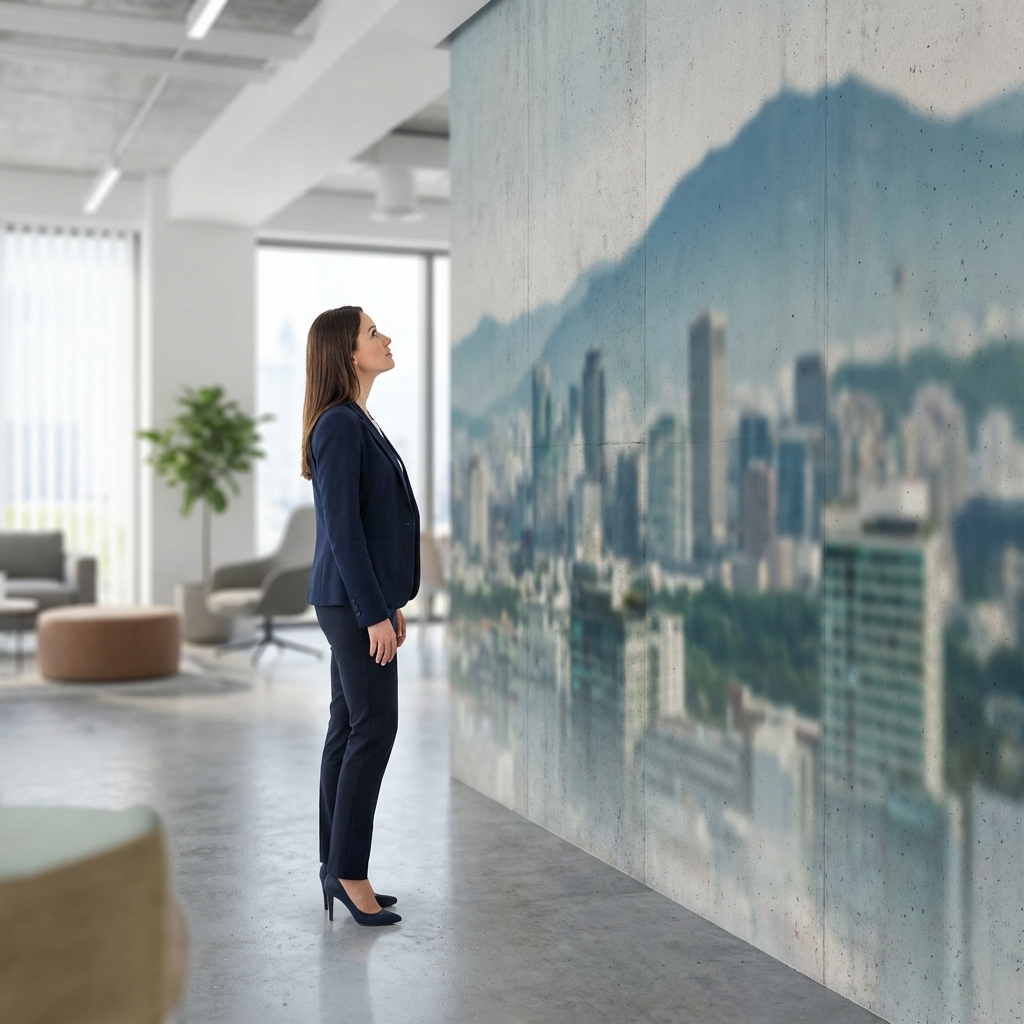
Illustration 1
Integration with the substrate: Graphics read as part of the wall, eliminating the plasticky texture, seams, and edge failures inherent to films.
Architectural-scale clarity: High-resolution imagery retains crisp detail over long runs—ideal for feature corridors, atriums, and gallery-grade visuals.
Adhesive-free reliability: Without glue lines or liners, there are fewer failure modes under humidity and temperature swings.
Precision alignment: Registration to reveals, base, and other control lines creates a custom-built look without panel lipping or overlap.
Wayfinding without clutter: Safety, instructional, and directional cues can be integrated into walls at decision points, reducing bracketed sign clutter and keeping corridors clear.
Paint-over-ready refresh: When it’s time to change messaging or turn a tenant, surfaces can be repainted rather than stripped—accelerating schedules and lowering repair exposure.
Multi-surface compatibility: From finished drywall to unpainted CMU, sealed concrete, or brick, modern systems accommodate common commercial substrates.
Consistent rollouts: Calibrated workflows and color management underpin predictable outcomes across campuses and national portfolios.
For many organizations, these qualities shift wall graphics from a decorative add-on to a reliable building system—an institutional wall branding solution that holds up under real-world conditions.
Cost and Lifecycle Efficiency: Initial Investment vs Long-Term Maintenance
Evaluating wall systems through a total cost of ownership lens reveals where direct-to-wall printing outperforms vinyl and wallpaper.
Lower failure remediation: No seams or edges means fewer service calls for lifting, bubbling, or corner damage. Repair labor and replacement panels often exceed the initial delta between systems.
Faster refresh cycles: Paint-over-ready finishes avoid demolition and substrate repairs associated with adhesive removal, compressing downtime between tenants or program changes.
Reduced soft costs: On-site printing eliminates freight, crating, long punch lists, and back-and-forth over mis-fabrications. Fewer site visits lower overhead and coordination time.
Longer usable life: Durable, cleanable surfaces extend intervals between replacements, particularly in corridors, elevators, and common areas with daily cleaning schedules.
Subscription-based planning: For organizations with seasonal campaigns or rolling brand updates, a predictable refresh cadence can be budgeted into OPEX, smoothing capital spikes.
A simple example: Consider a 120-foot corridor refreshed every 3 years. If vinyl requires partial replacement in year 2 due to edge failures and substrate damage at removal in year 6, those hidden costs can exceed initial savings. Direct-to-wall printing, with light maintenance and simple repaint at end-of-life, often wins on a 6–9 year horizon.
Procurement teams also value risk reduction. Fewer dependencies—no shipping windows, fewer reprint risks—translate into cost certainty. For multi-location programs, repeatable process controls improve unit economics as volumes scale.
Installation Speed and Minimal Disruption to Operations
Commercial projects succeed or fail on schedule control. Direct-to-wall workflows are designed for occupied buildings and tight turnarounds.
Condensed mobilization: A small, specialized crew protects adjacent finishes, calibrates, and prints in a single sequence. No staging pallets of film or managing liner waste.
Single-shift outcomes: Typical feature walls finish in under 5 hours, allowing overnight or weekend installs with morning turnover for hospitals, schools, offices, and retail.
Clean, low-odor process: Without adhesives or solvent-heavy primers, indoor air quality complaints are minimized. UV-LED curing locks prints quickly, so spaces can reopen faster.
Quiet and compact: Crews work within taped footprints. Lifts are used only when necessary; many corridor installations proceed from floor level with targeted protection.
Predictable sequencing: Because the print is the product, there is no waiting on shipments or backordered panels. Contingency time focuses on surface prep, not logistics.
For facilities teams negotiating occupied floors or sensitive environments, fewer trades, fewer materials, and less mess reduce conflict and downtime. EastCoast MuralPros coordinates with security, EVS, and nursing/operations to schedule work around peak flows, and can phase multi-wall programs to keep critical paths clear.
Design Flexibility and Multi-Location Consistency
Direct-to-wall printing unlocks creative range while strengthening control across sites.
Seamless wall murals for businesses: Floor-to-ceiling imagery without panel breaks supports hospitality features, brand storytelling corridors, and lobby moments that photograph well.
Brand color accuracy: ICC-managed workflows keep core hues consistent from campus to campus, critical for retail and healthcare identities.
Integrated systems: Wayfinding, safety icons, service lines, and visual zoning can be layered into the architecture, reducing hardware, fasteners, and sign clutter.
Adaptive templates: For large portfolios, parametric templates enable local content—maps, photography, or program highlights—within a standardized brand system.
Specialty surfaces: In-studio and on-site capabilities allow coordinated graphics on doors, glass-backed standees, tables, and event elements for a cohesive experience.
Digital artist enablement: Collaborative tools help artists scale high-resolution work to architectural dimensions, preserving detail and intent.
National and regional rollouts benefit from version control and predictable output. With direct-to-wall, the variables concentrate around artwork and site conditions—both governed by preflight checklists—so every location looks like the renderings.
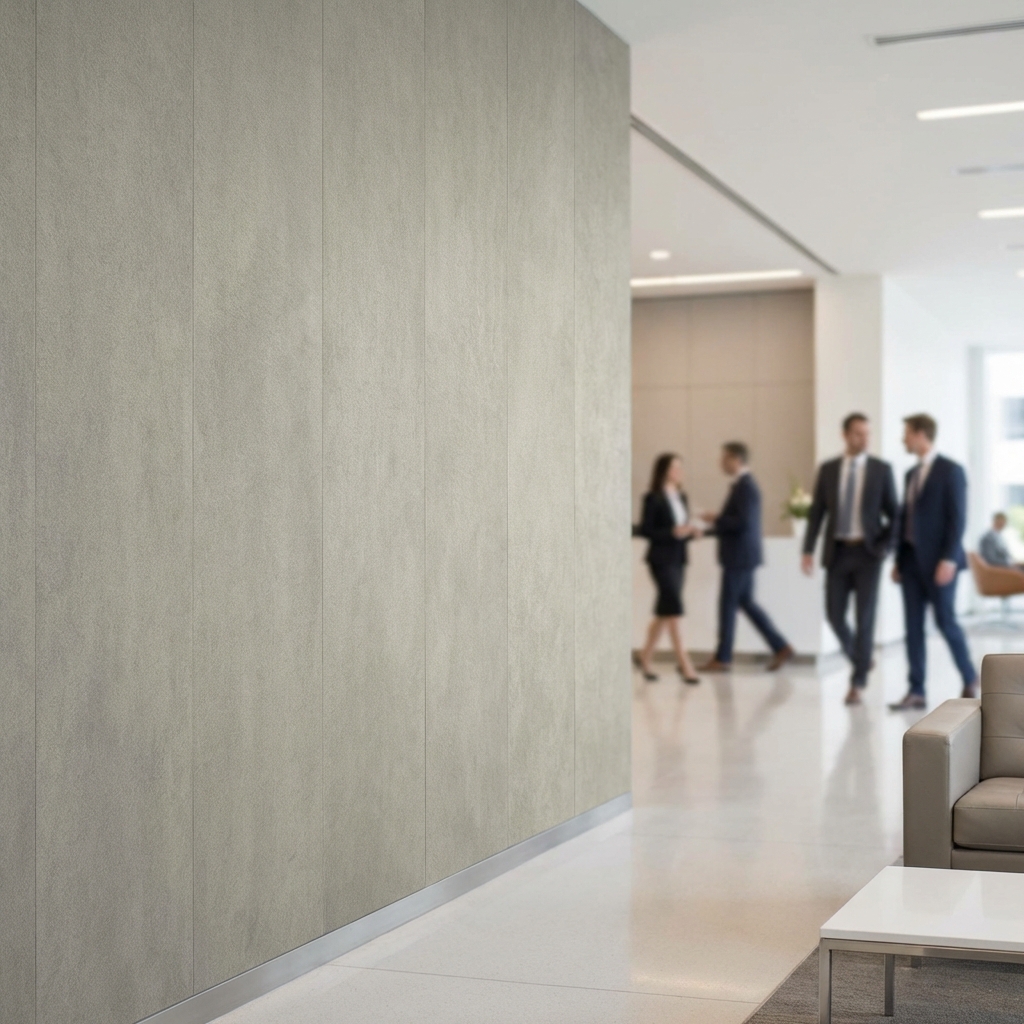
Illustration 2
Durability and Cleanability in High-Traffic Spaces
Durability is where commercial wall graphics alternatives succeed or fail. Direct-to-wall systems are engineered for daily wear and frequent cleaning in corridors, patient areas, classrooms, and retail back-of-house.
Abrasion resistance: Integrated coatings and cured inks stand up to contact from carts and bags better than thin surface films with exposed seams.
Easy cleaning: Smooth, non-film surfaces tolerate routine wipe-down with common disinfectants, avoiding edge wicking and discoloration seen in vinyl.
Reduced tamper points: Without edges to pick, vandalism and incidental peeling decrease, extending service life in student and transit environments.
Maintainable finishes: Isolated scuffs may be corrected with touch-up techniques; full reprints are reserved for significant changes in content or branding.
Durable wall coating vs vinyl: Performance aligns more closely with a specialty coating system than with a removable graphic, delivering lifecycle predictability.
For deeper insight into specifying for abrasion and cleaning protocols, see EastCoast MuralPros’ overview of direct-to-wall durability benefits.
Sustainability Benefits of Modern Wall Graphics Technology
Sustainability in wall systems is as much about lifecycle as it is about materials. Direct-to-wall printing improves both.
Fewer materials, less waste: No PVC films, liners, or mounting adhesives. On-site printing eliminates freight packaging and reduces damaged-goods waste.
Extended service life: Durable, cleanable prints lengthen refresh cycles. When it’s time to change, the surface can be repainted rather than landfilled.
Lighter logistics: Printing on site reduces shipping emissions and the risk of accelerated replacement due to transit damage or mis-fabrication.
Reduced demolition: Paint-over-ready finishes avoid destructive removal, saving substrate repairs and the waste associated with patching and skim coating.
Better fit for occupied buildings: Lower-odor, low-disruption processes support sustainability goals by minimizing tenant churn and out-of-service space.
For teams comparing options, EastCoast MuralPros provides a side-by-side analysis of direct-to-wall vs vinyl sustainability, highlighting waste reduction and lifecycle efficiency across common project types.
Industry Applications: Healthcare, Education, Retail, and Hospitality
The same performance traits that make direct-to-wall a vinyl wrap alternative for walls also make it adaptable to diverse sectors.
Healthcare systems and medical facilities
Wayfinding with clarity: Color-coded zones, floor identifiers, and decision-point graphics reduce sign hardware while supporting patient navigation.
Family-friendly environments: Photographic nature scenes and calming palettes in waiting areas and pediatric corridors without panel seams or edge failures.
Hygiene-ready: Cleanable surfaces withstand routine disinfecting without peeling at corners, supporting EVS protocols.
Education: K–12, colleges, and universities
Campus identity: Athletics branding, donor recognition, and academic highlights scaled across halls and arenas with color consistency.
Instructional graphics: Lab safety, makerspace guidelines, and studio prompts integrated into walls where students need them.
Resilient to student traffic: Durable finishes with fewer tamper points in corridors, cafeterias, and residence halls.
Retail chains and multi-location brands
Speed and agility: Seasonal promotions or brand refreshes installed overnight, coordinated across stores for a unified campaign.
Visual merchandising: Seamless backdrops for hero walls, fitting rooms, and queue areas that photograph cleanly for social and ecommerce.
Back-of-house communication: Safety and process graphics integrated where teams stage, reducing sign clutter and hardware.
Hospitality brands and hotel operators
Elevated ambiance: Lobby features, guest corridor moments, and meeting-room identity printed seamlessly to match design intent.
Minimal downtime: Install during low-occupancy windows with rooms returned to service the same day.
Coordinate surfaces: Doors, tabletops, and event standees printed in-studio to extend the brand beyond walls.
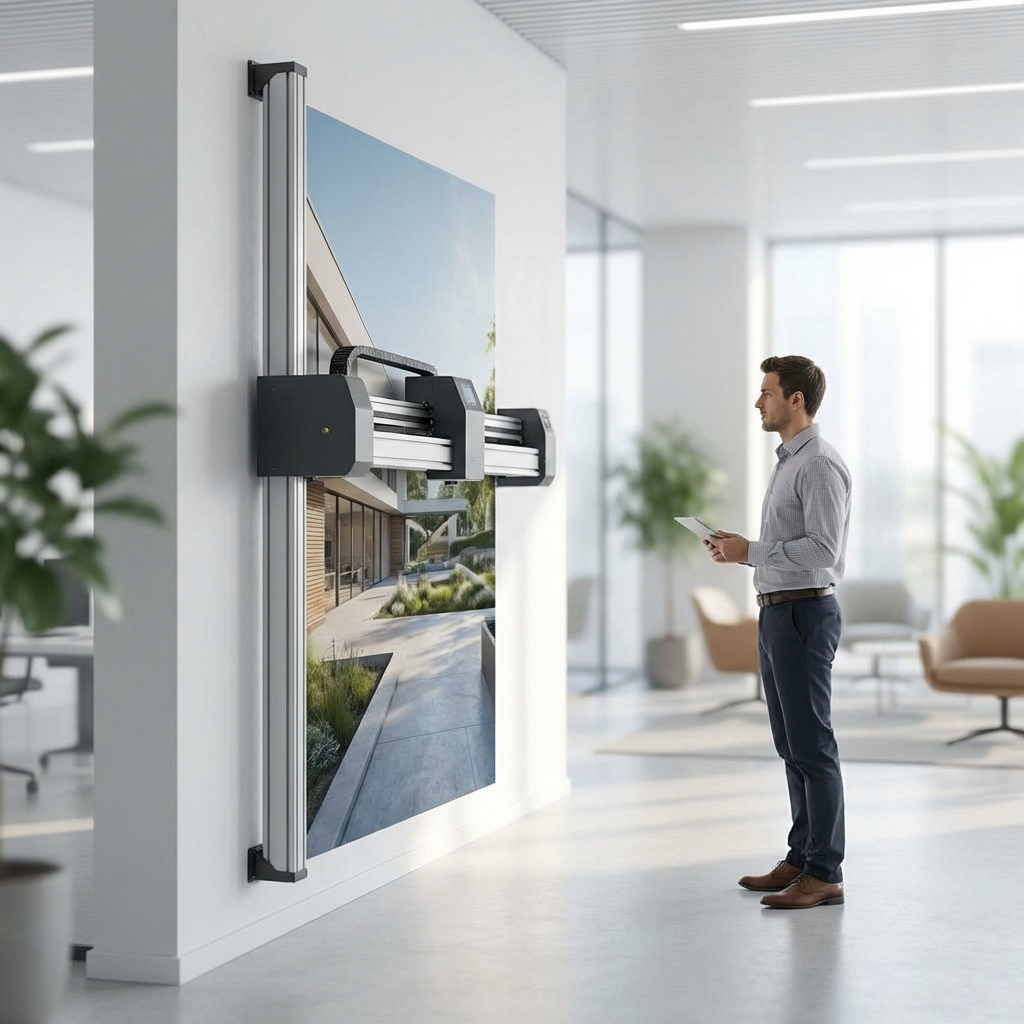
Illustration 3
Museums and cultural institutions also benefit from photoreal, high-resolution imagery with crisp detail at architectural scale—ideal for exhibitions that demand visual fidelity without reflective seams or panel edges.
Choosing the Right Wall Graphics Solution for Your Organization
Selecting between vinyl, wallpaper, paint, and direct-to-wall printing requires aligning the system with operational realities. A practical approach:
1) Define objectives
What outcomes matter most—speed, consistency, durability, sustainability, or all of the above?
Is this a single feature wall, a multi-floor rollout, or a full-campus program?
2) Audit conditions
Inventory substrates (painted drywall, CMU, concrete, brick) and exposure (traffic, carts, cleaning chemicals).
Map access constraints, security requirements, and allowable work windows.
3) Establish performance criteria
Set targets for cleanability, expected service life, and refresh cadence.
Decide whether paint-over readiness is required for tenant turnover.
4) Validate design intent
Confirm that brand colors, typography, and imagery scale effectively to the architectural footprint.
Request color-managed proofs under site lighting.
5) Pilot before you scale
Start with a corridor or lobby zone to validate installation speed, disruption profile, and cleaning response.
Gather feedback from facilities, end users, and brand owners.
6) Plan the program
For multi-location rollouts, standardize file prep, color targets, and QC checklists.
Consider a subscription model to schedule seasonal or strategic refreshes without capital spikes.
EastCoast MuralPros partners with procurement, facilities, and design teams to scope, prototype, and deliver consistent execution—on single sites, across campuses, and at national scale. Whether you need adhesive-free wall printing solutions for wayfinding, a performance-based alternative to wallpaper, or a system that pairs with doors, tables, and standees, the right choice is the one that meets your operational standards as well as your design goals.
Conclusion: Making the Strategic Transition to Next-Generation Wall Systems
Organizations aren’t moving away from vinyl because it’s unfamiliar—they’re moving away because it’s failing to meet modern operational demands. Direct-to-wall printing technology reframes wall graphics as an integrated building system: seam-free, durable, cleanable, and delivered with the speed and predictability commercial interiors require.
If your team is evaluating a commercial wall graphics alternative, prioritize total lifecycle performance, schedule control, and scalability across locations. Start with a targeted pilot, validate color and durability, and set standards that can be repeated portfolio-wide. For many facilities, healthcare, education, retail, and hospitality teams, that path leads to direct-to-wall as the practical, sustainable vinyl wrap alternative for walls.
EastCoast MuralPros helps organizations make this transition with on-site printing that typically completes in a single shift, multi-surface compatibility, and paint-over-ready finishes for future changes. When you’re ready to align brand, operations, and budget in one system, next-generation, adhesive-free wall printing delivers the dependable results modern interiors demand.


