Corporate Interior Branding Tools That Transform Commercial Spaces
Introduction: The Evolution of Corporate Interior Branding
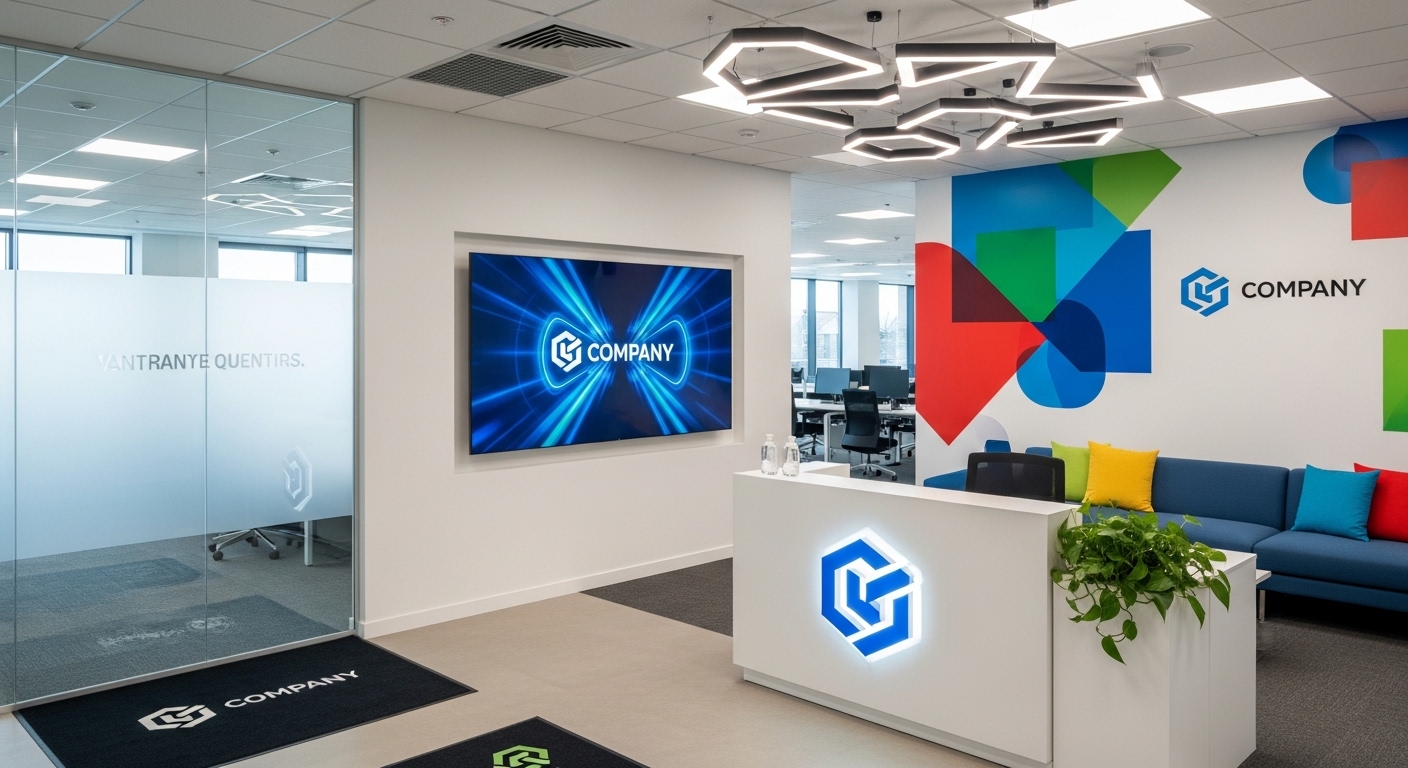
Corporate interior branding has moved far beyond logo walls and framed posters. Today’s corporate interior branding tools connect space, culture, and operations—turning circulation paths into wayfinding systems, break areas into culture carriers, and conference zones into brand showcases. This shift has been accelerated by hybrid work, experience-led retail, and a renewed emphasis on institutional clarity in healthcare and education.
What’s changed is not just the design ambition, but the technology that makes it possible. High-resolution, direct-to-wall printing now delivers architecture-scale visuals that are cleanable, durable, and integrated with the building itself. For commercial landlords, workplace teams, and institutional administrators under pressure to deliver fast upgrades with minimal disruption, this technology provides a practical alternative to vinyl wall coverings, wallpaper, and construction-heavy remodels—bridging the gap between vision and execution.
EastCoast MuralPros is part of this evolution, providing a performance-based approach to commercial wall graphics solutions that can be deployed quickly and consistently across campuses and multi-location portfolios. The result is design-forward impact with operational predictability—precisely what modern facilities, procurement, and capital projects teams demand.
Why Traditional Wall Solutions Fall Short for Modern Businesses
Legacy materials and methods—vinyl wraps, wallpaper, and hand-painted murals—were never created for today’s speed, scale, and maintenance requirements. Vinyl and wallpaper introduce seams, adhesives, and installation risks that compound over time. In high-traffic corridors, edges catch and lift; in healthcare and education, frequent cleaning accelerates wear; and in humid or temperature-fluctuating environments, bubbling becomes inevitable. Even when initial installs look clean, the maintenance curve is steep.
Construction-heavy upgrades create a different set of obstacles: noise, dust, and downtime. When timelines slip, business operations and patient or student access suffer. Shipping delays and fabrication errors add uncertainty, particularly for programs that need to deploy coordinated branding quickly across multiple floors or sites. Even hand-painted murals—beautiful as they are—depend on highly variable labor conditions, are slower to execute, and present scale and repeatability challenges for national rollouts.
The operational implications are real. Facilities teams must plan cleaning protocols around fragile surfaces, budget for frequent replacements, and troubleshoot inconsistent color across locations. Signage clutter creeps in to solve wayfinding or safety needs that could be addressed more holistically. And during tenant turnover, adhesive removal and wall repair add time and cost to every changeover. In short, traditional wall solutions weren’t built for the agility and consistency commercial and institutional owners now expect.
Key Features of Modern Corporate Interior Branding Tools
Modern corporate interior branding tools close the gap between design ambition and operational reality. The most effective systems—such as direct-to-wall printing—prioritize speed, durability, and lifecycle efficiency without compromising visual quality. Look for solutions that deliver:
High-resolution, photoreal imagery at architectural scale with crisp edge detail
Direct-to-wall technology that requires no vinyl, panels, or adhesives
Seam-free, continuous graphics across large expanses and around architectural features
Fast, low-disruption installation, often completed in under five hours per zone
Print compatibility with finished and unfinished surfaces: drywall, CMU, concrete, and brick
Cleanable, abrasion-resistant finishes designed for high-traffic environments
Paint-over-ready surfaces to simplify future tenant or program changes
Integrated workplace branding and wayfinding without signage clutter
Predictable, consistent results across multi-location deployments
On-site printing to eliminate shipping delays and reduce fabrication errors
Full-campus solutions for hospitals, universities, and K–12 districts
Subscription models for seasonal or strategic refreshes and pilot-to-scale programs
In-studio printing for doors, tables, standees, and other rigid substrates
Collaborative tools for digital artists and design teams to scale content safely and accurately
EastCoast MuralPros combines these attributes to help organizations operationalize brand and information at scale—with the reliability facilities and procurement teams require.

Illustration 1
Direct-to-Wall Printing vs. Vinyl Wraps and Wallpaper
When choosing between direct-to-wall printing and legacy materials, the performance and lifecycle differences are decisive.
Integration vs. application: Direct-to-wall systems bond pigment to the wall substrate, yielding a surface that looks and behaves like a painted finish. Vinyl and wallpaper add a foreign layer that introduces seams, edges, and adhesives—weak points under cleaning and wear.
Speed and predictability: On-site printing compresses schedules and avoids shipping risk. Wallpaper and vinyl rely on pre-fabricated panels that must fit perfectly; any mismatch or damage triggers delays and remakes.
Durability in the real world: Without seams or edges, there’s nothing to peel or catch. High-traffic corridors, stair towers, and elevator lobbies benefit from surfaces designed to be cleaned regularly.
Finish flexibility: Direct-to-wall graphics can be matte and low-glare—ideal for workplace readability and museum-grade image fidelity—while still being cleanable. Vinyl often introduces a plastic sheen that reads “applied,” not integrated.
Future change: Paint-over-ready surfaces reduce tenant-turnover time. Vinyl and wallpaper removal adds labor, wall repair, and schedule risk.
Environmental performance: Eliminating PVC and adhesive waste, plus minimizing shipping, significantly lowers environmental burden. For a deeper look at the waste and materials profile, see EastCoast MuralPros’ perspective on direct-to-wall printing vs. traditional vinyl.
For organizations prioritizing performance and schedule certainty, direct-to-wall printing provides a clear, operations-friendly alternative to wallpaper and vinyl.
Scalability and Consistency Across Multi-Location Deployments
Brand leaders and workplace teams need outcomes that scale. The challenge is not producing a single great wall—it’s deploying 20, 200, or 2,000 walls across a portfolio while maintaining color fidelity, legibility, and installation standards. Direct-to-wall printing is built for that.
Color and file governance: ICC color-managed workflows and calibrated devices keep brand color accurate across facilities. Vector-based elements and high-resolution imagery preserve crispness at any size.
Repeatable site surveys: Standardized wall audits capture substrate type, dimensions, and environmental conditions, reducing surprises and ensuring the right surface prep every time.
Coordinated scheduling: On-site printing avoids freight bottlenecks and allows crews to work during off-hours, weekends, or swing shifts—critical for healthcare, education, and hospitality.
QA from pilot to scale: Start with a pilot to validate design intent, cleanability, and occupant feedback. Roll proven standards into brand guidelines and facility playbooks for consistent national or campus deployment.
Asset and content control: Centralized digital asset management and templated wayfinding systems enable local adaptation (e.g., room numbers, floor IDs) without sacrificing consistency.
EastCoast MuralPros supports multi-location brand consistency with program-level coordination and on-site execution, reducing the variables that cause drift between locations.
Integration with Workplace Strategy and Employee Experience
Interior branding is ultimately about behavior and clarity. In modern workplaces and institutions, graphics do more than decorate—they orient, instruct, and reinforce culture.
Wayfinding as a system: Incorporate directional cues, floor identifiers, and departmental markers directly into wall surfaces to reduce signage clutter. Clear contrast, typographic hierarchy, and universal pictograms improve accessibility and speed of navigation.
Zones and rituals: Use color and imagery to define focus zones, collaboration areas, wellness spaces, and circulation routes. Employees and visitors learn the building faster and feel more at ease in complex environments.
Culture and communications: Replace poster campaigns with integrated, durable surfaces that carry values, safety messages, or seasonal initiatives. A subscription model allows periodic refreshes that align with strategic goals without redoing infrastructure.
Hybrid orientation: Merge digital and physical. QR-enhanced murals can link to onboarding content, event calendars, or training resources, keeping static surfaces connected to dynamic information.
Design equity across locations: Multi-location brand consistency signals parity—no “headquarters only” experience. Whether it’s a satellite office or a regional clinic, the brand looks and functions the same.
EastCoast MuralPros collaborates with workplace, brand, and facility teams to align content with strategy—so the environment supports people and operations day one.
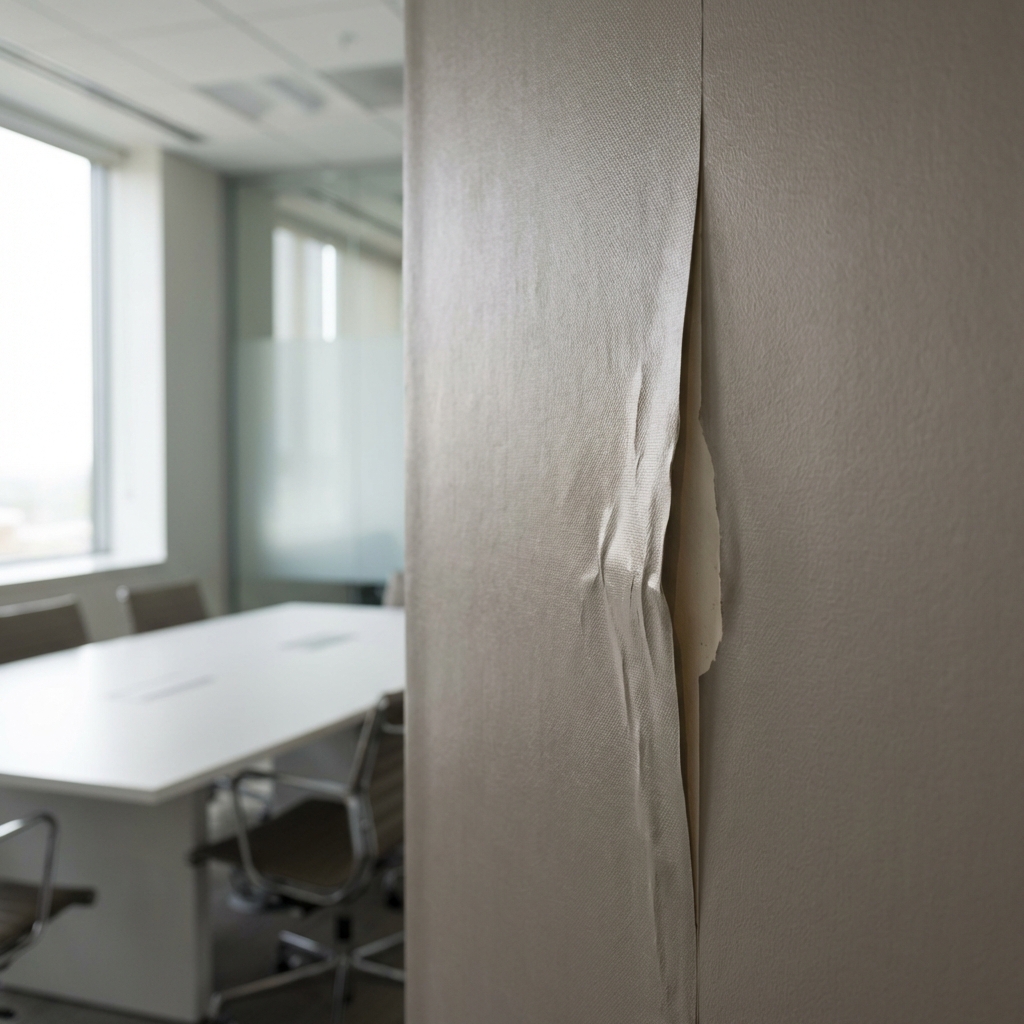
Illustration 2
Durability and Maintenance Advantages in High-Traffic Environments
Public corridors, lobbies, and learning spaces demand finishes that stand up to daily use and routine cleaning. Direct-to-wall surfaces are engineered for this reality.
Cleanability: Smooth, low-sheen finishes resist grime and accept standard non-abrasive cleaners. There are no vinyl seams or edges to trap dirt or wick moisture.
Abrasion resistance: Integrated imaging behaves like a painted finish with added toughness, reducing scuffs and preserving legibility for wayfinding and safety information.
Edge-free reliability: Without applied film, there’s nothing to delaminate around corners, handrails, or door frames—common failure points for vinyl.
Targeted touch-ups: Localized damage can often be addressed with controlled spot reprints or paint blending instead of full graphic replacement.
Future-proofing: When programs change, paint-over-ready surfaces reduce schedule time and eliminate adhesive removal, which often scars drywall.
If you’re evaluating performance in high-traffic settings, EastCoast MuralPros outlines the top durability benefits of direct-to-wall printing and how those translate into fewer service calls, clearer communications, and longer intervals between refreshes.
Sustainability and Lifecycle Benefits of Advanced Branding Solutions
Sustainability is as much about what you don’t install as what you do. By eliminating vinyl, adhesives, and panel substrates, direct-to-wall printing reduces waste at every stage.
Material reduction: No PVC films, liners, or adhesive backers; fewer cartons, cores, and pallets. Print-on-demand means no overproduction and no warehouse storage of panel stock.
Fewer replacements: Seam-free, cleanable surfaces extend useful life, reducing the embodied carbon of frequent removals and re-installs.
Minimal transport: On-site printing slashes freight miles, packaging waste, and risk of damaged goods requiring remakes.
Healthier interiors: Avoiding applied adhesives reduces off-gassing concerns and simplifies compliance with internal environmental health policies.
End-of-life simplicity: Paint-over, don’t landfill. When a space changes use, a standard repaint resets the surface.
For owners pursuing lifecycle-efficient, institutional space design systems, these gains compound across portfolios and years. Sustainable choices also tend to be operationally simpler—fewer materials to order, store, and manage—and support measurable ESG commitments.
Implementation Timeline and Minimal Disruption Installation
The best corporate interior branding tools respect schedules and occupied buildings. A streamlined, field-proven process keeps work predictable and unobtrusive.
Typical workflow: 1) Discovery and goals: Align on program scope—branding, wayfinding, safety, instructional needs—and define success metrics. 2) Site survey: Document dimensions, substrate types (drywall, CMU, concrete, brick), and environmental factors. Identify any patching or priming required. 3) Content and proofing: Finalize artwork, color targets, and message hierarchy. For critical areas, produce test swatches on the actual wall. 4) Scheduling: Coordinate off-hours, weekends, or phased dayparts to minimize disruption in occupied spaces. 5) Surface preparation: Light cleaning, patching, and priming as needed. Because no adhesives are used, prep is typically faster than vinyl or wallpaper installs. 6) On-site printing: High-definition, direct-to-wall printing is often completed in under five hours per zone, with low odor and minimal noise. 7) Curing and QC: Rapid cure times enable same-day turnover. Conduct final checks for color, alignment, and legibility. 8) Handover and care: Provide cleaning guidance, maintenance intervals, and documentation for future refresh cycles.
EastCoast MuralPros is built for low-disruption installation—ideal for hospitals, schools, and workplaces that cannot afford downtime. Infection control, access, and safety protocols are coordinated with facilities teams in advance, and the absence of adhesives and panels reduces site impact.
Illustration 3
Cost Efficiency and Long-Term Value Proposition
Long-term value comes from doing less, better. Direct-to-wall printing reduces line items and risk factors that inflate total cost of ownership.
Material and logistics savings: No panel stock, liners, or adhesive waste; fewer SKUs to manage; minimal shipping and storage.
Labor efficiency: On-site, single-pass printing replaces multi-stage panel fabrication, alignment, and seam finishing. Fewer steps mean fewer failure points.
Faster turnover: Compressed install windows reduce or eliminate downtime. In landlord scenarios, faster tenant-ready spaces speed revenue capture.
Maintenance certainty: Cleanable, edge-free surfaces lower service calls, and paint-over-ready finishes avoid costly removals during tenant or program changes.
Portfolio-wide planning: Subscription models spread costs predictably across fiscal periods, enabling planned seasonal or strategic refreshes without episodic spikes.
Risk reduction: Standardized processes and pilot-to-rollout workflows limit remakes and help procurement teams trust schedules and budgets.
For procurement- and operations-minded teams, these advantages create a clear business case: higher design quality with lower lifecycle costs than vinyl, wallpaper, or ad hoc mural programs.
Real-World Applications Across Industries and Institution Types
Direct-to-wall printing adapts to the realities of different sectors while maintaining consistency and performance.
Corporate workplaces: Brand corridors, collaboration zones, and meeting suites with durable office wall printing that reinforces culture and wayfinding. Integrate project rooms, recognition walls, and safety messaging without adding sign clutter.
Commercial landlords: Accelerate lease-up with lobby statements, elevator cab surrounds, and marketing suites that can be refreshed between tenants. Paint-over-ready finishes support frequent program changes without demolition.
Healthcare systems: Deploy integrated wayfinding, safety, and instructional graphics along patient routes and staff corridors. Cleanable, matte finishes meet care standards while calming imagery supports patient experience.
Colleges and K–12: Full-campus solutions help students and visitors navigate complex buildings. Athletics branding, departmental identity, and donor recognition can be scaled across arenas, halls, and student centers.
Retail and hospitality: Seasonal brand stories, launch campaigns, and zone differentiation (e.g., check-in, spa, F&B) can be updated on subscription, maintaining freshness without fixture changes.
Museums and cultural institutions: Photoreal, high-resolution imagery at architectural scale supports exhibitions, donor messaging, and educational graphics that feel integrated with galleries rather than applied to them.
Public-sector and civic: Clear, legible communications for safety, services, and navigation in courthouses, transit nodes, libraries, and community centers—without the visual noise of layered signage.
Multi-location brands: Consistent national rollouts maintain color accuracy and typographic clarity from flagship to outpost.
Beyond walls, in-studio printing on doors, tables, and standees extends brand systems to fixtures and events. EastCoast MuralPros also supports digital artists with collaborative tools to translate screen-native artwork into architecture-ready output—preserving detail, contrast, and scale while respecting building conditions.
Conclusion: Strategic Interior Branding as Competitive Advantage
Modern commercial and institutional environments demand speed, clarity, and consistency. The most effective corporate interior branding tools deliver all three—without the compromises of vinyl and wallpaper or the disruption of construction-heavy upgrades. Direct-to-wall printing makes brand, wayfinding, and instructional content feel native to the building while meeting the operational realities of facilities and procurement teams.
Organizations that treat interior branding as a strategic system—not a one-off decorative effort—gain measurable advantages: faster tenant turnover, clearer navigation, elevated employee and visitor experience, and lower lifecycle costs. EastCoast MuralPros brings next-generation, direct-to-wall printing to that challenge with high-resolution results, seam-free execution, on-site efficiency, and program-level consistency suitable for campuses and national portfolios.
If your team is evaluating commercial wall graphics solutions or building an institutional space design system, consider a pilot area to validate performance and schedule. The right partner and technology can transform walls into active, durable assets—accelerating workplace branding and wayfinding while strengthening multi-location brand consistency for years to come.


