Commercial Facility Manager's Guide to Modern Wall Branding Solutions
Table of Contents
Introduction: Why Modern Wall Branding Matters for Facility Managers
Understanding Traditional Wall Covering Limitations and Pain Points
Key Performance Advantages Over Vinyl and Wallpaper Solutions
Real-World Applications: Wayfinding, Branding, and Safety Graphics
Introduction: Why Modern Wall Branding Matters for Facility Managers
Commercial Facility Manager's Guide to Modern Wall Branding Solutions
Commercial wall branding has moved from a nice-to-have to an operational lever. For facility managers, the wall is no longer just a surface—it’s a channel to improve wayfinding, reinforce culture, communicate safety, and elevate the visitor experience without construction-heavy upgrades. In high-traffic, multi-stakeholder environments like hospitals, campuses, and corporate offices, the right wall system can shorten renovation timelines, reduce lifetime maintenance, and create visual standards that scale.
This shift is driven by advances in interior wall printing technology that let teams install high-definition graphics directly onto finished and unfinished surfaces. Providers such as EastCoast MuralPros bring direct-to-wall printing to occupied buildings, producing seam-free results at architectural scale without adhesives or vinyl. For facilities leaders accountable to uptime, budget compliance, and multi-location consistency, this new category offers a performance-based alternative to vinyl wall coverings and wallpaper—with measurable benefits across schedule, durability, and sustainability.
The goal of this guide is to help facility teams evaluate options, understand the technical differences that matter, and implement a facility manager branding strategy that is reliable, repeatable, and lifecycle-efficient. You’ll find pragmatic detail on installation timelines, procurement considerations, and the use cases where modern wall systems deliver the strongest return.
Understanding Traditional Wall Covering Limitations and Pain Points
Vinyl wall coverings and wallpaper have long been the default for visual upgrades, but they carry recurring operational risks that facilities teams know well:
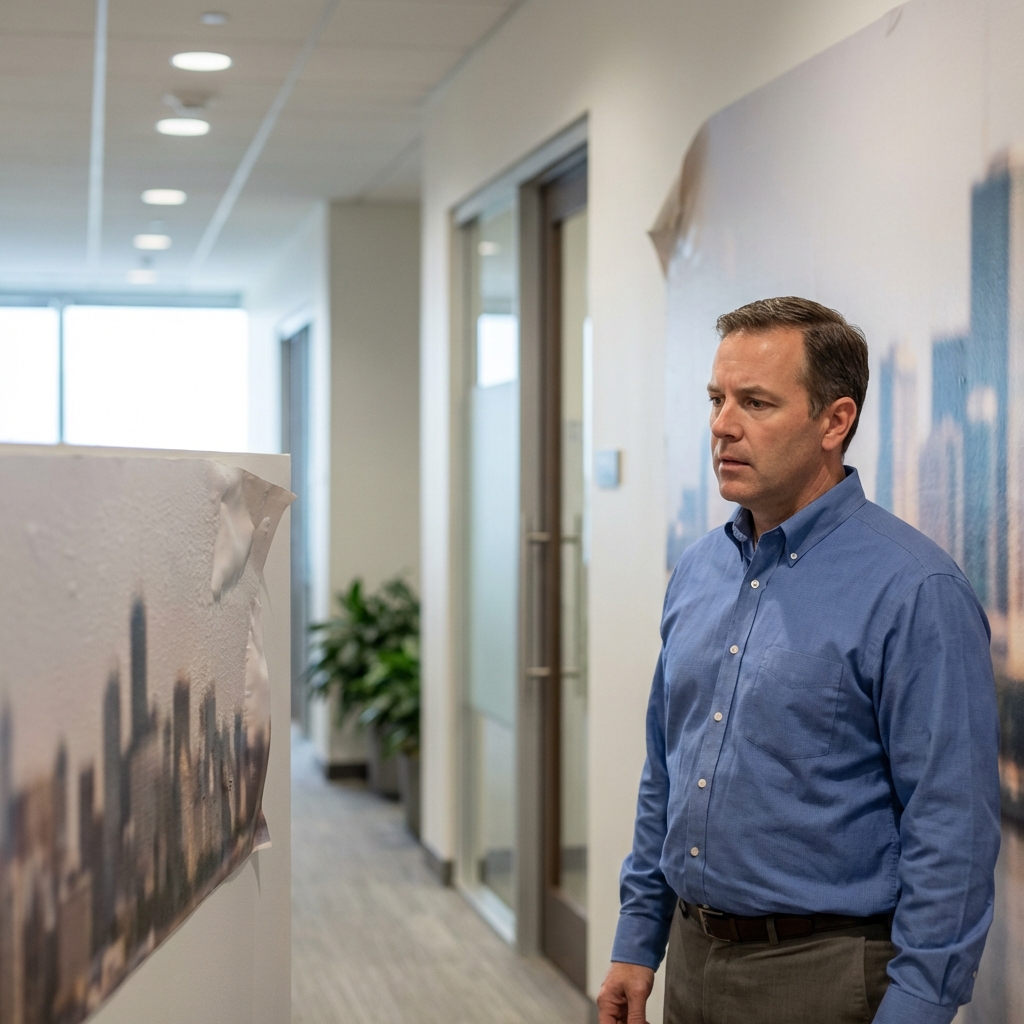
Seams and edges: Seams telegraph and edges lift, especially near corners, doorways, and HVAC returns. In high-traffic corridors, carts and daily cleaning accelerate edge failure.
Adhesive-related failures: Moisture, thermal cycling, and imperfect substrate prep can cause bubbles, peeling, or ghosting. Removal often damages paint and drywall, adding unforeseen repair costs.
Inconsistent field conditions: On renovation projects, “as-builts” rarely match reality. Mismatched dimensions or out-of-plumb walls lead to reprints, wasted materials, and schedule slips.
Longer, disruptive installs: Traditional wraps demand staging, curing, and larger crews. In healthcare or education, this means off-hours work windows and more days to complete.
Difficult refresh cycles: Updating messaging or brand systems requires full tear-out and re-install, increasing waste and downtime. Seasonal or strategic refreshes are not operationally efficient.
Limited substrate compatibility: Vinyl struggles to look integrated on CMU, brick, or heavily textured walls. Surface irregularities show through, and mechanical fasteners undermine the clean look.
Sustainability and waste: Rolls, liners, adhesives, and jobsite offcuts contribute to landfill. When multiplied across portfolios, the environmental impact and hauling fees add up.
These pain points create a pattern: what begins as a “simple” decorative upgrade becomes a maintenance burden and a line item in every refresh cycle. The result is growing demand for commercial space branding solutions that behave more like architectural finishes than décor.
Direct-to-Wall Printing Technology: How It Works
Direct-to-wall printing is a mobile, on-site digital print process that deposits UV-curable ink directly onto a wall, then instantly cures it with LED light. The technology merges large-format inkjet precision with a vertical gantry that travels the wall face, producing photoreal imagery with crisp vector lines at heights common to lobbies, corridors, and feature walls.
What happens on site:
Survey and color profiling: Teams verify dimensions, lighting, and surface conditions. Color targets and proofs align expectations and manage corporate brand standards across locations.
Wall prep: Light cleaning and de-dusting are typically sufficient on painted drywall; for raw CMU, brick, or concrete, minor patching or priming may be recommended to control porosity and texture.
Digital workflow: Artwork is preflighted with a RIP (raster image processor) for resolution, scaling, and alignment to architectural references—reveals, datum lines, outlets, and door frames.
Precision printing: The print carriage registers to the wall plane with laser guidance. UV-LED curing bonds ink to the substrate in place, minimizing VOCs and eliminating adhesives.
Protection and handoff: For hospitals, schools, and other high-wear environments, an optional clear coat may be added for enhanced abrasion and chemical resistance. The surface remains paint-over-ready for future changes.
Because the system prints in place, it avoids shipping delays, packaging waste, and the fitment issues that plague prefabricated graphics. EastCoast MuralPros also supports in-studio printing on flat substrates like doors, tables, and standees—useful when your program needs cohesive elements beyond the wall surface.
Compatibility is broad. Properly prepared drywall, CMU, sealed concrete, and even brick can receive direct print, allowing brand systems and wayfinding to carry through both finished and unfinished architectural areas. The result is a visual layer that appears integrated, not applied.
Key Performance Advantages Over Vinyl and Wallpaper Solutions
For facilities leaders tasked with predictable execution and lifecycle value, the advantages of direct-to-wall printing are pragmatic:
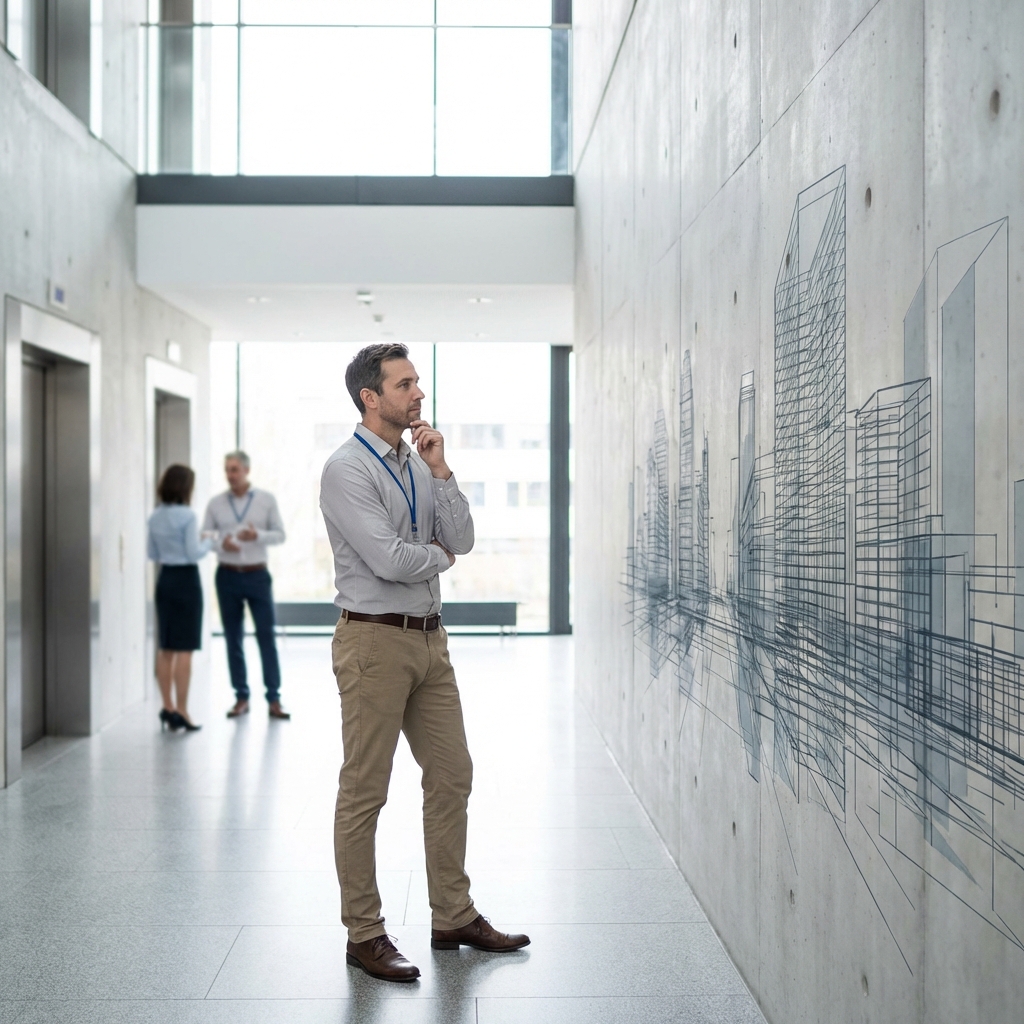
Seam-free, architectural look: Graphics read as part of the building envelope. There are no panel seams, overlaps, or edge terminations to fail.
Adhesive-free durability: Without glue, there’s no risk of peeling or residue. Ink is cured directly on the substrate for a tight bond and crisp detail.
Faster, more certain schedules: On-site printing compresses install windows. No shipping queues, mis-measured panels, or rework due to dimensional surprises.
Cleanability at scale: Hospital-grade cleaners and daily janitorial protocols are supported with the right topcoat, keeping walls service-ready in high-traffic zones.
Lower waste, stronger sustainability profile: Eliminating liners, adhesives, and offcuts reduces material to landfill. For a deeper dive, see EastCoast MuralPros’ analysis of direct-to-wall vs vinyl.
Field fit flexibility: Outlets, fire panels, or last-minute device moves can be accommodated in the print path, avoiding the cascade of reprints common with vinyl.
Paint-over-ready renewals: When tenants change or messaging evolves, walls can be lightly prepped and repainted, preserving the substrate and avoiding tear-out costs.
National and multi-site consistency: Digital workflows enforce color and layout standards across locations; crews execute to the same spec regardless of region or building vintage.
Taken together, these characteristics reframe commercial wall branding as a dependable facility asset rather than a decorative experiment.
Installation Speed and Minimal Disruption Benefits
Install windows are often the gating factor on capital and OPEX work. Direct-to-wall projects are engineered for low disruption, enabling business-as-usual in occupied buildings.
What to expect operationally:
Compressed on-site time: Many single-wall installations complete in under five hours, including setup and quality checks. Multi-wall corridors can be phased without closing entire floors.
Quiet, clean process: No adhesive odors or heat guns. UV-LED curing is controlled and localized. Crews contain dust with standard protection, keeping adjacent operations running.
Off-hours or swing-shift options: Health systems, schools, and hospitality brands can schedule night or weekend work to avoid peak occupancy, then reopen corridors the same day.
Small footprint: Lightweight, vertical printers and limited staging reduce the need for large lifts or scaffolding in most locations. Egress paths and life-safety clearances are maintained.
Infection control alignment: For clinical settings, cleanable protection films and wipe-down protocols are baked into the workflow, with ICRA barriers used where required.
On-site adaptability: If furniture, devices, or last-minute trade work crowds a wall, crews can re-sequence zones and keep the day productive—no wasted panels or idle time due to misfit.
EastCoast MuralPros emphasizes schedule certainty, leveraging pre-surveys and digital previews to lock in scope and minimize day-of surprises. For facility managers, the practical outcome is less operational choreography, fewer stakeholder escalations, and more confidence in go-live dates.
Durability, Cleanability, and Lifecycle Cost Efficiency
Durability determines whether a wall program is a one-time winner or a recurring headache. Direct-to-wall systems are designed for high-traffic environments—office corridors, elevator lobbies, patient units, dining areas—where carts, backpacks, and daily cleaning are the norm.
Performance characteristics to evaluate:
Abrasion resistance: UV-cured inks, optionally protected with a clear coat, hold up to scuffs and incidental contact better than edge-bonded films that can catch and lift.
Chemical tolerance: With the right finish, surfaces withstand neutral cleaners, diluted bleach, and hospital-grade disinfectants, maintaining color fidelity over time.
UV stability: Pigments and curing methods minimize fading under ambient daylight, important for glassy lobbies and perimeters.
Edge-free maintenance: The absence of seams removes the primary failure point found in vinyl and wallpaper, translating to fewer service tickets and touch-ups.
Lifecycle math favors systems that you don’t have to babysit. You avoid the recurring costs of seam repairs, de-lamination fixes, and complex tear-outs during refreshes. Many facility teams also shift wall branding to a predictable refresh cadence—quarterly, seasonal, or strategic—using subscription models that bundle design updates with scheduled on-site printing. For additional context on performance in tough environments, review the use cases in this overview of direct-to-wall durability.
Paint-over-readiness is another cost lever: when a tenant turns or a program changes, you can return a space to neutral without scraping, heat, or chemical removers. Over a portfolio, these avoided labor and material costs add up, strengthening the total cost of ownership versus adhesive-based alternatives.
Scalability Across Multi-Location and Campus Environments
The promise of a modern wall system is not just great results on one feature wall—it’s operationalizing those results across dozens or hundreds of sites. Direct-to-wall workflows lend themselves to scale:
Reproducible standards: Digital asset libraries, color profiles, and wall templates are version-controlled, ensuring consistent outcomes whether you’re upgrading ten floors or ten states.
Cross-surface continuity: Because the process prints on drywall, CMU, sealed concrete, and brick, your brand and wayfinding can bridge between renovated and original areas without material clashes.
Full-campus orchestration: Hospitals and universities can phase buildings by occupancy calendars, printing wayfinding, instructional, and safety graphics as one integrated package rather than siloed sign orders.
Centralized QA with local execution: Remote approvals and small field teams make national rollouts more predictable—especially helpful for franchise or retail programs.
Portfolio refresh cycles: Subscription-based refreshes allow workplace, retail, and education brands to update messaging seasonally without repeating procurement or construction loops.
EastCoast MuralPros supports these needs with consistent execution processes and collaborative tools that help internal designers and digital artists scale their work. When a brand system evolves, updating a central file propagates across the network, reducing the risk of outdated graphics lingering on walls.
Design Flexibility and Architectural Integration
Facility teams benefit when graphics behave like a finish rather than an add-on. Direct-to-wall printing creates visual layers that read as part of the architecture:
Photoreal at scale: High-resolution imagery holds crisp detail across large expanses—ideal for feature walls in lobbies, museums, and galleries where viewers stand close and far.
Seamless gradients and vector precision: Complex geometry, typography, and brand gradients reproduce cleanly, without panel break lines that distract the eye.
Site-aware layout: Artwork can align to datum lines, reveal joints, and millwork, reinforcing the discipline of your interior architecture.
Wayfinding without clutter: Instructional, safety, and directional elements integrate into the wall plane, reducing reliance on redundant plaques or stanchions.
Texture and substrate as design: Brick, CMU, and concrete can contribute natural texture underneath printed graphics, creating depth that vinyl can’t replicate convincingly.
For durable wall graphics for offices, this integration elevates everyday spaces—huddle rooms, elevator lobbies, break areas—without adding fixtures or compromising maintainability. When paired with in-studio printed elements such as branded doors, tabletops, or portable standees, facility teams can execute cohesive programs across surfaces and touchpoints.
Procurement and Budget Considerations for Facility Teams
Successful adoption of commercial wall branding depends as much on process as on technology. Procurement and facilities should align early on scope, performance criteria, and lifecycle expectations.
Key considerations for RFPs and vendor selection:
Performance spec, not brand spec: Define outcomes—seam-free finish, cleanability with specified agents, paint-over-ready, compatibility with given substrates—so bidders can propose the right method.
Surface preparation responsibilities: Clarify who handles patching, priming, or sealing for raw CMU/brick. Establish acceptance criteria (e.g., texture tolerance, moisture thresholds).
Color and brand standards: Require color target proofs and on-site test prints for initial sites; mandate ICC-based color management for multi-location rollouts.
Infection control and safety: In healthcare and labs, ask for ICRA protocols, MSDS for inks/topcoats, and cleaning recommendations aligned to your formularies.
Schedule and phasing: Request plan-of-day outlines for occupied spaces, including after-hours options, daily turnover conditions, and QC sign-off steps.
Warranty and service: Seek workmanship and adhesion/finish warranties that reflect your environment; require response times for spot repairs or refreshes.
Data and change control: Specify file management for artwork versions, naming conventions, and approval workflows to avoid conflicting art in the field.
Metrics and reporting: Ask for post-install reports with photos, dimensions, and materials used to support future maintenance and portfolio audits.
Budget drivers are transparent in direct-to-wall work: square footage, substrate type and condition, site access (lifts, after-hours), environmental requirements (ICRA), and program complexity (number of locations, art variations). Many facilities teams fund initial deployments as CAPEX, then treat planned refreshes as OPEX through a subscription model—stabilizing annual costs while keeping spaces current.
Because direct-to-wall printing eliminates vinyl, adhesives, and panel fabrication, it often shortens procurement cycles—fewer SKUs, less shipping, and reduced reprint risk. Over a lifecycle, these factors improve the value case versus wallpaper and vinyl, particularly where tenant turnover or program updates are frequent.
Real-World Applications: Wayfinding, Branding, and Safety Graphics
Where this approach shines is in complex environments where communication must be clear, durable, and adaptable.
Examples across sectors:
Healthcare and hospitals: Zone color bands, unit identifiers, and directional cues integrated at corridor height; departmental feature walls for patient orientation; procedure room protocols printed cleanly near points of use.
Education (K–12 and higher ed): Campus maps, floor numbering, classroom clusters, athletic branding, and code-of-conduct reminders that are easily refreshed each semester.
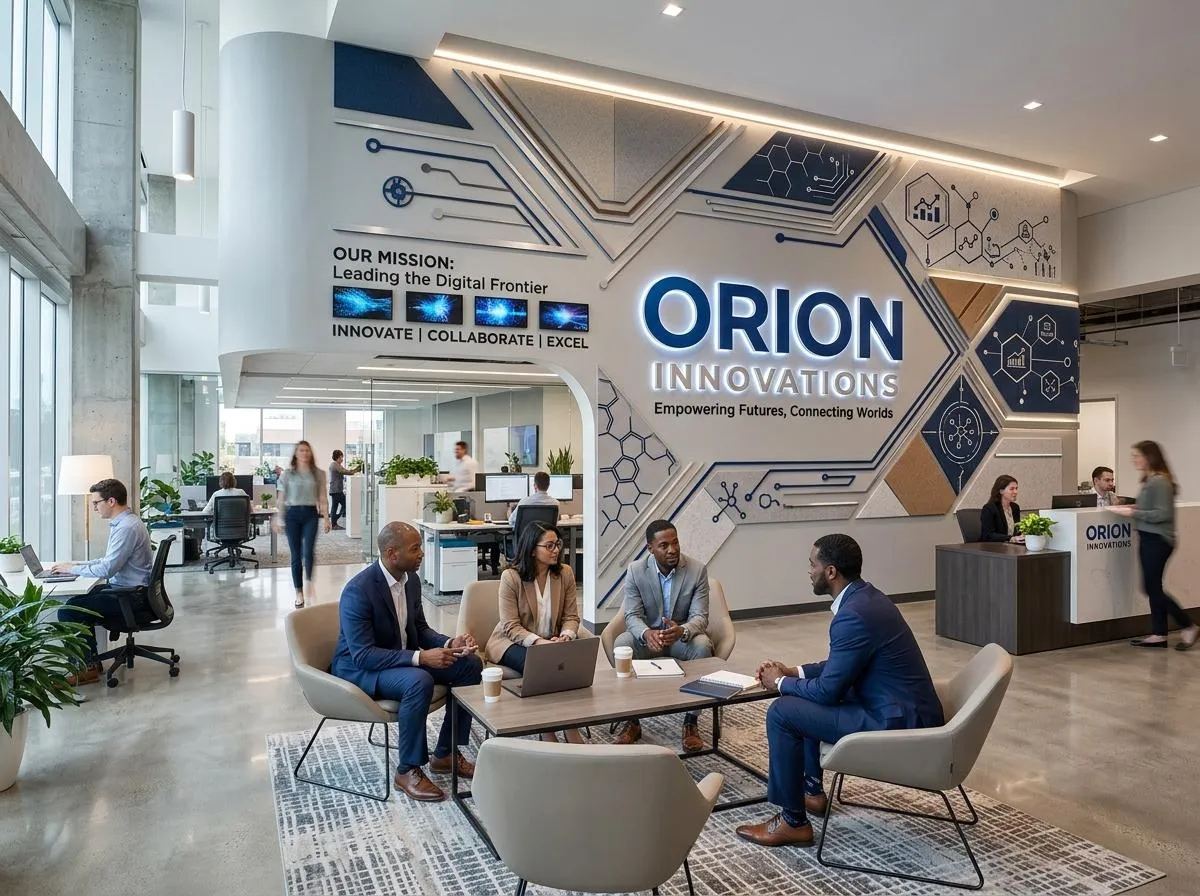
Corporate workplaces: Mission walls, product storytelling, privacy-friendly patterns near glass partitions, and branded elevator lobbies that withstand backpacks and rolling chairs.
Retail and multi-location brands: Seasonal campaigns and product education that can update quickly across locations without shipping delays or inventory of panels.
Hospitality: Guest flow wayfinding, amenity feature walls, and back-of-house safety communication that remains legible and clean under frequent cleaning.
Museums and cultural institutions: Photoreal exhibits, large-format imagery, and didactic graphics that align precisely to exhibits—without signage clutter competing for attention.
Public-sector and transportation: Instructional graphics, safety guidance, and multilingual wayfinding that integrate into existing walls and tolerate high daily wear.
To extend programs beyond walls, many teams supplement with in-studio printed doors, tabletops, and standees, creating cohesive touchpoints for events, pop-ups, or temporary activations aligned with long-lived wall graphics.
Implementation Best Practices and Timeline Management
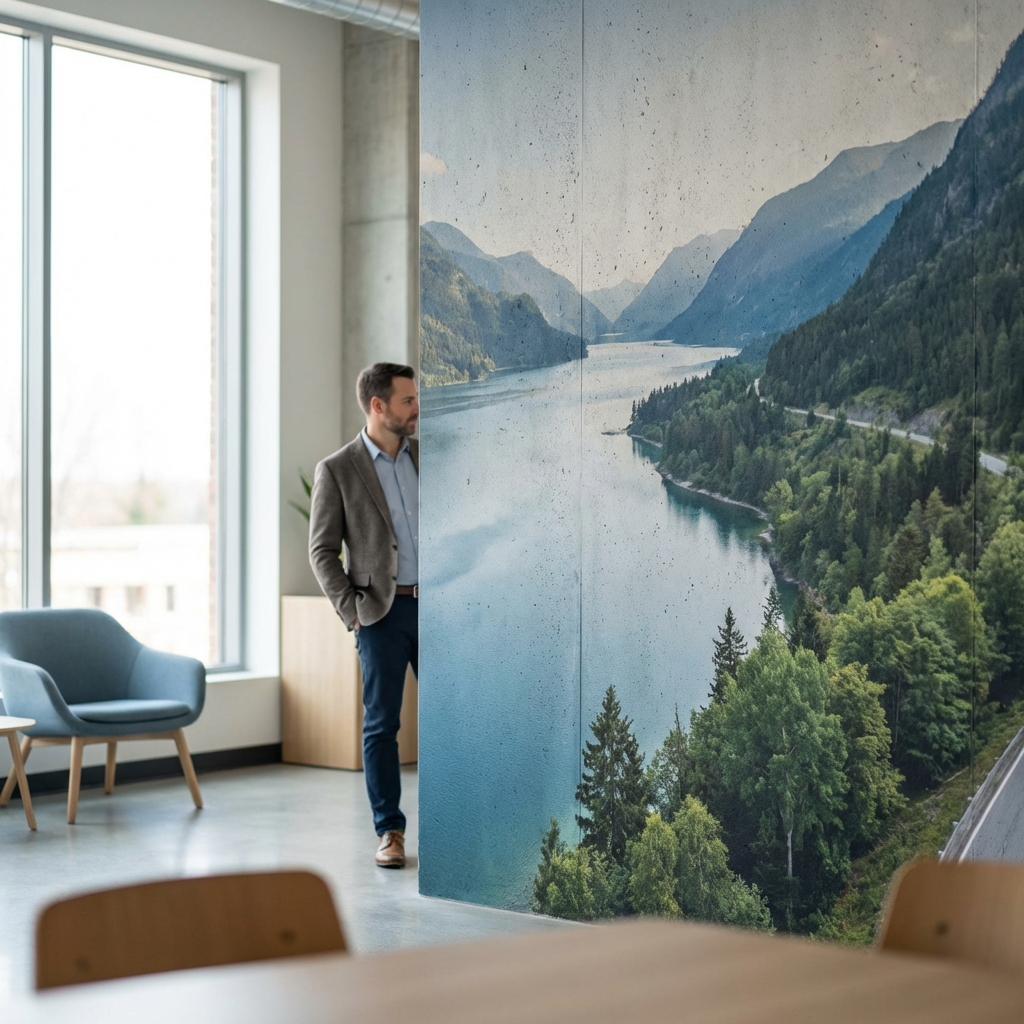
Implementing interior wall printing technology across active facilities benefits from a disciplined playbook. A typical sequence from concept to completion:
1) Discovery and goals
Define objectives: brand awareness, wayfinding clarity, safety compliance, or occupancy readiness for lease-up.
Identify priority zones and constraints: infection control, restricted hours, egress, or lift access.
2) Site survey and substrate assessment
Document dimensions, obstructions, texture, and lighting.
Test for moisture on masonry; specify priming where needed.
Capture photos and elevation sketches for exact art placement.
3) Artwork and preflight
Build to-scale templates with datum references and device callouts.
Set resolution targets (e.g., 150–300 dpi at full size) and color profiles.
Preflight files for text size, contrast ratios, and legibility at distance.
4) Approvals and mockups
Create digital overlays on survey photos to align stakeholders.
Produce on-wall test prints for the first site or new substrate.
Lock version control to avoid last-minute file collisions.
5) Scheduling and communications
Sequence work by occupancy and housekeeping windows.
Share plan-of-day to security, floor managers, and janitorial teams.
Prepare staging areas and protection for adjacent finishes.
6) Day-of execution
Protect floors and adjacent surfaces.
Final surface clean; spot-prime if specified.
Print, cure, inspect, and photograph for records.
7) Quality control and turnover
Review alignment to datum lines and obstruction cutouts.
Verify color accuracy and legibility under installed lighting.
Provide maintenance guidance and cleaning compatibility.
8) Post-install support and refresh planning
Capture “as-built” dimensions for future changes.
Schedule subscription-based refreshes for campaigns or program shifts.
Centralize artwork and site documentation for portfolio scale.
Indicative timelines depend on scope. Single-wall projects can move from approved art to installation within a week; multi-floor programs might span several weeks with phased nighttime work. For urgent wayfinding or safety updates, providers like EastCoast MuralPros can mobilize in compressed windows, often completing on-site work in under five hours per wall with minimal disruption.
Risk controls to include:
Clear acceptance criteria for substrates.
Contingency zones if access is obstructed.
Infection control barriers where required.
Escalation paths for schedule or scope changes.
Conclusion: Strategic Wall Branding as a Facilities Asset
Modern commercial wall branding sits at the intersection of operations, experience, and cost control. By moving beyond vinyl and wallpaper to a performance-based, adhesive-free approach, facility teams gain schedule certainty, durability suited to high-traffic environments, and a sustainable path to refresh messaging without construction. The result is a visual system that behaves like an architectural finish—cleanable, scalable, and ready for the next program change.
For organizations managing campuses, portfolios, or national footprints, direct-to-wall printing translates design intent into consistent execution. It supports integrated wayfinding and safety communication without signage clutter, and its paint-over-ready finish simplifies tenant turnover and lifecycle maintenance. Teams seeking durable wall graphics for offices, healthcare, education, hospitality, and retail can adopt a facility manager branding strategy that aligns with both operational realities and brand ambitions.
EastCoast MuralPros focuses on helping commercial and institutional owners realize these benefits with on-site printing, collaborative design workflows, multi-surface compatibility (drywall, CMU, concrete, and brick), and subscription models for planned refreshes. As you evaluate commercial space branding solutions, prioritize methods that minimize disruption, maximize lifecycle efficiency, and give your team the flexibility to adapt quickly. Done well, wall branding becomes a strategic facilities asset—one that elevates spaces today and makes tomorrow’s changes faster, cleaner, and more predictable.


