Best Direct-to-Wall Mural Printing Solutions for Commercial Spaces
Introduction: Why Direct-to-Wall Printing Outperforms Vinyl and Wallpaper
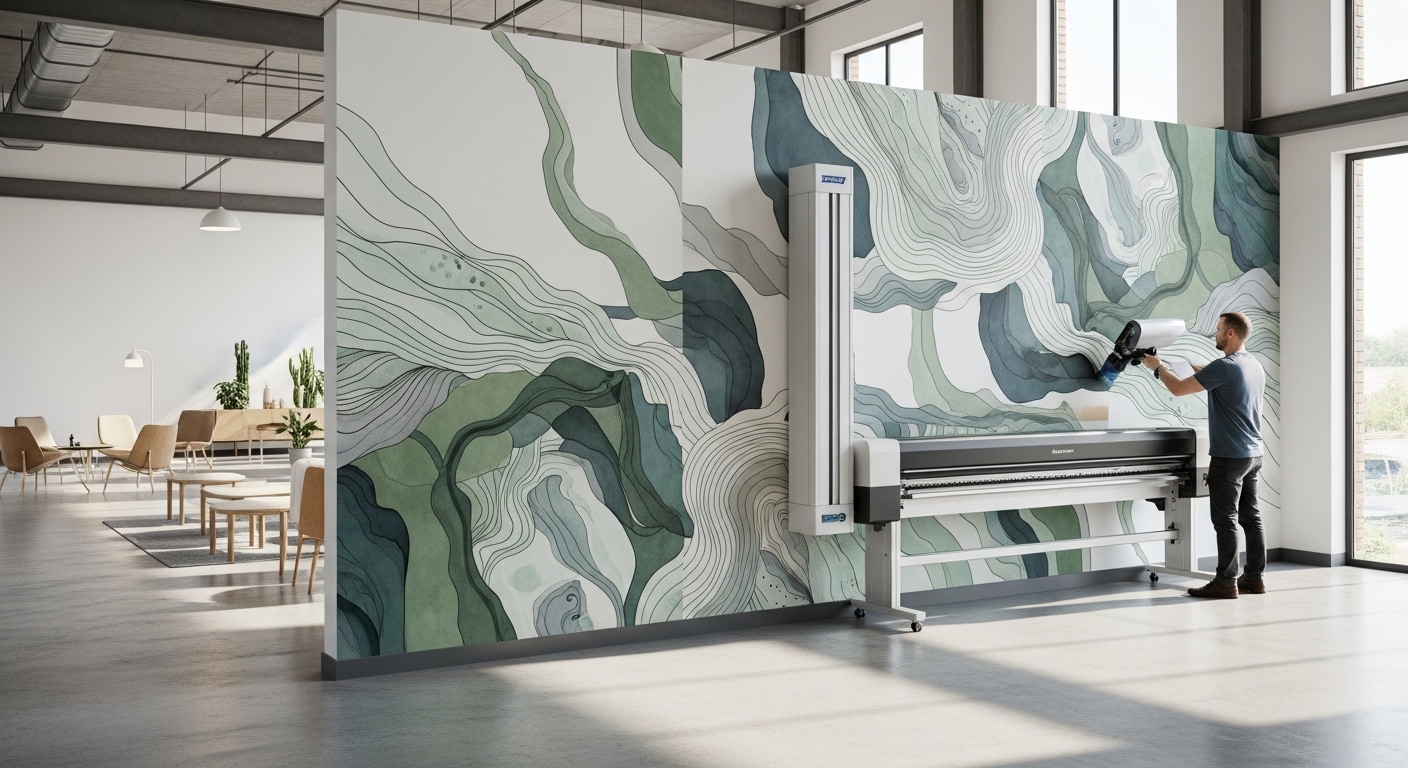
Design and facilities teams are under pressure to refresh interiors faster, with less disruption, and with clearer performance outcomes. That’s where direct to wall mural printing stands apart. Instead of fabricating vinyl panels or applying wallpaper with adhesives, next-generation wall printing technology images artwork directly onto the surface at high resolution. The result is a photoreal, seam-free graphic that feels integrated into the architecture—not stuck onto it.
Speed is a defining advantage. Because the system prints artwork on-site and in place, you eliminate shipping delays, complex staging, and long closures. For most environments, an installation window under five hours is realistic, making overnight, weekend, or phased rollouts practical even in active hospitals, campuses, and offices.
Direct-to-wall also addresses pain points that plague vinyl and wallpaper. There’s no adhesive to fail, bubble, or telegraph seams over time. The cured finish is durable and cleanable, designed for high-traffic corridors, lobbies, and educational spaces. When programs change or tenants turn over, the surface is paint-over-ready—no labor-intensive tear-out or waste streams.
From a brand perspective, the visual quality matters. High-resolution wall graphics systems deliver crisp detail and accurate color across architectural scales, making photographic storytelling viable for museums, galleries, and corporate experience walls. Wayfinding elements, safety cues, and instructional graphics can be integrated into the same visual system to reduce signage clutter and maintain clear circulation.
Operationally, on-site printing reduces the risk inherent in multi-surface environments. Finished or unfinished drywall, CMU, concrete, and brick are all compatible with the right surface preparation. That opens possibilities in public-sector buildings and legacy facilities where conventional coverings often struggle.
EastCoast MuralPros supports commercial and institutional teams that need durable results, predictable schedules, and lifecycle efficiency. Whether used for a full-campus refresh, a national retail rollout, or a pilot that needs to scale, direct to wall mural printing provides a performance-based alternative to vinyl wall coverings and wallpaper with fewer variables and a cleaner environmental profile.
Key Evaluation Criteria for Mural Printing Solutions
Selecting the right approach requires more than a style preference. Teams should benchmark methods—and providers—against measurable criteria tied to facilities performance, procurement discipline, and user experience.
Visual fidelity and resolution
- Ability to print photoreal imagery at architectural scale without banding or moiré. - Native resolution and color gamut that support brand standards and curatorial needs.
Substrate compatibility and surface preparation
- Proven performance on finished and unfinished drywall, CMU, concrete, and brick. - Clear guidance on patching, priming, and moisture testing for consistent outcomes.
Installation speed and building disruption
- Typical on-site time per wall and per zone, including masking and curing. - Noise, odor, and dust control protocols suitable for occupied buildings.
Durability and cleanability in high-traffic environments
- Resistance to abrasion, scuffs, and incidental impacts. - Compatibility with common cleaning agents and infection-control protocols (e.g., healthcare).
Seam-free execution and scale
- Capability to maintain image continuity across long runs and variable wall heights. - Methods for managing reveals, corners, and integrated architectural features.
Wayfinding and safety integration
- Experience translating brand systems and circulation plans into legible, code-aware graphics. - Tactics to reduce clutter while improving clarity for visitors and staff.
Change management and lifecycle efficiency
- Paint-over-ready finishes to avoid tear-out and reduce downtime at end of life. - Subscription or scheduled refresh programs for seasonal or strategic updates.
Proofing, quality control, and risk mitigation
- On-wall test prints and swatch approvals for color-critical applications. - Documented QA/QC processes for multi-location and national rollouts.
Sustainability and indoor air quality
- Adhesive-free imaging to reduce PVC, liner waste, and removal waste streams. - Low-odor, low-VOC processes appropriate for occupied spaces.
Artwork workflows and scalability
- Collaborative tools that help digital artists and brand teams scale content to multiple formats. - Asset management, version control, and templating for recurring campaigns.
Vendor competence and experience
- Track record in your sector (healthcare, education, corporate, retail, hospitality, museums). - Transparent pricing and schedule certainty aligned to procurement and capital planning.
With these criteria, direct-to-wall solutions typically stand out for speed, clean operations, and lifecycle performance—especially when supported by a provider that can consistently execute across regions and facility types.
Recommendation 1: Speed and Installation Efficiency
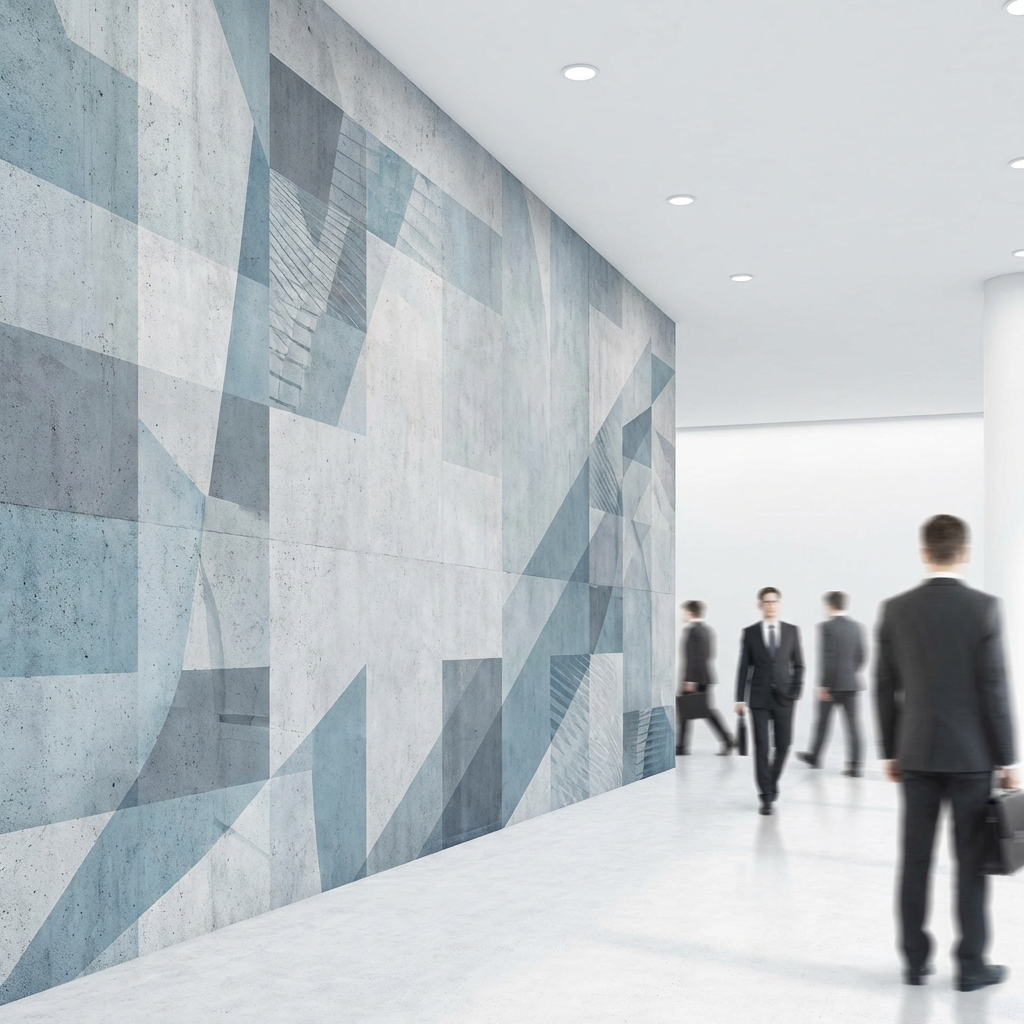
Illustration 1
If schedule certainty is your top constraint, prioritize methods that remove fabrication steps and ship-time dependencies. Direct to wall mural printing excels here because it prints where the mural lives, compressing timelines and reducing opportunities for error.
Under-five-hour windows: For many corridors, lobbies, and conference suites, installation can be planned as single-shift work that starts after close of business and finishes before opening. That protects revenue and patient or student flow.
No shipping or panel staging: On-site printing eliminates the logistics—crates, pallets, and loading docks—that can derail timelines or cause damage before install.
Lower rework risk: Because the artwork is imaged directly onto the prepared wall, there’s no fighting with panel alignment, seam match, or adhesive variables that can spiral into costly delays.
In practice, a workplace team might phase a multi-floor brand update over several evenings, closing only one bank of elevators or one corridor at a time. A hospital can refresh wayfinding zones during weekend windows, prioritizing clinical areas first and public lobbies second, without impacting daily operations. Retailers can execute store-in-store campaigns overnight, synchronized with visual merchandising resets.
EastCoast MuralPros plans projects around live operations, coordinating with facilities and security to stage, mask, print, cure, and depart with minimal footprint. For highly time-sensitive campaigns—grand openings or investor tours—this approach removes a full layer of schedule risk compared to vinyl fabrication and wallpaper install. For institutions with stringent disruption limits, the low-odor, low-noise process is another scheduling advantage.
Where speed meets quality, proofing is critical. Seek providers who perform on-wall test prints for color and substrate check before full production. A 12-by-12-inch swatch validated against brand standards can avoid surprises and streamline approvals across stakeholder groups.
Recommendation 2: Durability and Cleanability in High-Traffic Spaces
Commercial interiors live hard lives. Rolling carts, backpacks, luggage, and frequent cleaning routines can rapidly age decorative finishes. Direct-to-wall murals are engineered for that environment, with cured surfaces that resist scuffs and tolerate routine cleaning—without the failure modes common to adhesive systems.
Abrasion resistance: The cured imaging layer anchors to the substrate, reducing edge and seam vulnerabilities where damage usually starts. In corridors, the difference is evident over time: no lifted seams to catch a mop head or vacuum hose.
Cleanability: Compatibility with common detergents and disinfectants enables maintenance teams to preserve appearance standards without special instructions. This is indispensable for hospitals, K–12, and food-service-adjacent areas.
Sunlight and UV stability: High-quality systems maintain color in lobbies and atriums exposed to daylight. Where long-term sun exposure is intense, a maintenance plan is easy to establish because paint-over refreshes are straightforward.
The finish is also pragmatic at end of life. When space needs change—re-stacks, new tenants, evolving pedagogy—paint-over readiness avoids the tear-out, landfill waste, and wall repair typical of vinyl. Facilities teams regain flexibility without absorbing unplanned downtime.
For teams seeking performance detail, EastCoast MuralPros outlines cleaning and care protocols for medical and education environments and publishes guidance on substrate prep and finish expectations. To understand how direct-to-wall holds up in high-traffic settings, see this overview of direct-to-wall durability.
Finally, durability should be proven, not promised. Ask for site references, request mockups on your actual substrates, and verify that visual quality remains high after cleaning cycles. The goal is to blend aesthetics with operational resilience, avoiding decorative finishes that become maintenance liabilities.
Recommendation 3: Multi-Location Brand Rollout Capability
Scaling from a pilot to a regional or national program takes more than a beautiful first install. It demands repeatability, asset discipline, and a provider who can standardize process while staying nimble for local conditions.
Color and asset consistency: High-resolution wall graphics systems should be paired with calibrated color management and documented settings for repeatable results. Providers should archive ICC profiles, substrate notes, and on-wall swatch approvals per location.
Predictable logistics: On-site printing removes freight risk and shortens the path from approved artwork to completed walls. This predictability is vital when opening multiple stores or campuses on synchronized timelines.
Variable conditions, consistent outcomes: Real buildings differ—CMU in one region, skim-coated drywall in another, and concrete block in a third. A capable team will adapt prep protocols while holding the brand visuals constant.
For brand and creative teams, collaboration tools matter. EastCoast MuralPros supports digital artists and in-house designers with scalable templates and feedback loops so artwork can be adapted across wall sizes, conditions, and campaign variants without reinvention. For special elements—doors, tables, standees—an in-studio printing workflow allows parallel production that ships alongside on-site wall imaging for unified storytelling.
National rollouts benefit from programmatic options. A subscription model allows seasonal or strategic refreshes to be scheduled and budgeted in advance, aligning content cycles with marketing calendars and workplace experience initiatives. Consistent execution reduces variance across markets, which lowers total program risk.
Procurement teams should evaluate:
How the provider documents and transfers settings across jobs.
Whether QC photos, as-builts, and maintenance guidance are standardized.
The provider’s capacity to surge resources during peak rollout weeks.
When the program architecture is sound, direct to wall mural printing becomes a reliable, repeatable method to deliver brand environments at scale.
Recommendation 4: Wayfinding and Instructional Graphics Integration
Institutions and multi-building campuses often suffer from too many signs and not enough clarity. Direct-to-wall offers a way to embed wayfinding, safety, and instructional content into the architecture, reducing visual clutter while improving navigation and compliance.
Zone-based color systems: Color bands printed at decision points can signal departments, wings, or grade levels without a forest of extraneous plaques.
Floor, wall, and vertical integration: Walls, door legs, and soffits can carry consistent cues that align with ADA-compliant tactile signs rather than competing with them.
Instruction without hardware: Safety reminders, queue guidance, and equipment operating sequences can live on the wall where they’re needed, minimizing tripods and temporary placards.
For healthcare, this means calmer corridors with clearer destinations. For education, it simplifies daylighting, egress, and traffic flow during class changes. For corporate and mixed-use buildings, it reinforces branded experience while making navigation intuitive for visitors and new employees.
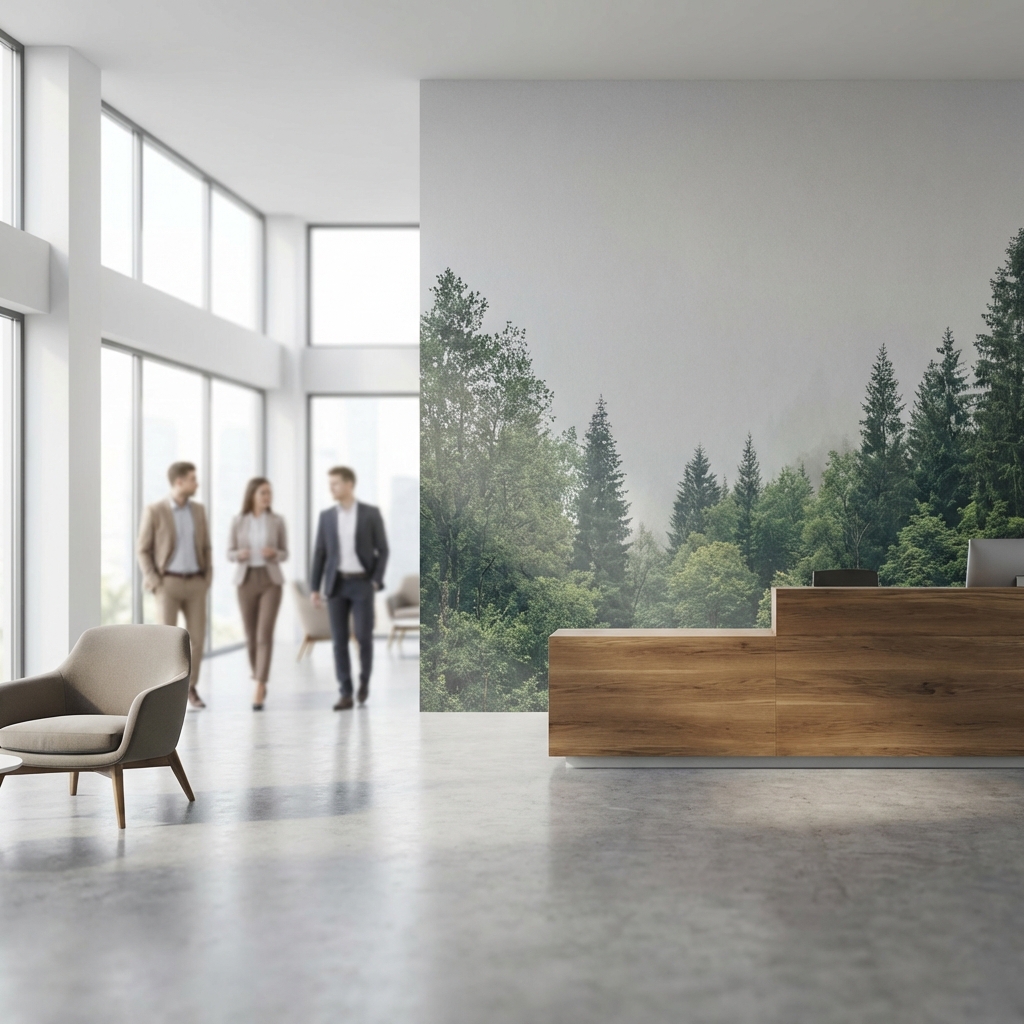
Illustration 2
Design governance is key. Integrating wayfinding into a graphic system requires a balance of hierarchy, legibility, and maintenance planning. Ask your provider:
How do they handle code-required signage versus informative graphics?
What minimum type sizes and contrasts do they recommend for viewing distances?
How are updates managed when departments move or room uses change?
EastCoast MuralPros frequently combines brand storytelling with directional cues and safety markings, using on-wall test prints to dial in color and contrast for real lighting conditions. Because updates can be localized and paint-overs are simple, the system remains flexible as programs evolve, unlike rigid hardware-based sign packages.
Recommendation 5: Sustainability and Lifecycle Cost Advantages
Sustainability targets and total cost of ownership often rise or fall on the same decisions. Direct-to-wall simplifies both by removing adhesive products, reducing waste, and minimizing replacement cycles.
No PVC, no liners, less waste: Skipping vinyl and adhesive-backed media eliminates a significant plastic stream from procurement, install, and, importantly, removal. There’s no backing paper, no release liners, and no spent panels.
Lower freight footprint: On-site printing means fewer shipments and lighter logistics. For multi-location programs, this compounds into meaningful carbon and cost reductions.
Easier end-of-life: Paint-over-ready surfaces prevent tear-out waste and repairs. Teams sidestep landfill fees associated with contaminated vinyl or wallpaper.
Lifecycle economics benefit as well. The finish is durable and cleanable, pushing maintenance intervals out. When change is needed—seasonal content, tenant rebrands, regulatory updates—refreshes can be surgical rather than wholesale. Over several years, reduced material purchases, lower install labor, and shorter downtime often outperform conventional wall coverings.
For sustainability officers and procurement teams benchmarking options, this resource on direct-to-wall vs vinyl outlines environmental waste considerations in commercial design. While every facility has unique parameters, adhesive-free imaging consistently scores well on waste minimization and occupant health, especially in occupied buildings with strict IAQ requirements.
EastCoast MuralPros approaches sustainability pragmatically: a durable system that’s simple to keep clean, fast to update, and straightforward to paint over when the program changes. The practical outcome is less waste, fewer truck rolls, and more budget aimed at the experience itself.
Comparison Matrix: Direct-to-Wall vs. Traditional Wall Covering Methods
Below is a practical, category-by-category comparison framed for facilities, procurement, and design teams evaluating commercial mural installation alternatives.
Installation time and disruption
- Direct-to-wall: Hours, often under a single shift; low noise/odor; suitable for occupied buildings. - Vinyl/wallpaper: Multi-step with substrate prep, panel alignment, and adhesive cure; sensitive to temperature/humidity; higher disruption. - Hand-painted mural: Days to weeks; skilled labor; significant scheduling and odor considerations.
Visual quality at scale
- Direct-to-wall: Photoreal, high-resolution imagery with crisp edge detail; seam-free. - Vinyl/wallpaper: High-quality prints but seams can telegraph; panel joins visible in raking light. - Hand-painted: Artistic variability; texture may be desirable but limited for photographic content.
Durability and maintenance
- Direct-to-wall: Cured, cleanable surface; strong abrasion resistance; no seams to fail. - Vinyl/wallpaper: Good initial durability; seams and edges prone to lift, bubble, or chip; susceptible to cleaning damage at seams. - Hand-painted: Depends on coatings and pigments; touch-ups may be visible.
Substrate flexibility
- Direct-to-wall: Compatible with drywall, CMU, concrete, brick; tailored prep guidance. - Vinyl/wallpaper: Requires smoother substrates; texture telegraphs; adhesion varies. - Hand-painted: Highly flexible but variable outcomes depend on painter and coatings.
Change management and end-of-life
- Direct-to-wall: Paint-over-ready; minimal downtime; no tear-out waste. - Vinyl/wallpaper: Removal can damage walls; labor-intensive; landfill waste streams. - Hand-painted: Typically requires priming and repainting; variable labor.
Sustainability profile
- Direct-to-wall: Adhesive-free; minimal materials and freight; significant waste reduction. - Vinyl/wallpaper: PVC or textile media, adhesives, liners; higher embodied waste. - Hand-painted: Low material mass; may involve solvents/odors; labor-intensive.
Program scalability
- Direct-to-wall: Strong for multi-location rollouts; on-site printing ensures consistent execution across conditions. - Vinyl/wallpaper: Factory consistency good; field conditions and seam install introduce variability. - Hand-painted: Difficult to replicate at scale; quality and schedule vary.
Cost perspective (installed and lifecycle)
- Direct-to-wall: Competitive installed cost; lower lifecycle cost due to fewer failures and easy updates. - Vinyl/wallpaper: Competitive installed cost; higher lifecycle cost due to seam failures, removals, and re-installs. - Hand-painted: Higher installed cost for skilled artists; variable lifecycle cost.
For organizations prioritizing reliability, speed, and lifecycle efficiency, direct to wall mural printing is frequently the best-fit choice.
Selection Guide: Matching Solutions to Your Facility Type
Different environments call for different emphases. Use these patterns to align capabilities with operational needs.
Healthcare systems and medical facilities
- Priorities: Cleanability, low disruption, wayfinding clarity, infection control compatibility. - Recommended approach: Direct-to-wall in corridors, public lobbies, and family zones with on-wall proofing for legibility and light conditions. Integrate zone colors and floor identifiers into the mural system. Schedule overnight/weekend windows and coordinate with environmental services on cleaning protocols.
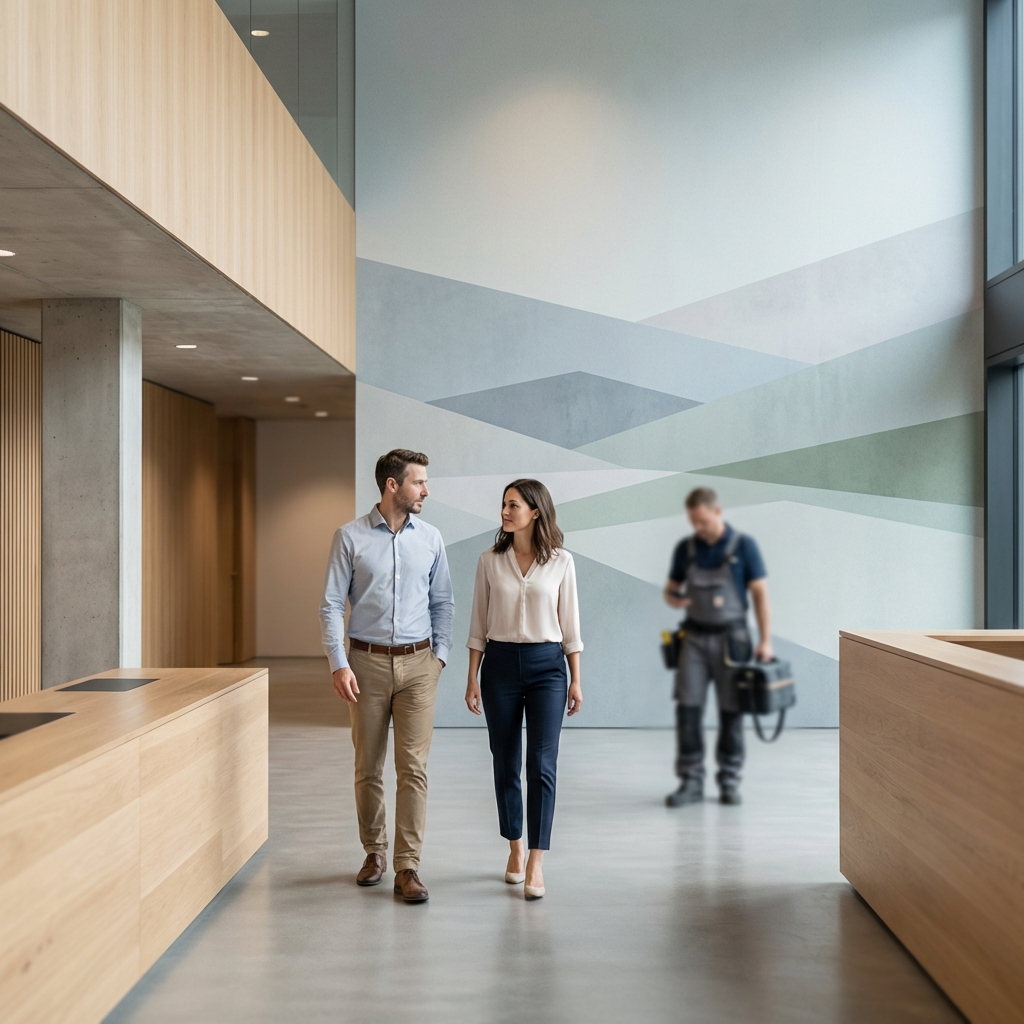
Illustration 3
Colleges, universities, and K–12 districts
- Priorities: Durability against high traffic, seasonal changeovers, student safety and behavior cues. - Recommended approach: Seam-free, high-resolution murals in hallways, cafeterias, athletics, and libraries. Pair with a subscription refresh for academic year or athletics seasons. Use instructional graphics for lab safety, maker spaces, and egress patterns.
Corporate real estate and workplace teams
- Priorities: Speed during re-stacks, brand consistency across campuses, executive and client experience. - Recommended approach: Pilot critical walls in HQ, then scale templates to regional offices. Use on-wall swatches for brand color fidelity. Combine walls with in-studio printed elements (doors, standees) for launch events. Favor paint-over-ready systems to adapt as floor plans evolve.
Retail chains and multi-location brands
- Priorities: Rapid refreshes, synchronized openings, scalable asset management. - Recommended approach: Direct-to-wall for core brand zones and seasonal narratives; align calendar to merchandising cycles via a subscription model. On-site printing prevents freight delays; proofs and QC photos maintain consistency across stores. Integrate POS instructions and queue guidance directly into the wall system to reduce hardware.
Hospitality brands and hotel operators
- Priorities: Guest experience, quiet overnight installs, corridor durability. - Recommended approach: High-resolution, seam-free murals for corridors, elevator lobbies, and amenities. Low-odor process supports occupied floors. Emphasize UV stability where atria daylight is strong. Use paint-over to refresh for brand updates without room closures.
Museums and cultural institutions
- Priorities: Curatorial-grade image quality, temporary exhibition turnover, unobtrusive wayfinding. - Recommended approach: Photoreal walls with crisp typography for labels and interpretive graphics. Schedule turns between exhibitions with direct-to-wall to avoid panel shipping and storage. Integrate color-coded gallery navigation without adding signage clutter.
Commercial landlords and asset managers
- Priorities: Lease-up speed, tenant customization, low make-ready costs. - Recommended approach: Use direct-to-wall to stage spec suites and amenities quickly; paint-over after lease. Provide brand-ready canvases for tenants with short turnovers. Add building-wide wayfinding that’s easy to update as occupancy changes.
Public-sector and institutional owners
- Priorities: Budget predictability, CMU/concrete compatibility, safety communication. - Recommended approach: Deploy murals and instructional graphics on CMU and concrete in transit hubs, rec centers, and civic buildings. Standardize testing and approvals. Build refresh cycles into fiscal planning for predictable upkeep.
Across all facility types, a common thread emerges: fast, durable, and legible outcomes with minimal operational disruption. Direct to wall mural printing meets those needs while keeping options open for future change.
Buying Checklist: Questions to Ask Before Implementation
Use this due-diligence checklist to compare providers and methods. It aligns procurement rigor with facilities and brand priorities.
Performance and durability
- What abrasion and cleanability testing supports the finish in your environment? - Which cleaning agents are approved, and what maintenance schedule is recommended? - How does the provider validate UV stability in daylight-exposed zones?
Surface preparation and compatibility
- Which substrates are supported (drywall, CMU, concrete, brick), and what prep is required for each? - How are moisture, efflorescence, or hairline cracks addressed before printing? - What primer or sealer specifications does the provider recommend?
Installation logistics and disruption
- What is the typical wall-by-wall time-on-site, including masking and cure? - How are odor, dust, and noise managed for occupied buildings? - Can the provider stage phased work (overnight, weekend, by floor) to maintain operations?
Proofing, QA/QC, and documentation
- Are on-wall test prints and color swatches included prior to full production? - How are settings, profiles, and approvals documented for future refreshes or locations? - Will you receive as-built photos and maintenance guidance upon completion?
Visual quality and scale
- What native resolution and color gamut can be achieved at your wall sizes? - How does the provider handle reveals, corners, and long continuous runs without visible registration issues?
Wayfinding and instructional integration
- Can the team translate your signage standards into on-wall systems while maintaining code compliance? - What are recommended minimum sizes and contrasts for legibility at expected viewing distances?
Change management and lifecycle costs
- Is the finish paint-over-ready, and what is the typical process/time to reset a wall? - Do they offer a subscription or scheduled refresh model aligned to your brand or academic calendar? - What are the documented lifecycle savings versus vinyl or wallpaper in similar facilities?
Sustainability and compliance
- Which materials are used, and how do they impact waste streams compared to vinyl/wallpaper? - Are processes compatible with IAQ requirements for sensitive environments (healthcare, education)? - Can the provider support sustainability reporting needs for your organization?
Team capacity and rollout readiness
- What is the provider’s experience in your sector and at your scale? - How do they handle surge capacity for multi-site openings or campus-wide phases? - Who is your single point of contact for scheduling, approvals, and field coordination?
As you gather answers, the value case typically clarifies: faster installs, fewer failure points, stronger visual outcomes, and simpler changeovers. For organizations actively seeking institutional wall branding solutions with predictable performance, direct to wall mural printing offers a clear, modern path—one that aligns design ambition with the realities of facilities operations.
EastCoast MuralPros partners with teams across healthcare, education, corporate, retail, hospitality, and cultural sectors to deliver this balance at scale, with on-site printing that’s fast, durable, and remarkably consistent from wall to wall and site to site.