Modern Commercial School Wall Decor Solutions for K-12 Institutions
Introduction: Why School Wall Design Matters for Learning Environments
Well-designed walls do more than decorate a corridor—they shape behavior, signal safety, and reinforce learning. In K–12 settings, hallways, commons, libraries, and classrooms double as daily communications platforms. Color, imagery, and typography can reduce stress, support wayfinding, and celebrate school identity, while instructional graphics keep attention on curriculum goals outside the classroom.
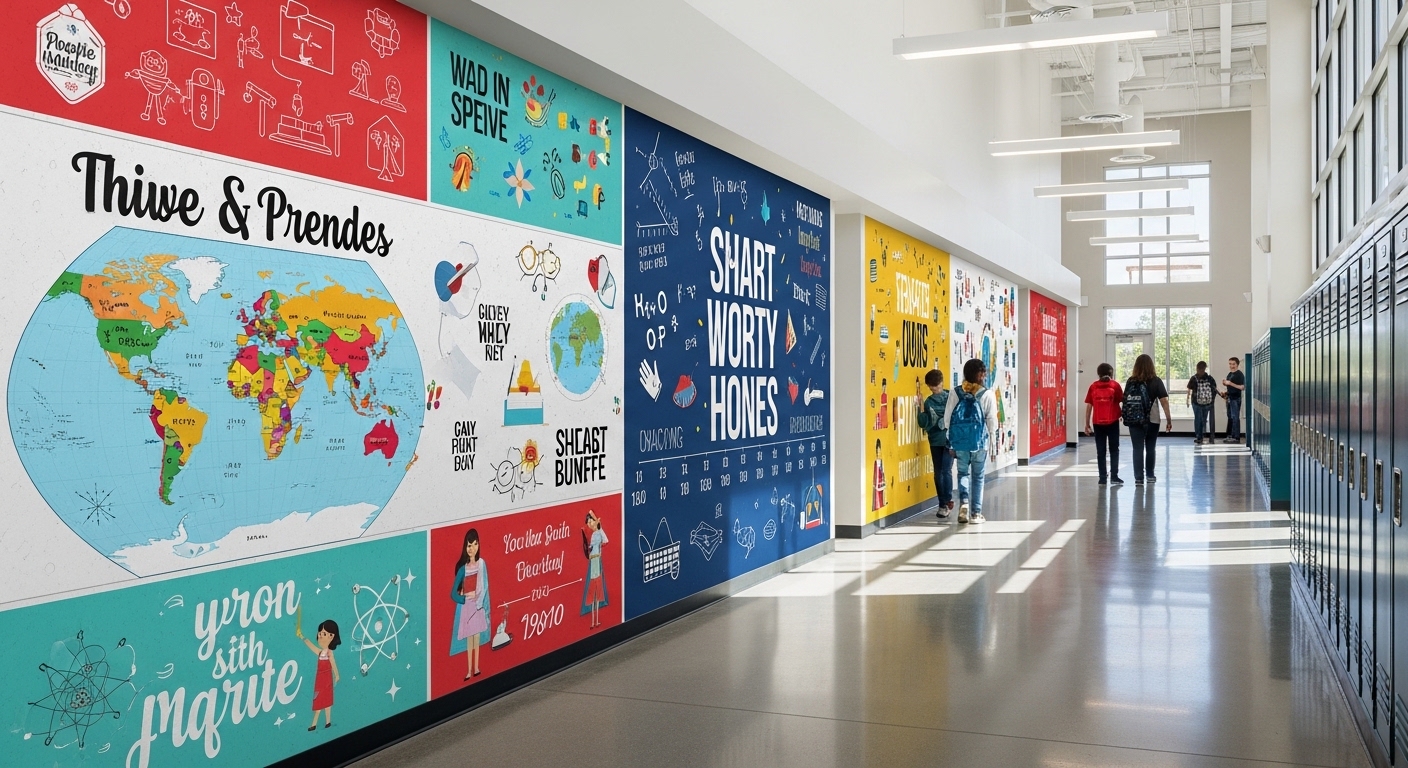
Modern commercial school wall decor approaches these surfaces as strategic real estate. Visuals calibrated to developmental stages—early literacy phonics lines, math number lines, or college-and-career pathway graphics—turn circulation zones into teaching aides. Thoughtful school interior branding also strengthens belonging: mascots and house systems become environmental anchors, and consistent graphics help students and visitors navigate without confusion.
Operational realities matter too. Facilities teams juggle tight windows between bell schedules, activities, and testing. Traditional solutions often mean construction, odor, or long closures. Schools need a performance-based, low-disruption alternative that delivers design quality without compromising safety or uptime. That’s where next-generation, direct-to-wall printing comes into play, enabling durable, high-resolution educational wall graphics installed quickly and at scale.
Traditional School Wall Decor vs. Modern Direct-to-Wall Solutions
For decades, schools relied on paint, vinyl wraps, wallpaper, bulletin boards, and occasional hand-painted murals. These methods can look good on day one but frequently struggle with seams, edges, and maintenance over time. Vinyl and wallpaper introduce adhesives, are vulnerable to picking and peeling, and complicate future refreshes. Hand-painted murals deliver craft but require long lead times, scaffolding, and specialized labor for replication across multiple buildings.
Direct-to-wall printing rethinks the medium. Instead of producing panels that get applied to walls, on-site equipment digitally prints imagery directly onto the surface—no vinyl, seams, or bulky adhesives. The result is a crisp, integrated aesthetic that reads as part of the architecture, not an overlay. In practice, this approach:
Speeds installation, often completing full zones in a school day or less.
Improves consistency across classrooms, wings, or entire campuses.
Reduces waste, shipping, and the risk of fabrication errors.
Leaves a paint-over-ready finish when programs evolve or tenants change.
Teams like EastCoast MuralPros pair this technology with campus-wide planning tools, ensuring a predictable process for K–12 facility upgrades. The outcome: commercial-grade visuals suitable for high-traffic environments, installed in hours and maintained with standard cleaning routines.
Key Challenges with Vinyl, Wallpaper, and Hand-Painted Murals in Schools
When schools evaluate upgrades, the pain points with legacy options cluster around durability, disruption, and lifecycle cost.
Peeling and seams: Vinyl and wallpaper introduce edges students can pick at; seams gather dust and moisture. Over time, small failures become big eyesores.
Adhesives and residue: Adhesion varies by substrate and climate; residue complicates refresh cycles and paint prep. Removals can damage drywall or CMU coatings.
Hygiene and cleaning: Harsh disinfectants degrade many decorative films. Frequent sanitation cycles in classrooms, cafeterias, and nurse stations expose weaknesses quickly.
Scheduling and disruption: Hand-painted murals demand extended access, masking, and ventilation—hard to coordinate around bell schedules and testing.
Replicability: Districts seeking uniform school interior branding discover that hand-painted or piecemeal vinyl solutions are difficult to standardize across multiple buildings or states.
Cost over time: Sticker price often ignores labor for surface prep, waste from misprints or shipping damage, and accelerated replacement cycles, especially in high-touch zones.
Illustration 1
In practice, these headaches deter facilities teams already balancing deferred maintenance backlogs. Schools need a solution that looks refined, installs fast, resists daily wear, and simplifies future changes without committing to a fragile or decorative stopgap.
How Direct-to-Wall Printing Technology Works for Educational Spaces
Direct-to-wall printing brings the print shop to campus. A compact, rail-guided printer moves along the wall, jetting UV-LED curable inks that instantly cure on contact. The system supports drywall, CMU, concrete, and brick—both finished and unfinished—producing seam-free visuals at architectural scale.
A typical workflow for institutional wall printing includes:
Site assessment and mapping: Teams survey substrates, obstacles (switches, railings, casework), and environmental conditions. Surfaces are dusted or wiped down; minor patching or priming is addressed if needed.
Artwork preflight: Designers check resolution, color profiles, and scale. Because the output is high-resolution and photoreal, artwork can include type as small as wayfinding size or intricate textures.
Color management: Test swatches confirm accurate brand colors and legible contrast for ADA-minded legibility where applicable. District brand standards are loaded for consistency across campuses.
On-site print: The unit prints edge-to-edge, around fixtures, and through reveals with millimeter alignment. Because ink cures on contact, there’s no prolonged drying time.
Quality check and turnover: Teams wipe, inspect, and document each zone. Spaces reopen immediately.
For schools, the advantages are tangible: no shipping delays, no panel misalignment, and no adhesive variables. Graphics can be updated as needs evolve, and paint-over-ready finishes support future tenant or program changes. To explore image clarity and scale in more depth, see this overview of High-resolution wall printing.
Benefits of High-Resolution Wall Graphics for Student Engagement and Wayfinding
Educational wall graphics work best when they combine design and pedagogy. High-definition output supports both:
Engagement through detail: Photoreal science imagery, local ecology, or historical timelines can include fine labels and micro-illustrations that reward close viewing. Students notice something new on every pass.
Calming and focus: Nature motifs and low-contrast textures reduce visual noise in counseling areas or resource rooms. In younger grades, warm palettes and simple iconography support a sense of safety.
Memory anchors: Repeated exposure to typographic reference lines—fractions, formulas, sight words—builds fluency over time without additional instructional minutes.
Inclusive wayfinding: Color-coded wings, bilingual labels, and universally recognizable pictograms make navigation equitable for families and visitors. Integrated arrows and zone markers reduce reliance on cluttered signage.
Program identity: CTE pathways, arts academies, and house systems gain a home in the environment. When identity lives on walls, it signals value and permanence.
Because fidelity is so high, walls can carry both bold identity and fine-grain information in the same composition. This duality is difficult with vinyl or wallpaper, where seams interrupt reading and small type softens at larger scales.
Design Applications: From Classroom Branding to Campus-Wide Installations
Direct-to-wall printing is as effective for a single classroom as it is for a district-wide system. Common K–12 use cases include:
Classroom zones: Age-appropriate alphabets, number lines, phonemic charts, and sentence stems; in middle/high school, lab safety icons, periodic tables, or design-thinking prompts.
Hallways and commons: Mascot and motto walls, graduate portraits, donor recognition, and cultural heritage displays. In elementary schools, milestone paths that celebrate reading minutes or attendance streaks.
Libraries and media centers: Genre wayfinding, author spotlights, and quiet-zone cues integrated into shelving bays and reading nooks.
Cafeterias: Nutrition education, waste sorting stations, and line-management cues that reduce congestion and improve flow.
PE and athletics: Record boards, championship timelines, and training graphics in gyms and weight rooms that hold up to ball impact and frequent cleaning.
Safety and operations: Visitor check-in instructions in vestibules, shelter-in-place or evacuation maps, lab PPE guidance, and color-coded stairwell markers without adding sign clutter.
Early childhood: Calming murals with tactile-scale imagery; height charts and sensory-friendly motifs for Pre-K corridors.
Special programs: Makerspaces, robotics labs, and esports rooms gain distinct visual identities that recruit participation and guide equipment zones.
Beyond walls, schools can standardize surfaces across the campus ecosystem. In-studio printing on doors, tables, and standees extends branding and instructional messaging into movable assets—useful during events, orientations, and testing periods. For districts leveraging local talent, collaborative tools help digital artists and student designers scale their work across multiple sites without losing fidelity or intent.
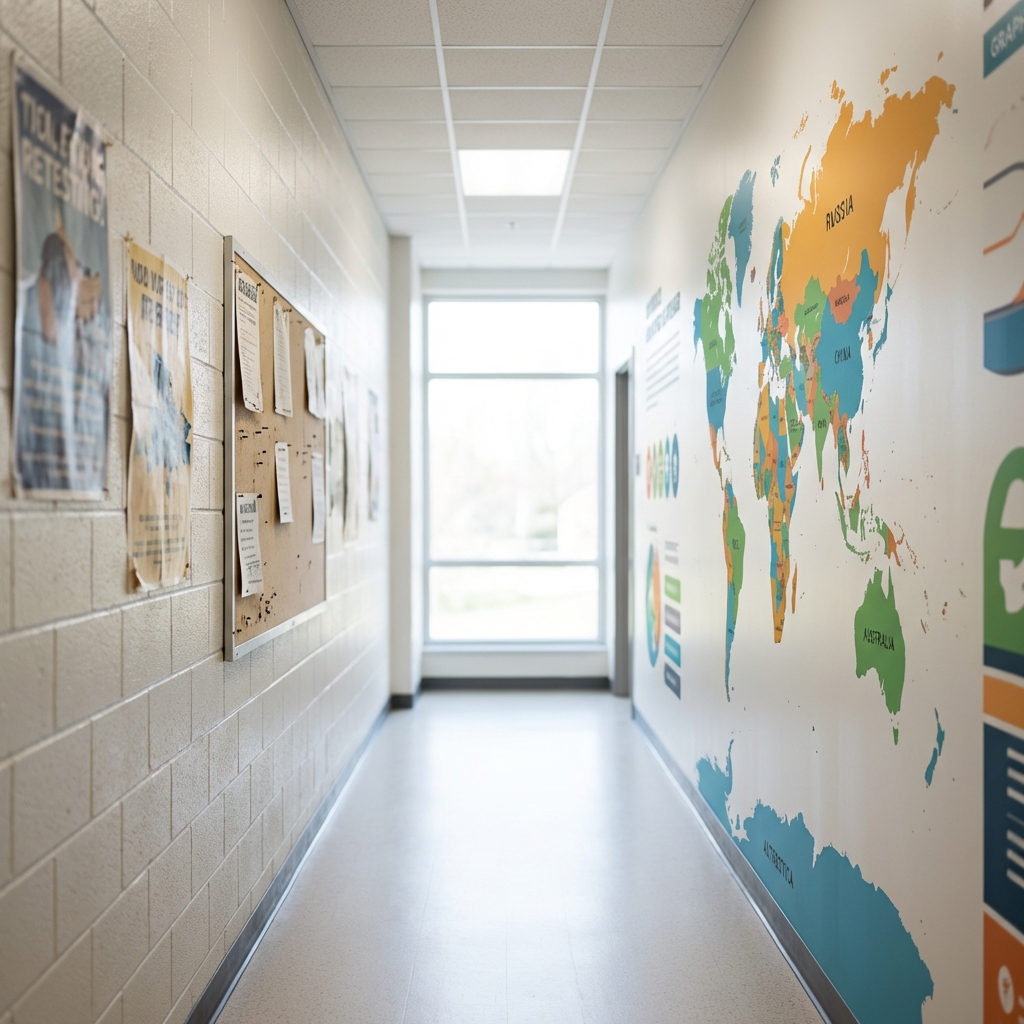
Illustration 2
Installation Speed and Minimal Disruption: Completing Projects During School Breaks
Schedule certainty is non-negotiable in K–12. Direct-to-wall printing is engineered for speed and low disruption:
Rapid turnaround: Many projects complete in under five hours per zone, with larger corridors or clusters sequenced efficiently across evenings, weekends, or breaks.
Occupied-building friendly: UV-LED inks cure instantly and produce minimal odor. Work areas are compact, with light masking around baseboards or fixtures rather than full-room closures.
Clean workflow: No adhesives, no large panels, and minimal packaging waste. The absence of dust-generating demolition keeps custodial tasks simple.
Tight coordination: Pre-surveys and digital mockups align stakeholders ahead of time. On the job, teams move methodically, handing back spaces as they finish.
Because printing happens on site, schools avoid shipping delays and fabrication bottlenecks that can derail summer schedules. If a day slips for construction elsewhere on campus, teams can pivot to another zone and keep progress moving. For districts phasing updates over several breaks, a subscription model can sequence seasonal refreshes without renegotiating scope each year.
Durability and Maintenance in High-Traffic Educational Environments
Facilities managers judge solutions by how they stand up to daily life: backpacks scraping, food spills, custodial cleaning, and the occasional scuff from a cart. Direct-to-wall output is designed for that reality.
Seam-free surfaces: With no edges to lift, there’s nothing to pick at. Graphics sit flush with the substrate, reducing impact risk in tight hallways.
Cleanability: Surfaces tolerate routine disinfectants and cleaning cycles without fogging, peeling, or edge fray. Optional topcoats add extra abrasion or anti-graffiti performance for locker bays or gym corridors.
Repair and refresh: Because the finish is paint-over-ready, future changes are straightforward—no adhesive removal or wall repair before repainting or reprinting.
Environmental durability: UV-cured inks resist fading and maintain crisp detail under varied lighting, including bright atrium spaces.
These performance characteristics translate to fewer service tickets and longer intervals between updates. For deeper context on field-tested durability in high-traffic areas, this primer on Direct-to-wall printing benefits outlines material and maintenance considerations that matter to school operations teams.
Cost Comparison: Lifecycle Efficiency Over Traditional Wall Covering Methods
Initial quotes don’t tell the full story. Schools comparing commercial school wall decor options should model the total cost of ownership over four to eight years—the period most districts use for corridor and classroom refresh cycles.
Key cost drivers where direct-to-wall printing performs:
Labor efficiency: On-site printing compresses install hours and reduces room closures. Custodial and security support are simpler when teams don’t manage panel staging or adhesive application.
Waste and rework: Eliminating panels and shipping removes two common failure points. No damaged crates, no misfit seams, and fewer punch-list items.
Maintenance cycles: Seam-free graphics withstand daily wear better than vinyl or wallpaper, lengthening replacement intervals and reducing unscheduled repairs.
Downtime: Spaces typically return to service immediately after printing—no extended curing or off-gassing periods.
End-of-life: Paint-over-ready surfaces avoid costly removals and substrate repairs, important during tenant turnover, reconfiguration, or capital projects.
Some districts adopt a subscription model to align upgrades with school calendars and budgets. By spreading refreshes annually—branding this summer, wayfinding next winter—facilities teams maintain momentum without lumpy capital outlays. In many comparisons, this lifecycle-efficient approach outperforms vinyl wall coverings, wallpaper, and labor-intensive murals, particularly in multi-building portfolios.
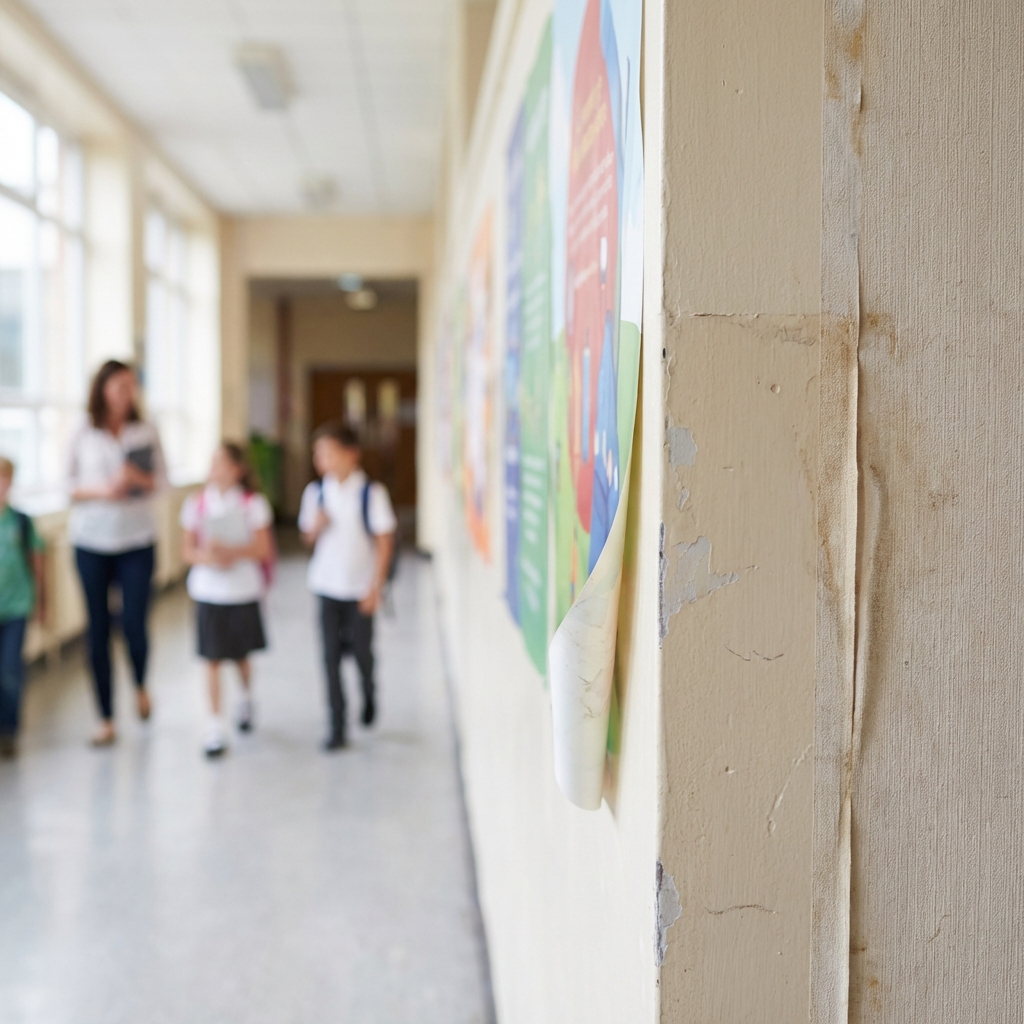
Illustration 3
Scalability Across Multi-Building Districts and Nationwide Rollouts
Standardization is essential when a district operates dozens of sites or when a charter network spans multiple states. Direct-to-wall printing lends itself to repeatable, quality-controlled execution:
Template systems: Core identity elements—logos, color palettes, typographic scales—are codified once and adapted campus by campus without rework.
Preflight libraries: Approved art assets, translations, and legally reviewed safety language live in a shared, version-controlled repository.
Site mapping: Each building receives a graphic plan keyed to room numbers and zones. Stairwells, vestibules, and specialty classrooms use standardized logic for wayfinding and instructional overlays.
Color consistency: Calibrated color management produces faithful branding regardless of substrate differences between older and newer buildings.
Multi-team coordination: Crews can work in parallel across regions, with checklists and proofing protocols to maintain uniform results.
EastCoast MuralPros supports national rollouts by combining campus surveys, digital mockups, and tightly scheduled mobilization. The same methodology fits smaller districts, too: a two-school pilot in year one can scale to full-district implementation with predictable cost and quality in years two and three.
Real-World Impact: Branding, Safety, and Instructional Graphics Integration
When graphics are integrated—not layered as separate signs, posters, and stickers—the building communicates more clearly and looks cleaner. Schools see tangible benefits across missions:
Branding that signals culture: An elementary campus might align its house system with color-coded wings and mascots, while a high school highlights college acceptance stories and CTE certifications along main corridors.
Wayfinding that lowers anxiety: Multilingual arrows and zone labels reduce the cognitive load on families during events, conferences, and first-day arrivals. Visitors reach offices without interrupting instructional time for directions.
Safety and compliance that feel native: Bus loop diagrams near exits, lab safety icons at eye level, and clear shelter-in-place markers appear as part of the environment—no cluttered sign banks. Contrast and placement support readability.
Instruction in motion: A library’s perimeter might carry a timeline of local history, while stair risers display multiplication facts or vocabulary by grade band. Learning happens along the way to lunch or class.
Community and donor relations: A subtle, durable donor wall in the auditorium lobby respects the venue while celebrating contributions. Seasonal overlays—managed through a subscription—update messages without reworking the base design.
In aggregate, these improvements free staff from ad hoc solutions and reduce visual noise, creating spaces that are both calmer and more informative. The building becomes a silent partner in teaching, safety, and community engagement.
Conclusion: Future-Ready Wall Solutions for Modern Schools
K–12 facilities need wall systems that match the pace of school life: fast installs, durable finishes, and design that advances academic and operational goals. Direct-to-wall printing delivers a performance-based alternative to vinyl and wallpaper, providing high-resolution, seam-free graphics that are cleanable, scalable, and paint-over-ready for tomorrow’s changes.
For districts planning comprehensive upgrades—branding, wayfinding, safety, and instructional overlays—the approach aligns with procurement priorities: reliability, speed, and lifecycle efficiency. It also reduces waste and eliminates adhesives, supporting sustainability commitments without sacrificing quality.
EastCoast MuralPros equips schools to implement commercial school wall decor at campus and district scales, pairing technology with planning rigor that respects schedules and budgets. Whether you’re refreshing a single media center or rolling out a multi-building identity system, modern direct-to-wall printing turns everyday surfaces into durable, instructional, and future-ready assets for students and staff.


