
Direct-to-Wall Printing vs. Vinyl Wall Coverings: Which Solution Wins for Commercial Spaces
Introduction: Why Wall Graphics Matter in Commercial Environments
Direct-to-Wall Printing vs. Vinyl Wall Coverings: Which Solution Wins for Commercial Spaces
In commercial and institutional interiors, walls are not just surfaces—they are high-value real estate for brand expression, wayfinding, safety communication, and experience design. From healthcare corridors and university commons to corporate lobbies and multi-location retail, commercial wall graphics shape how people navigate, learn, and feel in a space. They can compress renovation timelines, defer major construction, and deliver measurable enhancements to occupancy, revenue per square foot, and employee or patient experience.
Today, the decision many facilities and workplace teams face is direct-to-wall printing vs vinyl. Both approaches can deliver large-scale imagery, but they diverge sharply in installation speed, durability, lifecycle maintenance, and sustainability. For organizations responsible for multiple sites or floors—landlords, corporate real estate, hospitals, and schools—choosing the right method is less about decoration and more about operational performance.
EastCoast MuralPros, a provider of custom wall printing and commercial interior branding, works with teams that need high-definition wall printing executed quickly, cleanly, and at scale. This article breaks down how direct-to-wall printing compares with vinyl wall coverings across the performance categories that matter to facilities, procurement, and design leaders.
What Is Direct-to-Wall Printing Technology
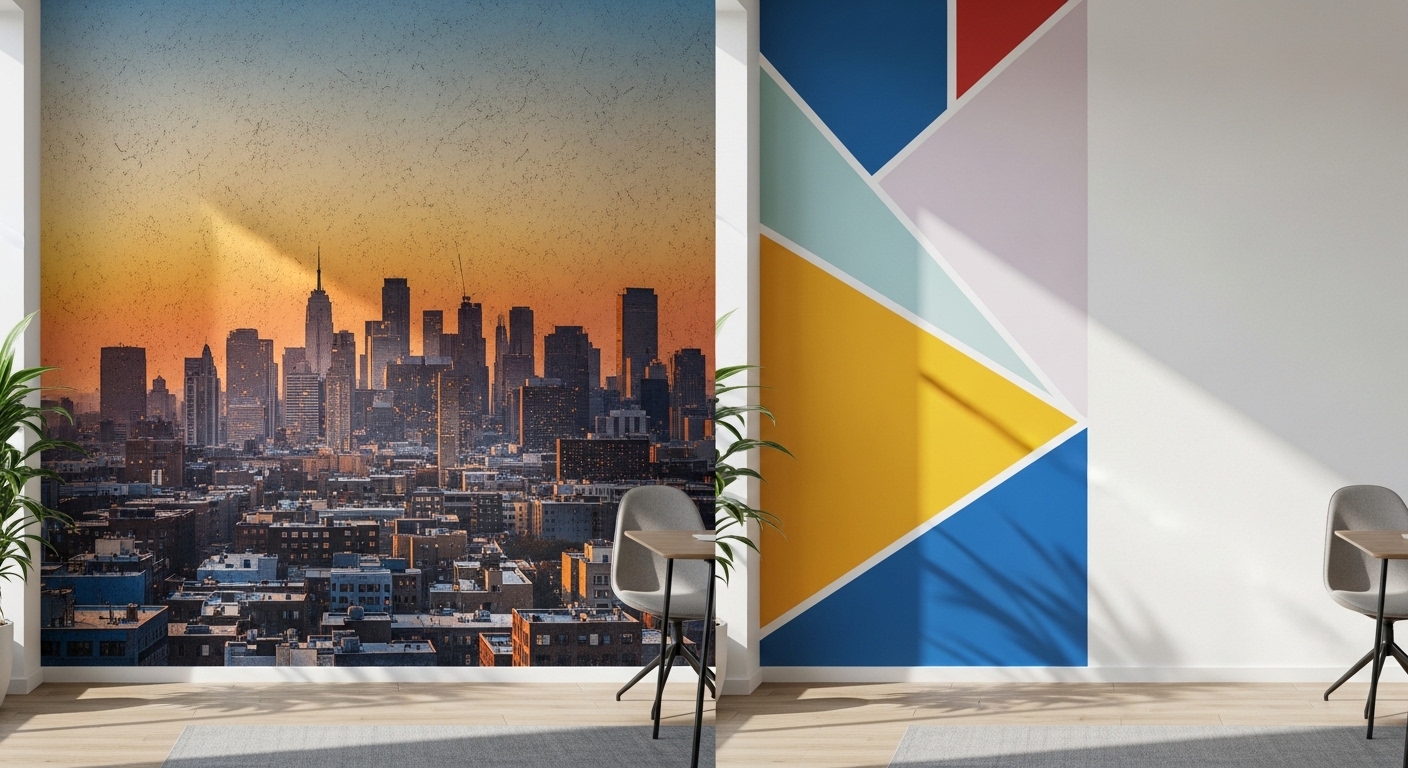
Direct-to-wall printing is a next-generation method that prints high-resolution imagery directly onto finished or unfinished surfaces—without vinyl, wallpaper, or liquid adhesives. A mobile large-format print system traverses the wall and cures ink as it prints, producing a durable, cleanable surface that reads as part of the architecture rather than an applied layer.
Key characteristics:
Substrate flexibility: Works on drywall, CMU block, sealed concrete, brick, and properly prepped surfaces. Texture telegraphs authentically, creating a built-in look.
Seam-free visuals: Because there are no panels, overlaps, or seams, artwork is continuous—even at architectural scale.
High-definition output: Photoreal, crisp detail suitable for brand moments, art installations, and instructional graphics that must be legible from various distances.
No vinyl or adhesives: Eliminates adhesive cure time, panel alignment, and the common failure points associated with vinyl.
Durable, cleanable finish: Cured inks produce a hard-wearing surface tolerant of regular cleaning in high-traffic zones.
Minimal disruption: On-site printing is typically completed in hours, not days, and can occur in occupied buildings during off-hours.
Paint-over-ready: When programs or tenants change, the surface can be lightly prepped and painted, avoiding time-consuming removal.
Teams like EastCoast MuralPros have extended the platform to support programmatic needs:
Full-campus and multi-building rollouts with consistent execution and color management.
Integrated wayfinding, safety, and instructional graphics—reducing sign clutter while improving clarity.
Subscription models for seasonal or strategic refreshes that keep spaces current without re-construction.
Collaborative tools to help digital artists scale their work correctly to architectural dimensions.
In-studio printing for doors, tables, and standees to coordinate environmental branding beyond walls.
For operations and capital planning, direct-to-wall printing shifts wall graphics from a bespoke art project to a repeatable, performance-based building solution.
Understanding Vinyl Wall Coverings and Traditional Methods
Vinyl wall coverings and digitally printed vinyl wraps have dominated commercial graphics for decades. They arrive in rolls or panels, are installed with adhesives or paste, and are trimmed and aligned on site. Variants include:
Printed PVC vinyl wall wraps for full murals
Commercial wallcovering materials (Type II/III) with printed graphics
Specialty wallpapers with textures or finishes
Hand-painted murals (traditional methods, not vinyl but commonly considered alongside)
Advantages of vinyl-based approaches:
Familiarity across trades and procurement channels
Wide range of stock textures, sheens, and finishes
Removable in some applications where temporary installs are required
Off-site fabrication reduces on-site equipment footprint
Limitations to keep in mind:
Seams and panelization are unavoidable on large walls and can detract from a premium finish
Edge lifting, bubbling, or shrinkage can appear with humidity swings or after cleaning
Removal can be labor-intensive, leaving adhesive residue and sometimes damaging paint or drywall
Shipping delays, reprints, and panel mismatches introduce schedule risk
Lifecycles may be shortened in high-traffic environments, increasing replacement frequency

Illustration 1
Vinyl remains a viable tool in certain scenarios—particularly when a specialty texture is essential—but it is increasingly evaluated against newer vinyl alternatives for offices, healthcare, and education that promise cleaner installations, faster schedules, and better lifecycle performance.
Installation Speed and Downtime Comparison
When facilities and workplace teams are planning brand rollouts or renovations, downtime and schedule certainty rank near the top of decision criteria. Here’s how the two methods typically compare.
Direct-to-wall printing:
Preproduction: Digital file prep and color proofing. No panel tiling or off-site fabrication.
Site prep: Light wall cleaning and masking; typical building clearances suffice. No adhesives to cure.
On-site print: Many feature walls can be completed in under five hours, even at large scale. Overnight or weekend work is common.
Disruption profile: Low. Occupants can often remain in adjacent areas. Minimal odor, no wet adhesives, and small on-site footprint.
Punch list: Because artwork is printed in place, there’s no panel mismatch or shipping damage. Touch-ups and alignment corrections happen live.
Vinyl wall coverings:
Preproduction: Panel tiling, printing, lamination (if specified), off-site QC, and packaging; then shipping. This alone can add one to two weeks to schedule.
Site prep: Surface priming may be required for adhesion. Installers typically need more staging area.
On-site install: Panel hanging, squeegeeing, seaming, trimming, and curing. Large walls can take a full day or more per space, often extending into a second day for finishing and cleanup.
Disruption profile: Moderate to high, especially in occupied buildings. Adhesives and solvents may have odors; areas often need to be cordoned off.
Punch list: Panel alignment issues, edge lift, and print defects are addressed post-install; reprints cause delays.
For multi-location rollouts, direct-to-wall printing reduces compound risk. On-site printing eliminates shipping delays and fabrication errors, while consistent device profiling maintains color integrity across sites. EastCoast MuralPros routinely stages national or campus-scale schedules with predictable nightly or weekend windows, limiting impact on operations.
Durability, Cleanability, and Lifecycle Performance
Durability is where the “graphics as infrastructure” idea either holds or falters.
Direct-to-wall printing:
Surface performance: Cured inks form a robust, cleanable layer with no seams to pick at or fail. In high-traffic corridors, fewer edges means fewer service calls.
Cleaning tolerance: Handles routine wipe-downs and disinfection protocols common in healthcare, education, and hospitality. Always confirm specific cleaning chemistries during preconstruction.
Environmental stability: Less susceptible to humidity-induced shinkage or lifting because there is no applied film. Texture in substrates like CMU remains intact and is not a dirt-catching seam.
Change management: When programs shift, the surface can be scuff-sanded and painted—no need to strip vinyl and adhesives, saving labor and wall integrity.
Vinyl wall coverings:
Wear patterns: Seams and corners are the weak points. Edge lifting can start at high-contact zones, and once panels are compromised, replacements are visible.
Cleaning tolerance: Many products accept gentle cleaning, but aggressive disinfectants can haze or delaminate films. In practice, janitorial variability often shortens lifespan.
Environmental stability: Temperature and humidity swings can telegraph through panel seams or cause shrinkage, especially in perimeter zones and atriums.
Change management: Removal often requires heat and scraping. Adhesive residue can damage paint and drywall, leading to patching and re-priming before new finishes.
Over a typical three- to seven-year facilities horizon, direct-to-wall solutions are lifecycle-efficient, with reduced replacement and maintenance cycles. For teams managing hundreds of walls across a portfolio, that stability translates directly into lower total cost and fewer emergency work orders.
Cost Analysis: Initial Investment vs. Long-Term Maintenance
Budget conversations for wall graphics should consider more than the initial per-square-foot price. The full financial picture includes schedule risk, removal costs, and the impact of downtime.
Direct-to-wall printing cost dynamics:
Initial scope: Comparable to or sometimes higher than vinyl, depending on access, wall condition, and after-hours scheduling. However, there is no material waste from panel trimming or failed adhesion tests.
Schedule savings: On-site printing compresses timelines, avoiding shipping, reprints, and lost nights due to panel defects. That reliability has a measurable value in occupied facilities.
Maintenance: Seam-free surfaces reduce reactive maintenance calls and panel replacements.
Changeovers: Paint-over-ready finishes avoid vinyl tear-downs, adhesive cleanup, and wall repair labor. That single line item can shift the lifecycle math substantially.
Rollout efficiency: Centralized file management and on-site color consistency minimize rework across multi-location programs.
Vinyl wall covering cost dynamics:
Initial scope: Materials may price lower, but production steps (printing, lamination, packaging) and shipping add. Install labor increases with panel complexity.
Schedule risk: Reprints, shipping damage, and panel mismatches trigger cascading costs when crews are on site.
Maintenance: Seams and edges generate service calls, particularly in high-traffic corners, near doors, and along corridors.
Changeovers: Removal labor, disposal fees, and surface repair add unplanned costs—especially over large square footages or where walls were previously patched.
Waste and overage: Panelization requires overprints and extra footage to account for site conditions, adding to landed cost.
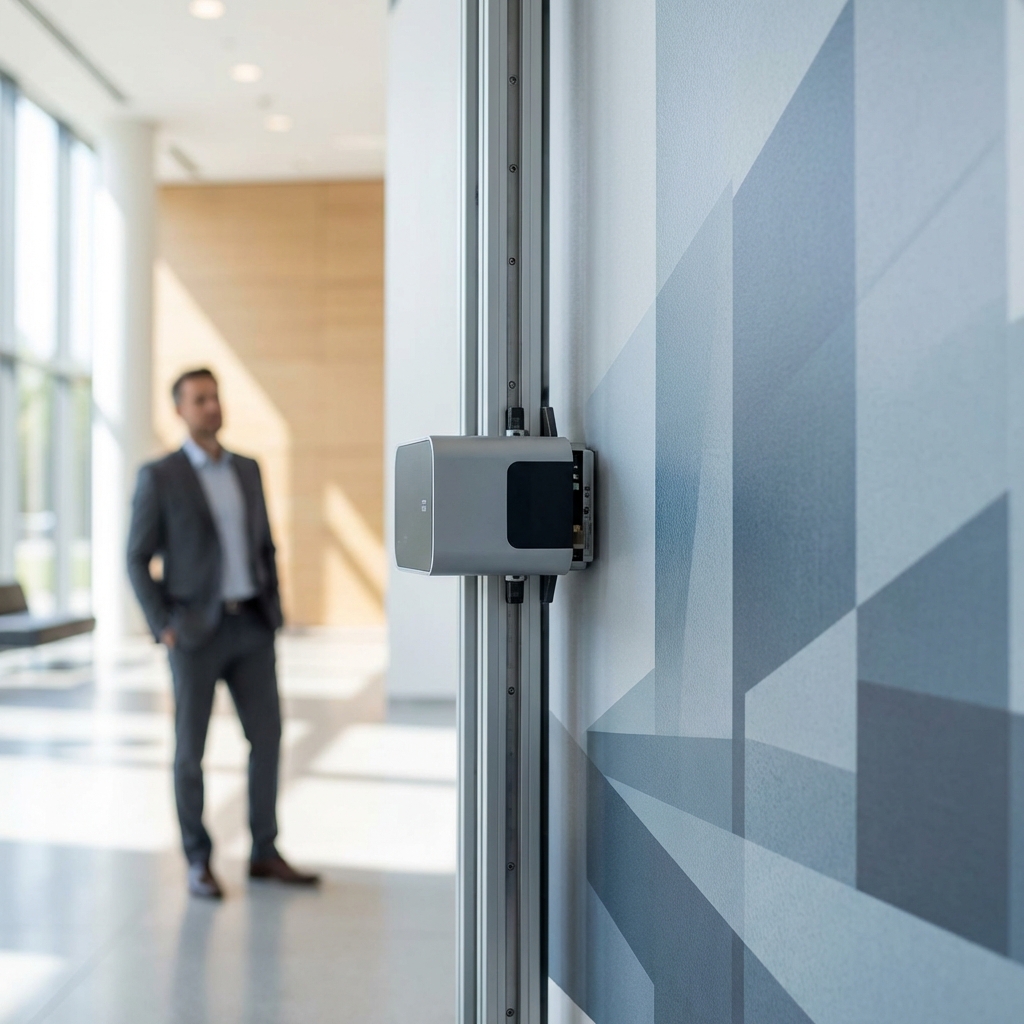
Illustration 2
A practical framework for facilities teams:
Run a 5-year scenario that includes at least one changeover event.
Add line items for disruption (nights of closure), punch-list risk, and rework probability.
Model a campus or portfolio scenario, not a single wall—because scale and repeatability are where performance differences compound.
For many institutional interior graphics programs, direct-to-wall printing’s schedule certainty and paint-over simplicity shift the total cost of ownership in its favor, even when initial quotes are close.
Design Flexibility and Visual Quality
Commercial brand and experience teams need wall graphics that reproduce complex visuals accurately and support varied program types—from wayfinding to hospitality storytelling.
Direct-to-wall printing strengths:
Visual fidelity: High-definition wall printing reproduces fine detail, gradients, and brand-critical colors with crisp edges at architectural scale.
Seam-free impact: Large fields of color or sky gradients render cleanly without seam breaks, avoiding panel shadows and overlaps.
Substrate options: Drywall, CMU, concrete, and brick can all be used to evoke different aesthetics. Texture shows through, reinforcing an integrated, built-in look.
White and layering: Ability to print with white layers or underbases (where supported) expands possibilities on darker or colored substrates.
Program versatility: Seamless integration of wayfinding, safety, and instructional graphics reduces sign clutter and supports compliance without sacrificing design.
Multi-asset coordination: In-studio printing on doors, tables, and standees brings identities and campaigns into three dimensions for cohesive storytelling.
Artist workflows: Collaborative tools help digital artists scale vector and raster art properly to walls, ensuring that small-screen intentions translate to full-scale installations.
Vinyl wall covering strengths:
Specialty finishes: Access to embossed textures, metallic sheens, or linen-like appearances not achievable with direct print on wall.
Temporary use: In short-term retail activations or pop-ups where removability in days or weeks is the priority, peel-and-stick products can be appropriate if surface prep allows.
Glass and smooth panels: For glass partitions or fixtures where cling or easily swapped graphics are needed, film-based solutions remain useful.
Design trade-offs to plan for:
If your concept relies on a specific embossed texture, vinyl may be the only path—but expect seams and paneling.
If your concept emphasizes seamless, photoreal expanses and integrated messages across complex corridors, direct-to-wall will typically produce a cleaner result with less maintenance.
For education environments specifically, see how high-resolution direct-to-wall printing supports campus-scale placemaking and wayfinding in EastCoast MuralPros’ article on High-resolution direct-to-wall printing.
Sustainability and Environmental Impact
Sustainability is no longer a “nice to have” for owners and operators—it is embedded in ESG reporting, procurement scoring, and capital project planning.
Direct-to-wall printing:
Material efficiency: Eliminates the plastic substrate, release liners, and much of the packaging associated with vinyl. What’s printed is what’s used.
Waste reduction: No panel offcuts or misaligned reprints heading to the dumpster. On-site proofing and corrections reduce scrap.
Fewer replacements: Lifecycle-efficient performance means fewer landfilled materials over time.
Low-disruption operations: Shorter installs mean fewer overnight HVAC cycling adjustments and energy use associated with extended closures.
Vinyl wall coverings:
PVC content: Many vinyls are PVC-based; end-of-life disposal options are limited, and recycling is not widely available at scale for contaminated wallcoverings.
Adhesives and liners: Adhesive waste and release liners add to the waste stream; some adhesives can complicate indoor air quality during install.
Frequent changeouts: Shorter lifespans in high-traffic areas increase material throughput and landfill contributions.
For sustainability teams comparing direct-to-wall printing vs vinyl in detail, EastCoast MuralPros outlines waste streams and lifecycle considerations in this primer: Direct-to-wall vs vinyl.
If you manage LEED projects or internal sustainability scorecards, the reduced material inputs and lower replacement frequency of direct-to-wall approaches are tangible advantages.
Best Use Cases for Each Solution
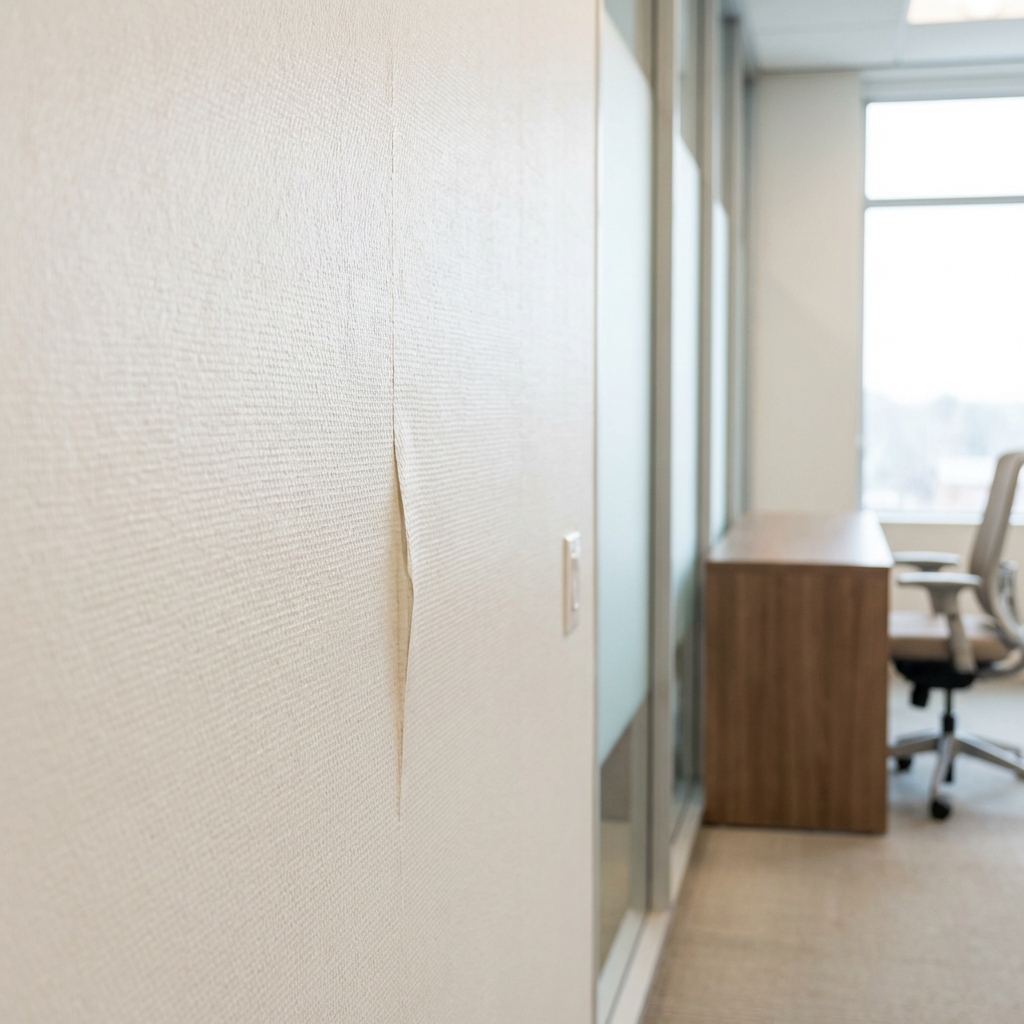
Illustration 3
Both methods have places where they excel. Match method to mission to maximize results.
Direct-to-wall printing: ideal scenarios
Occupied buildings and active corridors where low-disruption installation is critical
Healthcare and education facilities needing durable, cleanable, institutional interior graphics with integrated wayfinding and safety messaging
Corporate campuses and multi-location brands seeking consistent execution across sites and rapid refreshes via subscription models
Large, uninterrupted murals where seam-free surfaces and photoreal imagery deliver maximum impact
Full-campus solutions for schools and hospitals where schedule certainty and lifecycle performance matter over hundreds of walls
Brick, CMU, concrete, and other textured substrates where a built-in look is preferred
Museums, cultural institutions, and galleries requiring crisp, high-definition wall printing with minimal visual noise from seams
Vinyl wall coverings: where they still fit
Concepts that depend on specialty textures, emboss, or metallic finishes only available in vinyl materials
Very short-term activations where fast removability without repainting is a must and substrate conditions allow
Glass partitions or temporary partitions needing cling or easily swapped messages
Spaces where on-site equipment cannot be accommodated due to access constraints or specific compliance restrictions
When in doubt, pilot. Many teams engage EastCoast MuralPros to print a single corridor or feature wall as a proof-of-performance before greenlighting broader adoption.
Key Advantages and Disadvantages Summary
A quick operational lens on direct-to-wall printing vs vinyl:
Direct-to-wall printing advantages
Seam-free, high-definition visuals that look built-in
No vinyl or adhesives; reduced failure points and cleaner installs
Fast installation—often under five hours per feature wall—with low disruption
Durable, cleanable surfaces built for high-traffic environments
Paint-over-ready finish simplifies changeovers and reduces lifecycle cost
Consistent execution across multi-location and national rollouts
Compatible with finished and unfinished substrates (drywall, CMU, concrete, brick)
Integrated wayfinding and safety graphics reduce sign clutter
More sustainable than wallpaper and vinyl due to reduced materials and waste
Direct-to-wall printing considerations
Requires access for on-site printing equipment and stable environmental conditions during install
Specialty textures (e.g., heavy emboss or metallic) are not intrinsic to the method
Surface prep remains important; extremely porous or crumbling substrates may require sealing or repair
Vinyl wall covering advantages
Available in many specialty textures and finishes not possible with direct print on wall
Familiar to vendors and trades; removable in some short-term applications
Useful for glass or smooth panel applications requiring clings or films
Vinyl wall covering considerations
Seams, panelization, and edge lift can reduce visual quality and increase maintenance
Longer schedules due to off-site fabrication and shipping; higher disruption during install
Adhesives can off-gas and complicate occupied-area work
Removal and disposal add cost and waste; potential wall damage during changeovers
Greater risk of reprints and mismatches across locations, affecting rollout consistency
Conclusion: Making the Right Choice for Your Facility
For commercial landlords, corporate real estate teams, healthcare systems, schools, hospitality brands, and cultural institutions, wall graphics are operational tools—supporting identity, wayfinding, safety, and experience. Deciding between direct-to-wall printing vs vinyl should start with your constraints: downtime tolerance, durability requirements, lifecycle cost, and sustainability objectives.
If you need fast, low-disruption installs that deliver seamless, photoreal results and simplify future changeovers, direct-to-wall printing is typically the stronger, more durable wall solution.
If your concept depends on a specific embossed or metallic texture, or you are executing a very short-term pop-up with planned removal, vinyl remains a viable option—just budget realistically for panel seams, maintenance, and end-of-life removal.
EastCoast MuralPros helps teams deploy high-definition, adhesive-free, direct-to-wall systems across single buildings and national portfolios. The approach is a performance-based alternative to vinyl wall coverings and wallpaper, designed for speed, durability, and lifecycle efficiency. To explore how the method could fit your next rollout—or to pilot a corridor or feature wall—visit eastcoastmuralpros.com.
Contact us to learn more


