Sustainable Interior Branding Solutions for Commercial Spaces in 2024
Introduction: The Growing Demand for Sustainable Interior Branding
Across commercial real estate, healthcare, education, and corporate workplaces, the conversation around interior environments has shifted from “How fast can we update?” to “How responsibly can we transform our spaces?” Sustainable interior branding has become a board-level priority, shaped by ESG targets, occupant experience goals, and pressure to reduce waste without sacrificing speed or quality. Facilities teams need solutions they can deploy quickly, maintain easily, and scale across portfolios—without the lifecycle pitfalls of vinyl wall coverings, wallpaper, or construction-heavy upgrades.
Sustainability is no longer a nice-to-have; it’s a performance metric. Interior branding systems are now evaluated on material intensity, installation disruption, durability under high traffic, and end-of-life outcomes. Teams want eco-friendly wall graphics that perform like infrastructure: reliable, cleanable, and adaptable as programs, brand standards, and tenants evolve.
Direct-to-wall printing—such as the approach used by EastCoast MuralPros—has emerged as a practical, green interior design alternative that aligns with these demands. By printing high-resolution graphics directly onto finished or unfinished surfaces, organizations can achieve architectural-scale impact with minimal material use, low disruption, and a clear path for future updates. The result is sustainable commercial branding that supports occupant engagement, wayfinding, and storytelling—without the environmental baggage of adhesives and plastic substrates.
Why Traditional Wall Solutions Fall Short Environmentally
Conventional wall graphics—particularly vinyl wall coverings and panel systems—were designed for impact, not circularity. From manufacturing through removal, they introduce environmental compromises and operational hassles that add cost, time, and waste.
Key environmental drawbacks include:
Material intensity: PVC-based vinyls rely on petrochemicals, plasticizers, and stabilizers that are difficult to recycle and commonly end up in landfills. Wallpaper often includes coatings or backings that also complicate disposal.
Adhesives and off-gassing: Many wallcoverings require primers and adhesives that can introduce odors and complicate work in occupied spaces. Adhesive residues can persist, requiring aggressive removal and patching that further extends timelines.
Shipping and fabrication waste: Printed rolls, trims, and panels create excess material. Mismeasurements, fabrication defects, or transit damage often lead to reprints and additional freight.
Seams and failure points: Seams provide edges that bubble, peel, or collect grime. In high-traffic environments, those failure points shorten service life and increase maintenance cycles.
Removal and replacement: End-of-life usually means stripping, patching, skim coating, sanding, and repainting—multiple trades, multiple visits, and multiple days of space disruption.
For procurement and facilities teams, these factors translate to schedule uncertainty and a bigger environmental footprint. Even well-executed vinyl and wallpaper installations tend to require earlier replacement due to aesthetics, damage at seams, or changes in brand or tenant needs. In other words, the solution becomes the maintenance plan, pushing organizations toward recurring waste and recurring costs.
Understanding Direct-to-Wall Printing Technology and Its Sustainability Benefits
Direct-to-wall printing is a field-proven method that places high-resolution imagery directly onto architectural surfaces—no vinyl, no adhesive films, and no panel systems. A mobile print unit registers artwork to the wall and cures inks on contact, producing crisp, photoreal graphics that conform to surface textures while remaining seam-free at scale.
Sustainability benefits flow from this core simplicity:
Material reduction: Eliminating vinyl, backing papers, lamination films, and adhesive systems cuts bulk materials and end-of-life waste.
Fewer shipping touchpoints: On-site printing removes freight for large-format rolls or panels, reducing packaging and the likelihood of damage or reprints.
Low disruption: With installation windows often under five hours for typical scopes, facilities can avoid prolonged downtime, clear spaces quickly, and limit off-hours premiums.
Adaptable lifecycle: When branding or program needs change, walls are paint-over-ready. You update the surface finish rather than sending composite materials to a landfill.
Performance in place: Durable, cleanable finishes support high-traffic use without the pick points that lead to early failure in seam-based systems.
EastCoast MuralPros applies this technology across finished and unfinished substrates—drywall, CMU, concrete, and brick—enabling eco-conscious wall solutions for both new builds and existing facilities. High-resolution output supports brand storytelling, integrated wayfinding, and safety or instructional graphics without adding to signage clutter. For a deeper dive into the sustainability mechanics of this approach, see their overview on direct-to-wall printing.
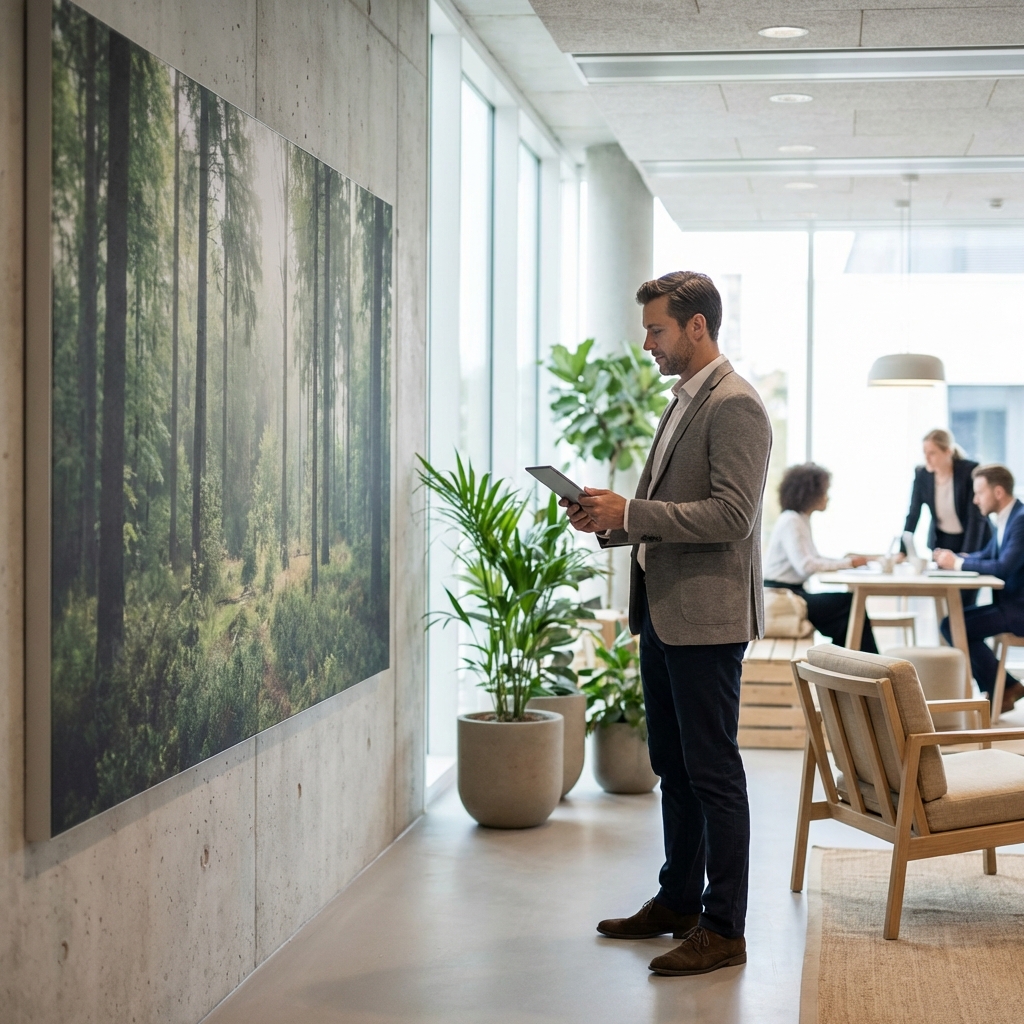
Illustration 1
Comparing Lifecycle Impact: Vinyl, Wallpaper, and Modern Printing Solutions
Sustainable interior branding is ultimately a lifecycle decision. The winning approach minimizes inputs, extends useful life, streamlines updates, and avoids waste-intensive removal. Here’s a practical comparison across common phases.
Material sourcing and fabrication:
- Vinyl and wallpaper: Depend on multi-layer substrates, coatings, and adhesives. Production waste and trim loss are common. - Direct-to-wall printing: Uses only inks on existing walls—no separate substrate, laminates, or adhesives to fabricate and transport.
Logistics and site prep:
- Vinyl and wallpaper: Require precise field measurements, shop fabrication, roll or panel packing, and careful shipping. Site prep often includes primers and adhesive-specific wall treatments. - Direct-to-wall printing: Artwork is assessed digitally and printed in place, reducing reliance on freight, sensitive packaging, and pre-coated walls.
Installation and disruption:
- Vinyl and wallpaper: Panel alignment, seam management, and adhesive cure times add complexity. Work in occupied facilities necessitates extensive protection, phasing, and off-hours labor. - Direct-to-wall printing: Rapid, clean installation with minimal masking, typically executed in a single onsite operation.
In-use performance:
- Vinyl and wallpaper: Seams become wear points; edges can be lifted by carts or cleaning equipment. Repairs are visible and often escalate into partial replacements. - Direct-to-wall printing: Seam-free surfaces are easier to clean and present fewer opportunities for picking, peeling, or moisture intrusion.
Updates and end-of-life:
- Vinyl and wallpaper: Removal is labor-intensive and generates substantial landfill-bound waste. Walls typically require repair and repainting. - Direct-to-wall printing: Updates can be layered or completely reset with standard paint, avoiding composite-material disposal.
Over the life of a program, these differences compound. Fewer materials in means fewer materials out. Teams avoid the logistics of reprints and deliveries, and they gain a predictable path to refreshes when initiatives change. EastCoast MuralPros’ subscription model supports scheduled updates—seasonal, academic-year, or campaign-based—without replacing substrates or adding construction waste.
Cost Efficiency and Long-Term Value of Sustainable Branding Systems
Sustainable commercial branding has to make sense on paper. The facilities math is straightforward: reduce materials, shorten install windows, protect uptime, and minimize unplanned maintenance. Direct-to-wall printing creates savings at each step.
Faster delivery, fewer trades: Typical projects complete in under five hours, avoiding multi-day adhesive cures, seam touch-ups, or panel refits. That means less off-hours labor and fewer vendor mobilizations.
Lower shipping and remake risk: On-site printing removes a common source of cost overruns—freight damage, fabrication errors, or field-fit surprises. If a wall is off by an inch, the printer adjusts in real time.
Longer service life through performance: Seam-free graphics reduce failure points and keep walls looking new longer. Cleanability standards match high-traffic environments, from corridors to elevator lobbies.
Predictable refreshes: Brand evolutions, tenant turnovers, or wayfinding changes no longer require stripping and repaneling. Walls can be updated through new prints or repainted, which typically costs less than vinyl removal and reinstallation.
Lifecycle-efficient procurement: By shifting from one-time décor to a performance-based system, teams can budget total cost of ownership, build refresh cycles into operating budgets, and document waste avoided for sustainability reporting.
For corporate real estate and institutional owners, speed is value. The ability to mobilize during a weekend, open Monday, and avoid rework reduces opportunity cost. EastCoast MuralPros’ approach also scales well to partial scopes—pilot floors, single wings, or phased cross-campus rollouts—so decision-makers can validate outcomes before committing capital at full scale.
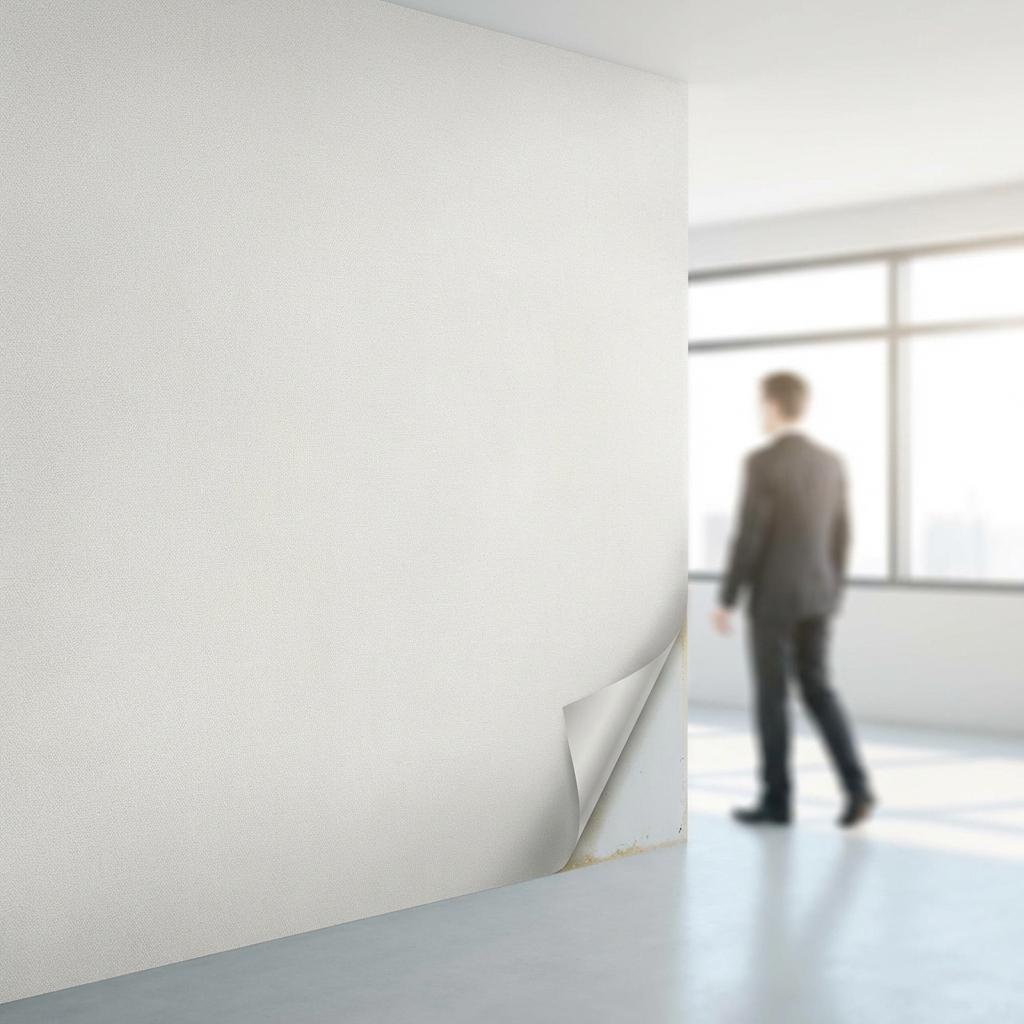
Illustration 2
Scalability Across Multi-Location Facilities Without Environmental Compromise
Branding at campus or enterprise scale typically magnifies every friction point: color inconsistency, shipping delays, variance in local installers, and divergent maintenance outcomes. A sustainable interior branding system must standardize execution while minimizing resource intensity.
Direct-to-wall printing supports scalability through:
Centralized file prep and local deployment: A consistent print profile and calibrated process enable predictable color and resolution across sites, avoiding the waste and reprints that follow mismatched outputs.
Fewer physical goods: Limiting physical inventory to inks and on-site equipment eliminates pallets of rolls and crates of panels, along with the packaging and emissions they entail.
Portfolio-friendly logistics: One crew can complete multiple walls in a location, then advance to the next site with minimal freight. For national campaigns, this can significantly reduce material and shipping miles compared to moving large-format substrates.
Compatibility with varied conditions: The method prints onto drywall, CMU, concrete, and brick—common substrates across offices, healthcare, education, and public-sector facilities—so design intent doesn’t have to change wall to wall.
Consistency in occupied spaces: Low-disruption installation supports active hospitals, schools, and workplaces, allowing programs to proceed without extended closures or complex swing-space planning.
EastCoast MuralPros also provides collaborative tools for digital artists and brand teams to scale artwork, manage approvals, and coordinate multi-location rollouts. That back-of-house rigor—intake, mockups, survey verification, and quality checks—prevents the hidden waste of rework, overnight shipments, and schedule slips that strain budgets and sustainability goals.
Implementing Sustainable Branding in Healthcare, Education, and Corporate Environments
Sector needs vary, but the operational priorities are similar: reduce downtime, deliver durable results, and meet strict cleanliness and safety requirements. Here’s how sustainable facility upgrades with direct-to-wall printing align with each environment.
Healthcare systems and medical facilities:
Infection-control aware surfaces: Seam-free graphics reduce crevices where soil can accumulate, and cleanable finishes support routine maintenance protocols.
Wayfinding and safety integration: Departments, routes, and code cues can be printed directly onto walls, minimizing signage clutter while improving legibility and flow.
Low disruption in occupied areas: Rapid installation windows and minimal odor profiles suit sensitive spaces, including clinics, diagnostic corridors, and family waiting zones.
Family- and patient-centered environments: Photoreal imagery can humanize high-stress areas, support pediatric theming, and reinforce privacy zones without protruding fixtures.
Colleges, universities, and K–12 districts:
Campus-scale branding: Athletics, admissions routes, student services, and residence life can be upgraded swiftly during breaks or overnight shifts. See how this translates into portfolio-wide strategies in EastCoast MuralPros’ guide to campus branding with direct-to-wall printing.
Program agility: Labs become maker spaces; advising centers relocate. Paint-over-ready finishes let schools pivot without paying a removal penalty.
Integrated learning and safety: Instructional graphics, lab protocols, and evacuation routes can be embedded into corridors and rooms for durable, high-visibility communication.
Corporate and workplace environments:
Brand consistency at speed: Multi-floor or multi-market refreshes can be deployed with uniform quality and color control across the portfolio.
Experience design without construction: Cultural storytelling, departmental cues, and collaboration zones can be executed without millwork, panels, or heavy demolition.
Pilot-to-scale programs: Test a strategy on one floor, gather feedback, and scale. Subscription-based refreshes align with quarterly campaigns or leadership messaging.
Across all three sectors, EastCoast MuralPros supports full-campus or multi-building strategies, aligning design intent with operations. The outcome is eco-friendly wall graphics that improve navigation, reinforce identity, and enhance the day-to-day experience—without material-intensive construction.
Durability and Maintenance: Reducing Waste Through Performance-Based Alternatives
Durability is what turns a design gesture into infrastructure. A performance-based alternative to vinyl must hold up to rolling carts, hallway traffic, routine cleaning, and the realities of public occupancy. Direct-to-wall printing meets these demands by removing seams, anchoring imagery directly to the substrate, and delivering a finish that is both resilient and maintainable.
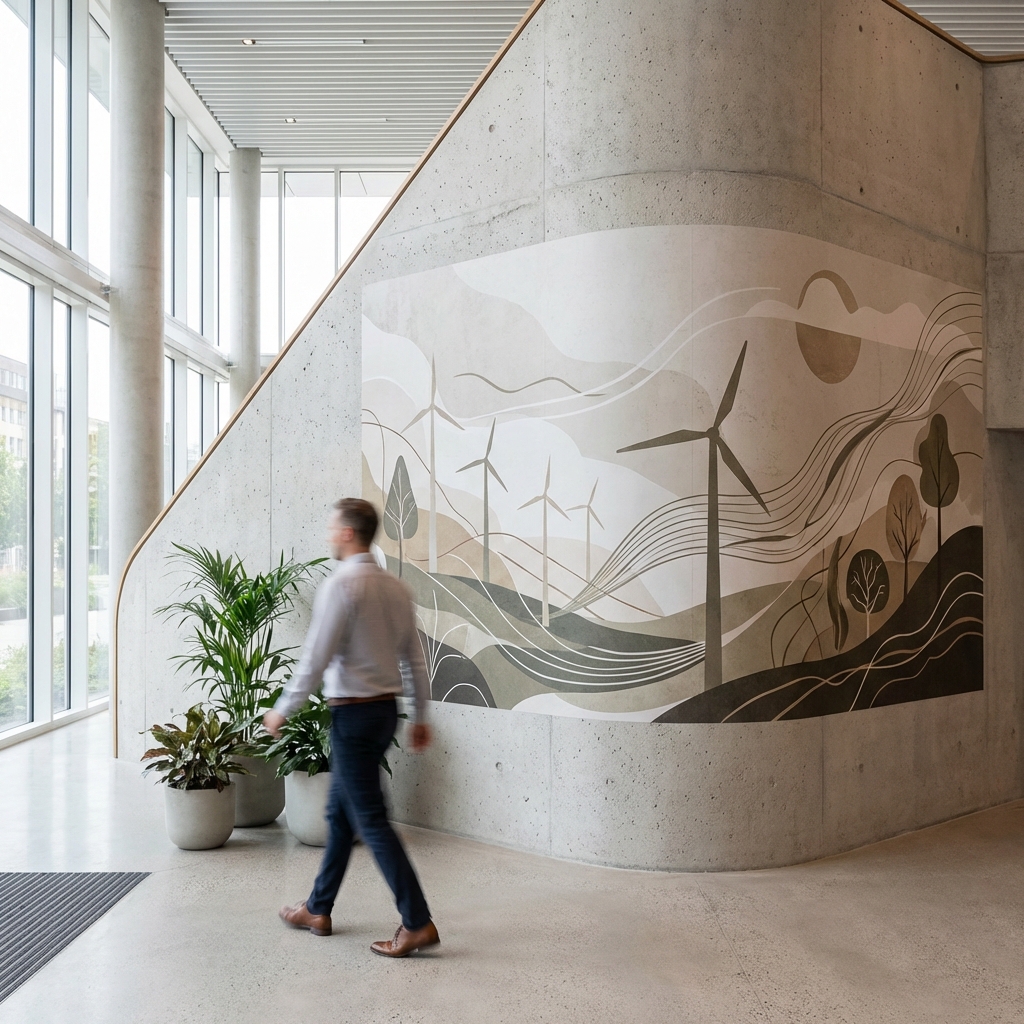
Illustration 3
Practical maintenance advantages include:
Cleanable surfaces: Routine wiping and standard cleaning protocols remove scuffs and marks without lifting edges or seams.
Fewer failure points: No seams means fewer opportunities for peeling or vandalism, extending service life and delaying refresh cycles.
Localized repairs: In the event of damage, small areas can be addressed without replacing entire runs of material, reducing waste and labor.
Paint-over readiness: When tenant mix, brand guidelines, or room functions change, the wall can be reset with paint—no adhesive-stripping or substrate replacement.
For facilities managers, these characteristics simplify the maintenance playbook. Instead of planning for re-lamination or full removal every few years, teams can schedule inspections during routine walk-throughs and address only what needs attention. EastCoast MuralPros designs finishes appropriate for high-traffic corridors, atriums, and public spaces, aligning aesthetics with the practical needs of daily operations in hospitals, schools, museums, and corporate campuses.
Design Flexibility and Brand Consistency in Sustainable Spaces
Sustainable interior branding should never feel like a compromise on design. Direct-to-wall printing supports photoreal, high-resolution imagery and crisp typography at architectural scale—across smooth drywall, textured CMU, or even exposed brick—so designers can specify experiences that feel integrated, not applied.
Use cases that benefit from this flexibility include:
Integrated wayfinding and instruction: Floor-level numbering, department color bands, QR-enabled navigation, and compliance messaging printed where occupants need them.
Experience zones and storytelling walls: Brand histories, donor recognition, product narratives, or cultural features executed without millwork or panel seams.
Seasonal or strategic refreshes: Subscription-based updates allow retail and hospitality brands to adjust campaigns without generating panel waste or adhesive removal.
Multi-surface ecosystems: In-studio printing on doors, tabletops, and standees extends identity beyond walls, creating consistent environments for lobbies, galleries, and event spaces.
Artist collaborations at scale: Collaborative tools help digital artists and curators adapt works to large formats while preserving color accuracy and detail for galleries and museums.
Consistency across locations is as much a process issue as a technology one. EastCoast MuralPros aligns brand standards with calibrated print profiles, mockups, and controlled approvals, then executes on site with predictable outcomes. The result is sustainable commercial branding that looks and feels intentional—everywhere it appears—while staying agile as organizations evolve.
Conclusion: Building Sustainable Commercial Interiors for Tomorrow
Sustainable interior branding is no longer a trade-off between speed, quality, and responsibility. By replacing vinyl and wallpaper with direct-to-wall printing, organizations can materially reduce waste, simplify logistics, shrink downtime, and establish a clear, low-impact path to future updates. The approach meets the real-world needs of facilities, procurement, and operations teams: reliability, schedule certainty, and durable performance.
For healthcare systems, it supports cleanable, legible environments without adding signage clutter. For education, it enables campus-scale identity and instructional graphics that can evolve program by program. For corporate and multi-location brands, it delivers consistent execution across portfolios, backed by a lifecycle-efficient model that turns refreshes into planned, low-waste events.
EastCoast MuralPros brings these advantages together with a focus on speed, precision, and long-term value—printing directly to walls for seam-free, adhesive-free results at architectural scale. For teams seeking eco-conscious wall solutions that perform like infrastructure, this is a practical, future-ready path to sustainable facility upgrades and a built environment that’s easier on people, schedules, and the planet.
Learn more at eastcoastmuralpros.com and explore how direct-to-wall printing can support your next sustainable interior branding initiative.
Contact us to learn more


