Custom Office Wall Murals: Modern Branding Solutions Beyond Vinyl and Wallpaper
Introduction: Why Custom Office Wall Murals Matter for Modern Workplaces
Modern workplaces do more than house teams—they communicate brand, support culture, and guide people through complex environments. When employees and visitors walk into a lobby, a project room, or a café space, they’re experiencing your organization’s priorities at full scale. Custom office wall murals give you a high-impact way to shape that experience, translating brand strategy and storytelling into the physical environment without adding clutter or construction.
In an era of hybrid work and distributed teams, the office has to work harder. It must be a destination that inspires, informs, and connects. Thoughtfully planned commercial wall graphics can reinforce mission and values, make wayfinding intuitive, and turn underused surfaces into purposeful, design-forward assets. Unlike a framed poster or a temporary banner, these graphics become part of the architecture itself—seam-free, scaled to the space, and designed to last.
Organizations that view the office as a brand channel see measurable advantages in recruiting, onboarding, and visitor perception. If you’re considering how to align interior design with brand strategy, you might find it useful to explore the idea of the office as brand. The core insight: integrated visual systems outperform isolated decorative gestures. For facilities and workplace teams, the missing piece has often been execution—how to deploy large-format, durable wall graphics quickly, across multiple locations, without the headaches of vinyl or wallpaper. That’s where next-generation direct-to-wall printing comes in.
EastCoast MuralPros specializes in this approach, providing custom office wall murals that meet enterprise standards for quality, speed, and lifecycle performance. It’s a shift from “art project” to operationally reliable interior branding—exactly what modern workplaces require.
The Limitations of Traditional Solutions: Vinyl, Wallpaper, and Hand-Painted Alternatives
Vinyl wall coverings and wallpaper have been widely used for corporate interiors, but they come with trade-offs that are hard to ignore at scale. Adhesive-backed materials introduce risk: temperature swings and humidity can lead to bubbling, peeling, or seam lift. Corners and columns are common failure points. When removal time comes, adhesives often leave residue or pull paint and gypsum off drywall—costly to repair during tenant turnover or space reconfiguration.
Wallpaper presents different constraints. Even higher-quality products rely on seams that can telegraph over time. Patterns solve for repetition, but brand storytelling rarely fits neatly into repeating motifs. Wallpaper also entails longer lead times, specialized installation, and compatibility issues with textured or unfinished surfaces such as CMU, concrete, and brick. In busy offices, carts, chairs, and rolling luggage scuff edges, accelerating wear and increasing maintenance.
Hand-painted murals deliver craft but create operational friction. They require days or weeks of onsite work, which means blocked rooms, odors, and scheduling shifts that many occupied buildings can’t support. Hand-painted results also vary by artist and are difficult to standardize across multiple locations. Touchups later can introduce sheen or color mismatch, and reproducing the same design in 20 offices can be impractical.
From a sustainability perspective, disposable materials and frequent replacements build waste. Vinyl, in particular, is difficult to recycle and typically ends up in a landfill after a single use. Facilities directors and procurement teams looking for a reliable alternative to vinyl wall coverings now prioritize performance, not novelty. They want a system that installs fast, looks seamless, survives high-traffic use, and is simple to refresh without generating piles of scrap.
How Direct-to-Wall Printing Technology Works
Direct-to-wall printing eliminates the layer of adhesive or paper altogether. Instead of fabricating and shipping panels, a mobile, high-resolution printer is brought onsite to image directly onto the prepared wall surface. UV-LED inks cure instantly as they’re applied, bonding to the substrate to create durable, crisp, seam-free graphics at architectural scale. The result is a photoreal finish that reads as part of the building, not something stuck on top.
The process begins with a site assessment and artwork planning. EastCoast MuralPros collaborates with workplace, brand, and design teams to evaluate surfaces—finished or unfinished drywall, CMU, concrete, and brick are all compatible—and to set expectations for color, resolution, and placement. Artwork is proofed digitally, then calibrated onsite to account for wall dimensions, lighting, and surface texture. This eliminates surprises that can occur when prefabricated panels meet field conditions.
On the day of installation, technicians set up the equipment, align imagery to architectural features, and print directly to the wall. Crisp lines, fine typography, and gradients hold up beautifully; high-resolution photography and illustrations render with gallery-level fidelity. Because inks cure instantly, there’s no waiting for adhesives to off-gas, no seams to align, and no shipping crates to manage. Spaces remain usable, and any necessary cordoning is measured in hours, not days.
The same technology extends beyond walls. EastCoast MuralPros offers in-studio printing on doors, tables, and standees for branded moments in conference rooms, event spaces, and town halls. Digital artists can scale their work across entire portfolios thanks to consistent color management and collaborative production tools. And when it’s time to move on—to a new campaign, a rebrand, or a different tenant—the paint-over-ready finish simplifies change without demolition or disposal.
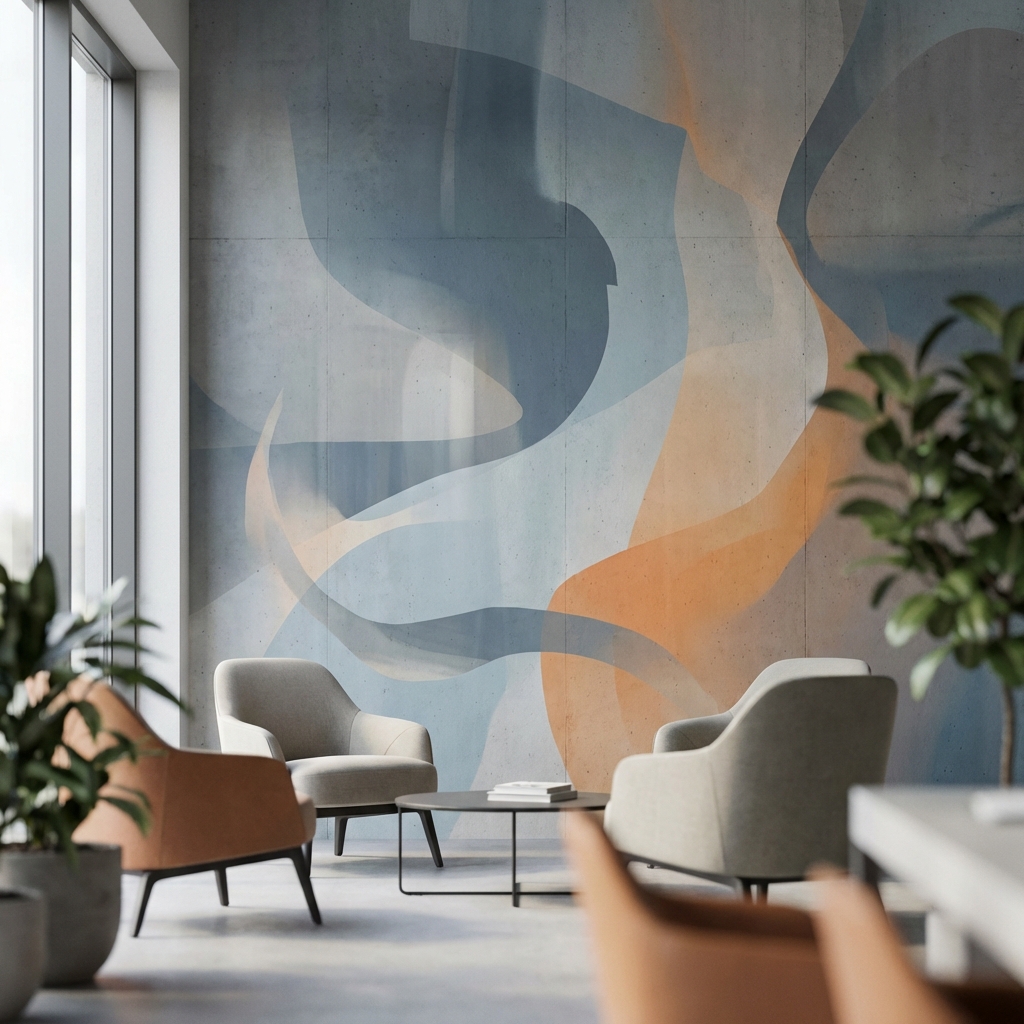
Illustration 1
Key Benefits of Custom Office Wall Murals for Commercial Spaces
Custom office wall murals produced with direct-to-wall printing provide a convergence of design ambition and operational practicality. They deliver visual impact without complicating maintenance or disrupting the business.
Seam-free, architectural integration: Graphics read as part of the building, with no panel joints, edge lift, or applied layers to manage.
Photoreal clarity at scale: High-resolution imagery, fine lines, and crisp typography maintain fidelity even across long corridors or double-height walls.
Broad surface compatibility: Finished and unfinished drywall, CMU, concrete, and brick support a wide range of workplace locations—including lobbies, stairwells, and atriums.
Speed and predictability: Most installations complete in under five hours, with minimal masking or room closures and no shipping delays.
Durability and cleanability: Surfaces are engineered for high-traffic environments and routine cleaning protocols common in offices.
Lifecycle efficiency: Paint-over-ready murals reduce future removal and patching costs; refreshes can be done at the source without tearing out material.
Sustainability: No vinyl or adhesives and fewer replacements significantly reduce waste compared to traditional wall coverings.
Consistency at scale: Centralized file control and onsite calibration produce reliable results across multi-location and national rollouts.
For teams comparing office branding solutions, the difference is pragmatic as much as aesthetic. You gain the creative freedom of large-format storytelling and the reliability of a performance-based system—exactly what facilities, procurement, and brand leaders jointly require.
Design Flexibility and Brand Integration Across Multi-Location Offices
The most successful workplace interior branding programs function as systems. They define zones (lobbies, hubs, focus rooms), content types (mission statements, local stories, product timelines), and visual rules so the environment feels cohesive from city to city. Direct-to-wall printing supports this systemization by delivering consistent color, scale, and quality without the variability of adhesives or paint crews.
Enterprise teams can build libraries of assets—hero imagery, iconography, patterns, messaging frameworks—and use them to generate site-specific murals that still follow global standards. EastCoast MuralPros’ collaborative tools help digital artists and internal designers scale their work. CMYK and spot color targets are profiled, proofed, and maintained, so a flagship headquarters and a regional office share the same visual language.
Standardize templates for statement walls, elevator lobbies, and collaboration zones.
Localize hero photography or messaging while maintaining color and typography rules.
Extend brand elements over challenging surfaces like CMU and brick without visual compromise.
Coordinate seasonal or strategic refreshes via a subscription model that keeps content current.
Consistency doesn’t mean uniformity. An effective system allows for contextual storytelling—highlighting team achievements, community partnerships, or industry milestones. If you’re building a business case internally, this approach aligns closely with the viewpoint that the office is a brand medium. It’s not simply decoration; it’s part of how your organization communicates and operates, backed by a production method that scales cleanly across a portfolio.
Installation Speed and Minimal Workplace Disruption
For many facilities and workplace leaders, the primary constraint is time. Teams need upgrades completed between all-hands meetings, during a brief vacancy, or over a weekend—without dust, odors, or punch lists extending into the workweek. Direct-to-wall printing is built for these realities.
Typical projects finish in under five hours per wall, including setup, alignment, and curing.
Installations can occur during nights or off-hours to avoid downtime for staff and visitors.
Noise and odor are minimal; UV-LED inks cure instantly and do not require open adhesives.
Occupied buildings remain operational. Conference rooms can be booked the next morning.
Because printing happens onsite, there’s no waiting for fabricated panels to arrive, no risk of shipping damage, and no staging of large rolls that disrupt corridors. Last-minute adjustments—center a headline differently, scale an image to avoid a thermostat—are straightforward, not project-derailing. Difficult-to-reach areas are planned in advance, and technicians work within standard safety protocols required in corporate real estate and multi-tenant buildings.
Compared to wallpaper or specialty coatings, the absence of demolition or removal means fewer steps, fewer trades, and fewer surprises. Where a traditional wall covering might call for patching, priming, and panel alignment over multiple days, direct-to-wall printing compresses the schedule to hours while producing a more integrated result.
Cost Efficiency and Lifecycle Value Over Time
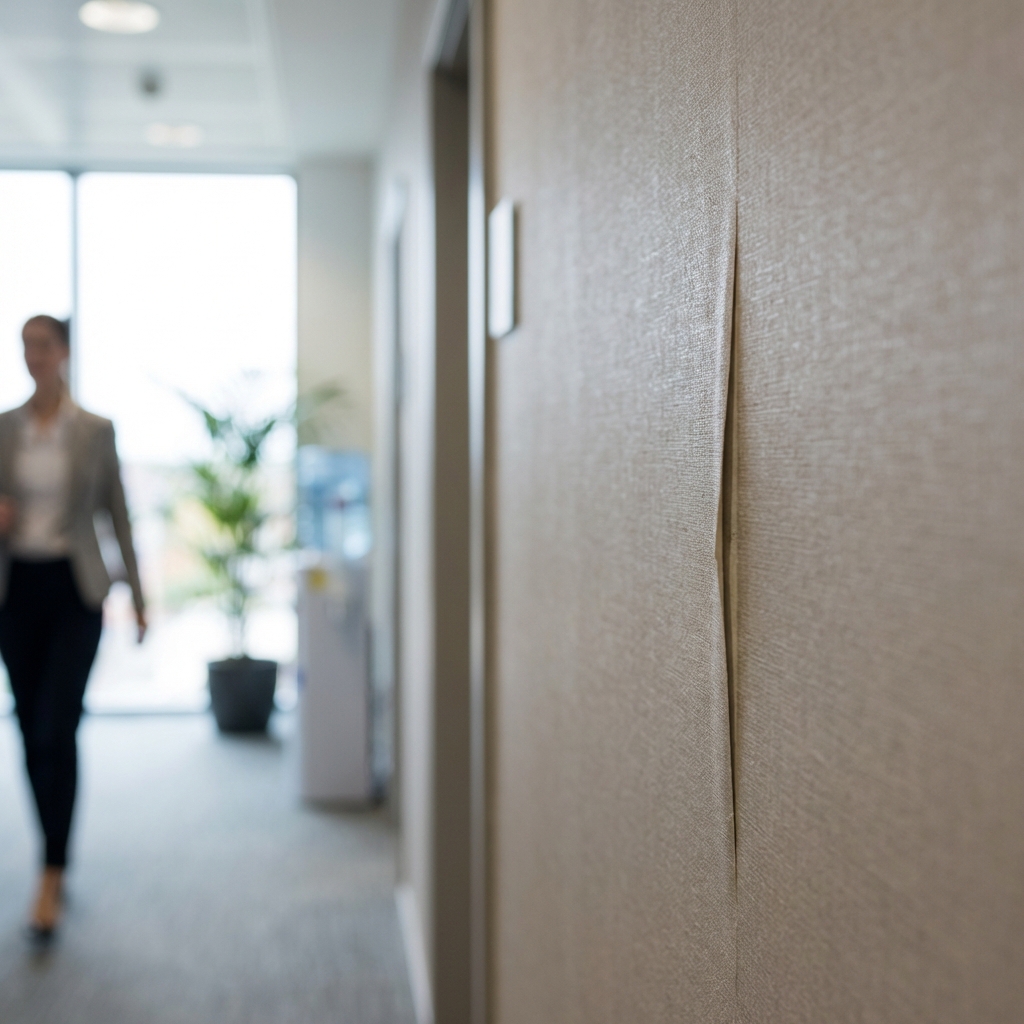
Illustration 2
The financial case for custom office wall murals depends on total lifecycle cost—not just initial installation. Adhesive-backed graphics and wallpaper often appear economical at the outset, but maintenance, replacement, and removal tilt the balance.
Reduced removal and turnover costs: Paint-over-ready finishes eliminate scraping adhesives, patching pulled gypsum, or refinishing seams during decommissioning or rebranding.
Fewer replacements: Durable, cleanable surfaces extend usable life in high-traffic corridors, elevator lobbies, and collaboration spaces.
Lower logistics overhead: Onsite production minimizes freight, handling, storage, and the risk of measurement or fabrication errors.
Predictable refresh cycles: A subscription model spreads expenses and keeps content updated strategically—ideal for HR campaigns, recruiting seasons, or product launch calendars.
When you avoid seams and adhesive failure, you avoid unplanned service calls and interim fixes. For multi-location portfolios, the value compounds as you prevent multiple rounds of waste, labor, and downtime. Procurement teams also appreciate the clarity: a single vendor partner accountable for file management, color integrity, and field execution across the portfolio.
For a deeper dive into operational and budget implications, see this overview of the advantages of custom wall printing. The key takeaway is that a performance-based alternative to vinyl and wallpaper can reduce both direct spend and the hidden costs that emerge during turnover and refresh cycles.
Durability and Maintenance in High-Traffic Office Environments
Office environments demand finishes that can withstand constant contact: rolling bags along corridors, chairs near café walls, backpacks brushing elevator lobbies. Direct-to-wall printed murals are engineered for this reality. UV-cured inks bond to the substrate, forming a hard, abrasion-resistant surface that maintains color and clarity under routine wear.
Cleanability is another operational advantage. Common cleaning protocols—dry dusting, microfiber wipes, and mild detergents—are compatible. Because there are no seams, edges don’t lift or trap dirt, and there’s no adhesive layer to degrade. In brighter spaces, color stability over time helps graphics look fresh for longer without frequent touchups.
Maintenance planning benefits from the precision of the process. If a small area is damaged, it can often be reprinted and blended to the surrounding wall with controlled alignment. For facilities managers balancing service tickets across large office footprints, that predictability saves time and avoids the all-or-nothing decisions typical of wallpaper systems.
The bottom line: these are durable wall graphics for offices, purpose-built for high-traffic environments. You gain the aesthetic quality of gallery-grade imaging and the resilience required by day-to-day operations.
Real-World Applications: Corporate Branding, Wayfinding, and Culture
Custom office wall murals are tools, not just art. When planned as part of office branding solutions, they solve practical challenges and elevate the day-to-day experience.
Corporate brand and storytelling:
Welcome walls in lobbies that establish brand presence without adding signage clutter.
Product timelines or innovation stories along primary corridors to engage clients and candidates.
Executive briefing centers with immersive visuals that frame conversations and demos.
Wayfinding and workplace navigation:
Zone identifiers, directional cues, and floor-level branding that integrate with architecture.
Color-coded neighborhoods and icons that guide movement without a forest of freestanding signs.
Safety and instructional information—such as stair prompts or egress notes—embedded legibly into the environment.
People and culture:
Values walls or recognition features near café spaces to anchor culture and morale.
Local community highlights—sports, arts, landscapes—that connect global brands to regional teams.
Campaign-based graphics supporting recruiting seasons, ERG initiatives, or wellness programs.
Collaboration and focus spaces:
Acoustically “quiet” visual fields for focus rooms and libraries—subtle textures that reduce glare and distraction.
Energizing, color-forward murals in project rooms to support creativity and sprint mindsets.
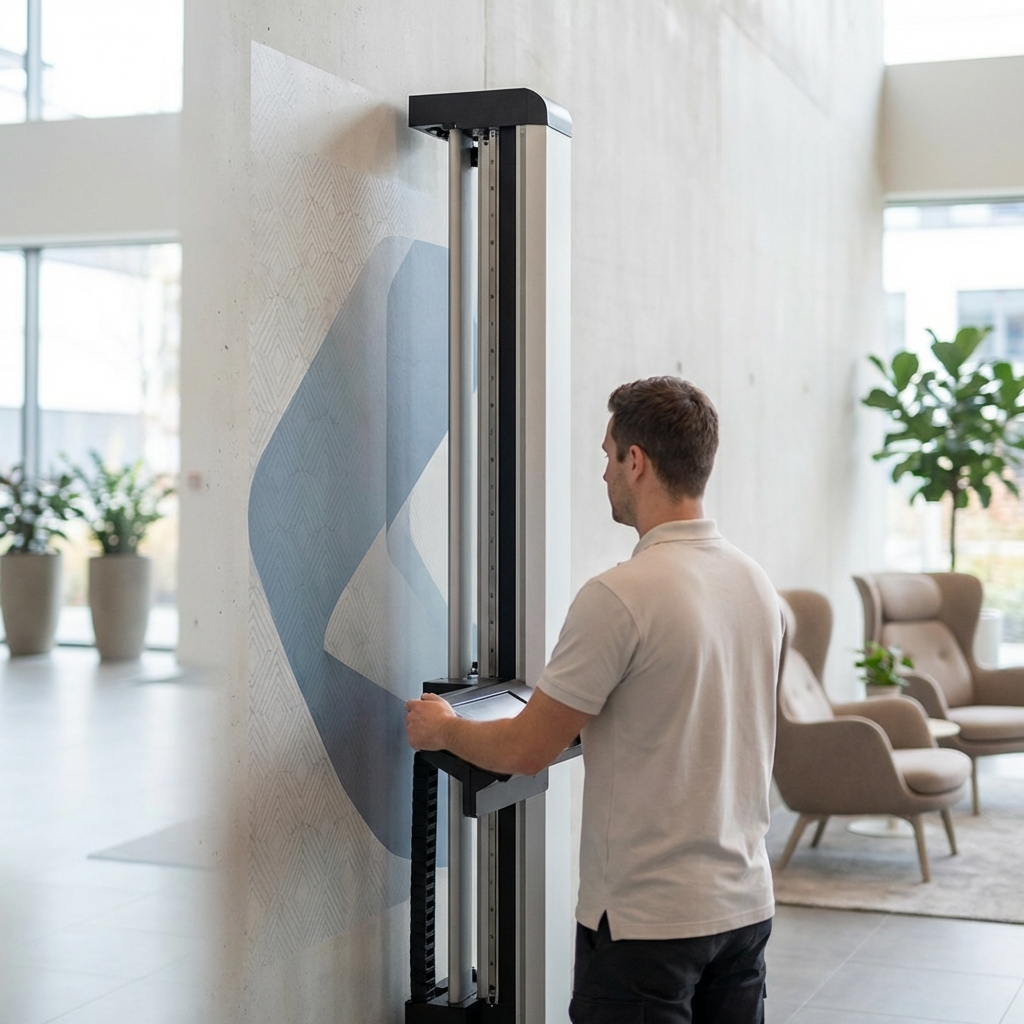
Illustration 3
Beyond walls, complementary pieces can extend the system. EastCoast MuralPros produces in-studio graphics on doors, tables, and standees for event branding, pop-up meeting zones, and town-hall experiences. The same design library and color standards carry across these elements, ensuring cohesive workplace interior branding wherever people gather.
Design Best Practices for Professional Office Murals
A successful program balances brand expression with legibility, maintenance, and the lived reality of the office. The following practices help teams move from inspiration to high-performing outcomes.
Start with intent and hierarchy:
Define the purpose of each wall: welcome, orient, inform, inspire, or focus.
Prioritize content so the most important message reads at a glance from typical viewing distances.
Use typographic scales and color contrast that remain legible in varied lighting conditions.
Design for architecture:
Align imagery to doors, columns, and datum lines; avoid splitting key content at corners.
Respect circulation paths; keep high-detail content away from pinch points where people can’t step back.
Consider surface texture (e.g., CMU or brick). Textured walls can add character but require thoughtful image selection and scaling.
Plan for light and finishes:
Evaluate natural and artificial light at different times of day. Avoid large, saturated darks where glare is an issue, or overly bright fields that fatigue the eye in heads-down zones.
Ensure color targets align to brand standards under real conditions; proof onsite when possible.
Prepare production-ready files:
Use native vector for logos and linework; supply high-resolution imagery suitable for architectural scale.
Establish color management protocols (CMYK and spot) and test critical hues.
Include sufficient bleed beyond trim areas for precise edge alignment onsite.
Integrate change over time:
Build modular content systems that can refresh seasonally without redoing entire walls.
Use a subscription model to pre-plan updates for recruiting cycles, product releases, or cultural initiatives.
Maintain a centralized asset library with version control, so multi-location rollouts stay consistent.
Coordinate with facilities and operations:
Confirm wall conditions early; ensure surfaces are clean, dry, and free of loose paint.
Schedule installations during off-hours; communicate room closures and reopening times to stakeholders.
Document final placements for future reference and fast reprints if a repair is needed.
For teams comparing approaches or building a playbook, you can reference the practical factors outlined in the article on the advantages of custom wall printing. The best design decision is one you can implement predictably, maintain affordably, and refresh strategically.
Conclusion: Strategic Investment in Workplace Environment and Brand Expression
Custom office wall murals have moved beyond decoration. With direct-to-wall printing, organizations can deliver office branding solutions that are fast to install, durable in daily use, and consistent across a portfolio—without relying on adhesives, vinyl, or wallpaper. The approach supports storytelling, wayfinding, and culture while satisfying the operational priorities of facilities and procurement teams.
EastCoast MuralPros brings this performance-based alternative to vinyl wall coverings into focus for commercial offices: high-resolution, seam-free graphics; low-disruption installation typically under five hours; compatibility with finished and unfinished surfaces; and paint-over-ready finishes that simplify future change. For companies rethinking the role of the workplace, it’s a reliable path to make the physical environment work harder for brand, people, and operations.
When you’re ready to align design ambition with execution certainty, consider a direct-to-wall strategy that scales—an investment in clarity, speed, and lifecycle value that modern workplaces demand.


