Best Wall Mural Companies for Commercial Spaces: A Complete Buyer's Guide
Introduction: Why Choosing the Right Wall Mural Company Matters
Best Wall Mural Companies for Commercial Spaces: A Complete Buyer’s Guide
Wall graphics are no longer “nice-to-have” decor. For facilities directors, procurement teams, and commercial landlords, mural decisions now touch real business drivers—brand consistency, wayfinding clarity, safety communication, tenant experience, and lifecycle cost. Selecting the right partner from the crowded field of wall mural companies directly impacts schedules, budgets, and outcomes across multiple locations.
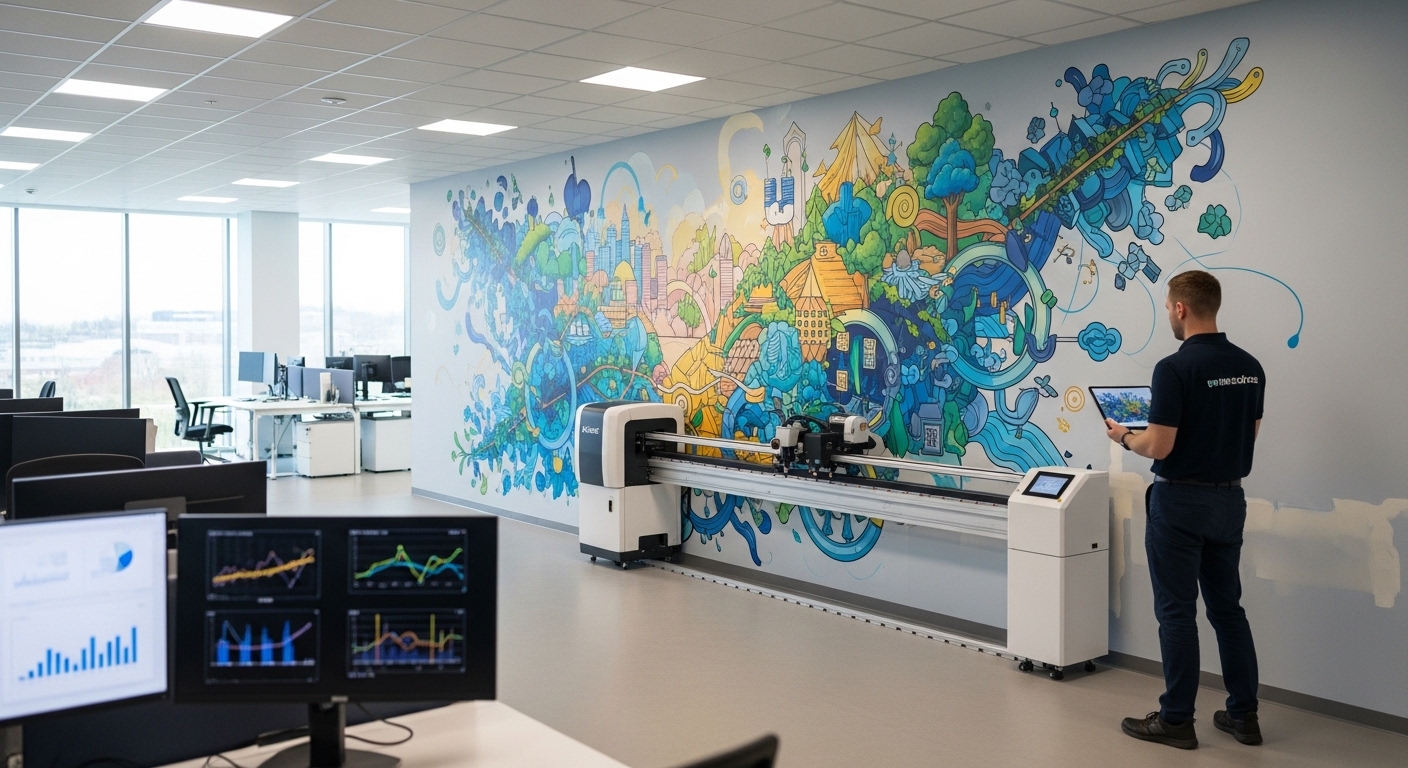
The market has changed quickly. Beyond vinyl wraps and hand-painted murals, next-generation commercial wall printing services use direct-to-wall printing technology to deliver high-resolution imagery straight onto finished or unfinished substrates—without adhesives, panels, or extended downtime. That shift redefines speed, durability, maintenance, and sustainability.
This guide explains what’s possible today, how top providers work, and what criteria matter most. You’ll also learn where a performance-focused partner such as EastCoast MuralPros fits when your goals include fast, predictable installation, durable wall graphics for businesses, and repeatable execution across campuses or national portfolios.
Key Differences Between Traditional Murals and Modern Wall Printing
Traditional mural approaches typically fall into three categories: hand-painted artwork, vinyl wall coverings or wallpaper, and printed panels applied to walls. Each can produce strong results, but they carry familiar risks—visible seams, adhesive failures, surface damage on removal, and lengthy install windows that disrupt operations.
Modern direct-to-wall printing changes the equation in several ways:
Integration with architecture: Imagery is printed directly on the wall surface, so visuals feel built-in, not applied. No seams, no panel edges.
Speed and predictability: With mobile, on-site printers and UV-LED curing, installations often complete in hours, not days. Many spaces remain fully occupied during work.
Surface flexibility: Drywall, painted CMU, concrete, brick, and even lightly textured surfaces can receive crisp, photoreal output without the sublayer buildup of vinyl.
Lifecycle efficiency: Paint-over-ready finishes simplify future changes. Instead of demo and disposal, you refresh with a new coat of paint or repeat printing.
Risk management: Fewer variables—no large adhesive fields, no heat-gun rework—means fewer failure points, less punch-list churn, and tighter control of quality.
For teams accustomed to managing vinyl campaigns and coordinating artists or sign shops, these changes relieve pressure on schedules, procurement complexity, and facilities maintenance.
Direct-to-Wall Printing vs. Vinyl Wraps and Hand-Painted Alternatives
Comparing direct-to-wall printing technology against vinyl and traditional painting helps clarify when each approach fits.
Where direct-to-wall excels:
Seam-free scale: Large, continuous walls print without panel joints, which often collect dust or lift over time in vinyl applications.
No adhesives: Eliminates bubbling, peeling, and residue risks and avoids humidity-induced failure modes common in high-traffic areas and healthcare environments.
Durability and cleanability: Cured inks form a robust, cleanable surface compatible with standard facility cleaning regimens, making it ideal for corridors, lobbies, and patient areas.
Rapid turnaround: Printing and curing happen in one pass on site. That removes shipping delays and fabrication errors, and it shortens overall project schedules.
Reversible by design: Paint-over-ready finishes reduce tear-out and disposal costs when branding or programs change.
Where vinyl or painting may still fit:
Short-lived, low-stakes seasonal decor with extremely low budgets.
Specialty textures or wallcovering effects a brand standard explicitly requires.
Historic preservation cases where no direct modification is allowed (though many jurisdictions accept paint-over-ready solutions).
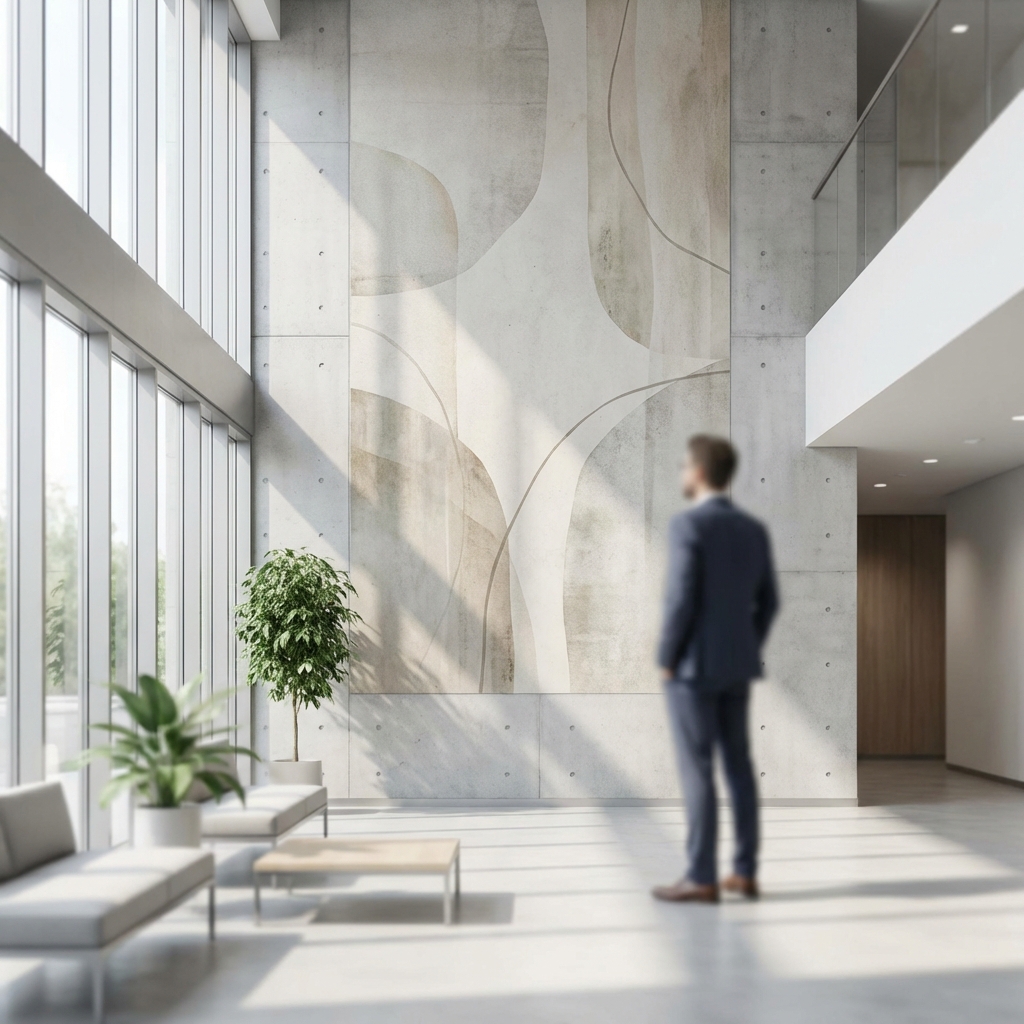
Illustration 1
For sustainability-conscious owners, the difference is substantial. Vinyl wraps introduce large volumes of PVC and adhesive waste at installation and removal. Direct-to-wall printing generates far less material waste and eliminates adhesive off-gassing and residue management. For a deeper dive on environmental impact, see this comparison on direct-to-wall printing vs vinyl.
Hand-painted murals still shine in certain cultural contexts or for singular artistic expression. However, for corporate and institutional programs that prioritize repeatability, precise brand colors, schedule certainty, and lifecycle simplicity, direct-to-wall printing offers a performance-based alternative that addresses day-to-day operational realities.
How Top Wall Mural Companies Deliver Speed Without Sacrificing Quality
The best mural installation companies consistently finish quickly because they engineer risk out of the process before anyone arrives on site. Look for these practices:
Early discovery and site survey: Photos, substrate assessment, moisture readings, and a review of access, hours, and adjacent operations. This prevents day-of surprises and ensures the surface is ready for ink adhesion.
Art preflight and color proofing: Top providers calibrate devices with color-managed workflows and ICC profiles to lock in brand colors. They’ll share proofs and, if needed, produce a small on-wall test print.
Operational staging: Because printing occurs on site, crews arrive with a predefined run plan and equipment sized for corridors, elevators, or tight spaces. Expect pre-labeled files, layout maps, and a pre-checked equipment manifest.
UV-LED or similar curing: Inks cure instantly or within minutes, so areas reopen quickly. That matters for hospitals, schools, hotels, and office floors that can’t pause activity.
Clean containment and protection: Floor, base, and adjacent surfaces are protected; negative air or dust control is used if required by a medical or lab setting. Noise is minimal and odor is low with modern inks.
Lean, skilled teams: Experienced operators print more square footage per hour with fewer punch-list items. You should see a predictable cadence from setup to final clean—many walls complete in under five hours.
Providers like EastCoast MuralPros also integrate digital artist collaboration and pre-production tools so creative teams can scale their work to architectural surfaces rapidly. Where accessories or freestanding elements are needed, in-studio printing on doors, tabletops, or standees minimizes onsite complexity while maintaining color and material consistency.
Evaluating Wall Mural Providers: Core Selection Criteria for Facilities Teams
Procurement and facilities leaders vet wall mural companies the way they evaluate any mission-critical vendor: by performance, risk, and scalability. Use this checklist to structure your selection:
Technology stack and capability
- True direct-to-wall printing technology with UV-LED curing - Maximum resolution and line acuity at viewing distance - Proven compatibility with drywall, CMU, concrete, and brick
Quality assurance and color management
- ICC color-management workflow and spot-color matching for brand palettes - Test-print process and documented visual standards - Photographable, measurable acceptance criteria (e.g., line weight, banding control)
Durability and maintenance
- Cleanability with common facility cleaners and disinfectants - Abrasion resistance suited to high-traffic areas - Paint-over-ready surface and documented repaint protocols
Safety and compliance
- Low-VOC inks and SDS documentation - Infection control procedures for hospital work (ICRA awareness) - Background checks and site-specific compliance (union/non-union as required)
Project management and schedule control
- Detailed pre-install checklist and site readiness requirements - Night or weekend work availability and minimal-closure approaches - Contingency plans for live environments and occupied buildings
Multi-site and rollout capability
- Consistent execution across campuses or national portfolios - Asset management for brand libraries and wayfinding systems - Subscription model or planned refresh program for seasonal or strategic updates
Risk and commercial terms
- Clear warranty tied to expected lifecycle and environment - COIs that meet your thresholds - References for projects similar in scale, substrate, and timeline
Integration with broader goals
- Wayfinding, safety, and instructional graphics expertise (to reduce signage clutter) - Collaboration with architects and interior designers - Coordination with contractors for renovations without construction or permitting
If your shortlist includes EastCoast MuralPros, you’ll see strengths in speed, seam-free architectural scale, on-site printing that eliminates shipping variances, and repeatable workflows suited to campuses and multi-location brands.
Real-World Applications: Hospitals, Schools, and Corporate Environments
The best commercial wall printing services deliver more than visuals—they solve operational challenges. Here’s how direct-to-wall solutions show up in key settings.
Hospitals and healthcare systems
Wayfinding and care-team identifiers printed directly on corridor walls reduce dependence on plastic signage plates and help patients navigate calmly.
Cleanable, durable finishes withstand routine hospital-grade disinfectants without edge-lift or moisture issues.
Graphics can integrate safety prompts, hand-hygiene reminders, and code-wayfinding while maintaining a warm, hospitality-forward aesthetic.
For practical strategies, this guide on interior branding for hospitals highlights solutions that balance durability with patient experience.
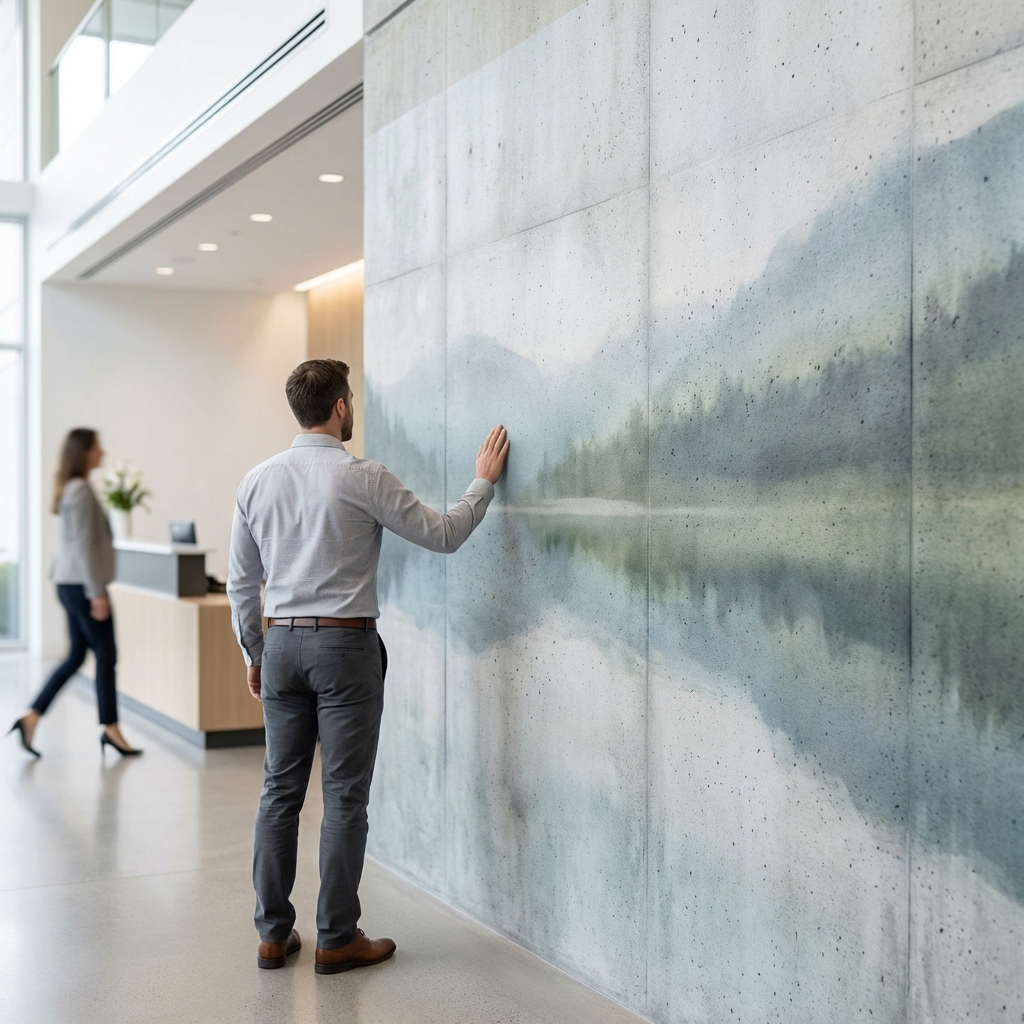
Illustration 2
K–12 and higher education
Full-campus rollouts unify athletics, academics, and student-life branding across academic buildings, gyms, dining areas, and residence halls.
CMU and brick commonly found in schools take crisp, high-contrast imagery for mascots, mission statements, wayfinding, and donor recognition.
Breaks, summers, and teacher workdays are ideal windows; many walls can complete in a single shift, reducing disruption to learning.
Corporate workplaces
Brand walls, town hall spaces, and collaboration zones receive photoreal, high-resolution imagery that scales to architectural features without seams.
Meeting rooms gain naming strategies, privacy patterns, and departmental cues printed on finished surfaces that can be repainted when programs change.
For multi-location portfolios, standardized kits of parts and color governance keep experiences consistent from HQ to regional offices.
Museums and cultural institutions
Exhibit graphics print directly on gallery walls for crisp typography and large-format imagery with fine detail.
Temporary shows benefit from paint-over-ready reversibility, removing the need to demo and dispose of panels or adhesives between rotations.
Retail and hospitality
Seasonal campaigns and brand stories change out quickly, with installations completed overnight to avoid business downtime.
In-store wayfinding, back-of-house instructionals, and safety markers integrate into architecture, reducing clutter and sign fatigue.
Across all environments, on-site printing and immediate curing let facilities stay open, while precision color control and seam-free output keep spaces looking purpose-built.
Cost-Benefit Analysis: Lifecycle Value and Total Cost of Ownership
A simple square-foot price misses the bigger financial picture. When facilities teams evaluate wall mural companies, the total cost of ownership (TCO) provides a more accurate comparison across vinyl, hand-painted, and direct-to-wall approaches.
Key drivers that improve TCO with direct-to-wall printing:
Fewer labor hours and site visits: Printing and curing happen in one pass. Most walls complete in under five hours, reducing overtime, escorts, and after-hours premium charges.
No adhesives or panel waste: Disposal costs and environmental fees related to vinyl removal are eliminated. You also avoid damage repair to walls from adhesive residue or aggressive removal.
Minimal disruption: Areas reopen quickly, preserving productivity in workplaces and patient/guest access in hospitals and hospitality settings.
Longer service life: Cured inks resist abrasion and cleaning chemicals common in high-traffic environments, reducing premature replacements.
Predictable refresh cycles: Paint-over-ready surfaces and subscription options create a planned cadence of updates with lower labor and material costs than re-wrapping or re-paneling.
Illustrative scenario
Vinyl solution: $12–$18 per sq ft installed, plus two nights of closures, lift rental, and future removal/disposal. Expected refresh every 3–5 years; edge-lift risk in humidity-prone areas.
Hand-painted mural: $20–$50 per sq ft depending on artistry and detail, plus longer installation windows and schedule risk tied to artist availability. Revisions can be time consuming.
Direct-to-wall printing: Competitive installed rate with far fewer ancillary costs (no shipping, no panels, no adhesives). One-night or same-day turnaround is typical; repaint or reprint for program changes.
For multi-site portfolios, these advantages compound. Standardized artwork and run plans eliminate repeated learning curves, and centralized asset libraries reduce rework. EastCoast MuralPros also supports subscription models for seasonal or strategic refreshes, smoothing budgets across fiscal periods and aligning updates with tenant turnover or brand campaigns.
Sustainability and Performance: Why Commercial Wall Graphics Matter
Sustainability increasingly factors into vendor selection. Compared with vinyl wall coverings and wallpaper, direct-to-wall printing can significantly reduce environmental impact and improve performance:
Material reduction: No PVC film, paper backers, or large adhesive fields to manufacture, ship, or dispose of. Waste from panels and liner materials is effectively eliminated.
Lower freight and packaging: On-site printing removes pallets, crates, and protective packaging, reducing both emissions and materials.
Low-VOC, fast-curing inks: Modern UV-LED formulations cure quickly with low odor, helping teams maintain indoor air quality within occupied buildings.
Lifecycle efficiency: When it’s time to refresh, paint over the existing graphics rather than demolish and discard panels or vinyl—less landfill, less labor, and less disruption.
Integrated messaging: Wayfinding, safety, and instructional graphics printed directly on walls reduce plastic sign plates and hardware over the life of a facility.
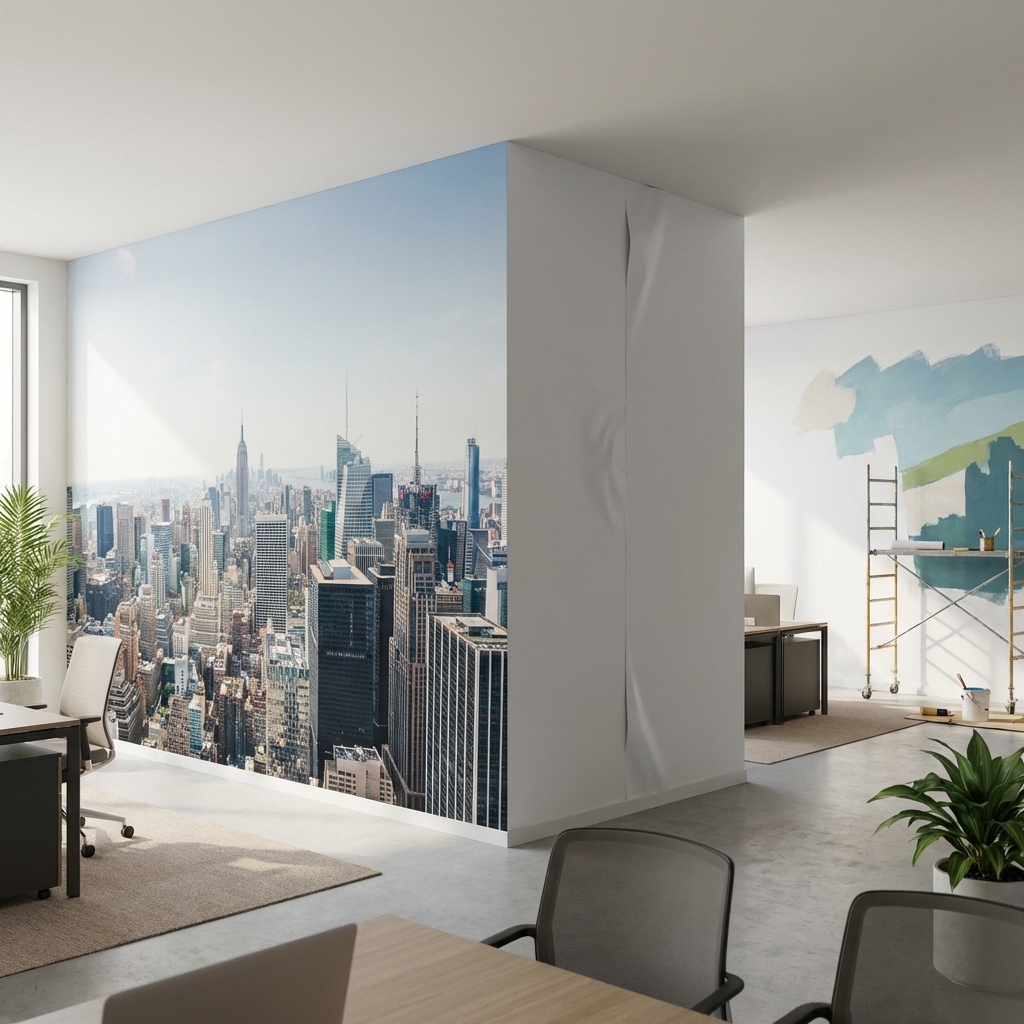
Illustration 3
Performance gains come along for the ride. Seam-free, photoreal graphics deliver crisp readability for wayfinding and compliance messaging. Museums and galleries benefit from fine detail and color accuracy at architectural scale. Hospitality and workplace teams gain finish quality that feels permanent yet remains adaptable as brand stories evolve.
Installation and Minimal Disruption: What to Expect
A professional provider should outline a clear, low-disruption path from kickoff to closeout. Here’s the typical journey with a direct-to-wall approach:
Pre-install coordination
- Site survey to confirm substrates, access, and power - Moisture or adhesion tests where necessary - Art preflight, scaling to architectural features, and color proofing - Schedule alignment for nights, weekends, or off-peak hours
Day-of operations
- Site protection for floors, base, and adjacent finishes - Equipment setup optimized to minimize footprint and noise - On-wall printing with immediate UV-LED curing; low odor and minimal VOCs - Rolling quality checks to ensure banding control and color consistency
Turnover and care
- Surfaces returned to service quickly—often within hours - Documentation for cleaning protocols and paint-over readiness - As-builts or photo documentation for brand governance and future refreshes
In sensitive environments—healthcare, labs, or food service—providers such as EastCoast MuralPros adapt to infection control requirements, implement containment as needed, and coordinate with facilities to avoid patient pathways and clinical schedules. Because on-site printing is compact and quiet, teams can maintain building operations with only small, temporary work zones.
Scaling Solutions Across Multi-Location Rollouts
Many wall mural companies can handle a single lobby wall. Fewer can deliver consistent results across dozens of sites with diverse substrates and floor plans. Successful rollouts share these traits:
Standardized design systems
- Brand-approved kits of parts (typography, iconography, privacy patterns, and wayfinding cues) - Scalable templates for different wall sizes and substrates - ADA and life-safety considerations baked into graphics from the start
Centralized asset management
- A single source of truth for artwork, color targets, and revision histories - Version control across pilot, regional, and national phases - Collaboration tools to help digital artists translate concepts to real-world walls
Repeatable field operations
- Pre-survey and readiness checklists for each location - Trained print operators familiar with site constraints, from corporate offices to CMU school hallways - On-site printing that eliminates shipping delays and last-minute fabrication errors
Quality assurance at scale
- Documented acceptance criteria and photo verification - Color calibration routines that travel with the equipment - Closeout packages for each site to inform maintenance and future refreshes
Programmatic refreshes
- Subscription models timed to seasonal campaigns, tenant changes, or brand updates - Paint-over-ready surfaces that make planned updates straightforward
EastCoast MuralPros is built around this multi-location discipline—seam-free wall graphics at architectural scale, consistent execution across campuses and national portfolios, and low-disruption installation suited for busy, occupied buildings.
Conclusion: Finding the Right Wall Mural Partner for Your Organization
When evaluating wall mural companies, start with outcomes: speed without disruption, durability in high-traffic spaces, precise color, and the ability to scale across sites with consistency. Direct-to-wall printing technology offers a strong mix of performance and sustainability—seam-free visuals, paint-over-ready finishes, and on-site production that cuts schedule risk and waste.
Look for providers who prove surface compatibility, own a rigorous color-managed workflow, and document cleanability and lifecycle performance. Make sure they can integrate wayfinding, safety, and instructional graphics without adding clutter, and that they can support programmatic refreshes through subscription or campus-wide planning.
If your organization is actively seeking a performance-based alternative to vinyl wall coverings and wallpaper, consider a partner like EastCoast MuralPros. The team specializes in direct-to-wall, high-resolution murals for branding and wayfinding, full-campus solutions for schools and hospitals, and low-disruption installations that finish in hours—not days. Explore what’s possible at https://eastcoastmuralpros.com and bring architectural-scale graphics to life with the control and predictability facilities teams require.


