Comparing Digital Wall Printing and Traditional Signage for Integrated ADA and Regulatory Branding
Introduction: The Evolution of Interior Wayfinding and Compliance
Wayfinding and code-compliant messaging used to mean plaques, modular sign families, and layers of vinyl. Today, integrated ADA signage murals use custom wall printing to merge regulatory wayfinding graphics with brand storytelling—without adding hardware that clutters corridors. As direct-to-wall printing matures, facilities teams can deploy consistent systems that are faster to install and easier to maintain than many traditional facility signage alternatives.
An integrated approach places high-visibility information—directional arrows, color-coded zones, room numbering, evacuation routes, and safety pictograms—directly onto finished or unfinished walls. It then pairs those walls with code-required tactile components (raised characters and Grade 2 braille) at doors, stairwells, elevators, and permanent room IDs. This satisfies ADA while reducing visual noise and vandal-prone plaques in corridors. In a hospital, for example, continuous color bands and bilingual icons can be printed along CMU corridors, with small compliant room-ID plaques at doorways; in a K–12 campus, mascots and behavior prompts can be layered with traffic-flow arrows and zone IDs.
This evolution is compelling when you need:
Fast refreshes during tenant turnover without permits or construction
Consistency across multi-location rollouts and national programs
Low-disruption installs in occupied buildings and high-traffic areas
Lower lifecycle costs versus vinyl and modular sign families
Integrated safety and instructional graphics without signage clutter
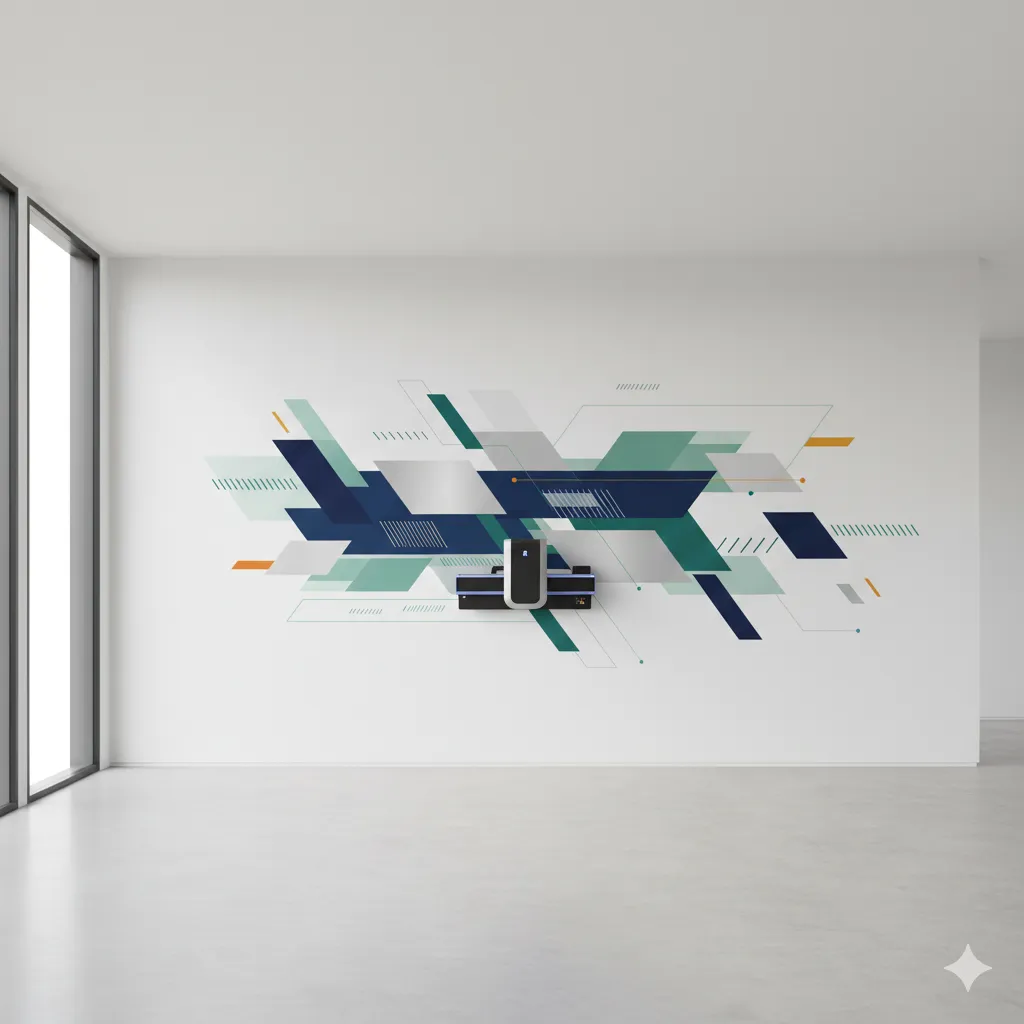
EastCoast MuralPros enables this model with adhesive-free, on-site direct-to-wall printing that typically completes in under five hours per area, with photoreal resolution and seam-free results on drywall, CMU, concrete, and brick. Surfaces are durable, cleanable, and paint-over-ready for future tenant or program changes, helping teams manage lifecycle and branding needs in tandem. The approach scales from single corridors to full-campus systems and can be paired with subscription refreshes for seasonal or strategic updates. For corporate environments, it bridges compliance and commercial interior branding, aligning wayfinding with the “office as brand” strategy discussed in our guide to corporate branding through space.
Overview: Direct-to-Wall Digital Printing for Integrated Visuals
Direct-to-wall printing turns walls into unified systems for branding, navigation, and code-required visuals. Instead of layering plaques, vinyl, and posters, integrated ADA signage murals place high-contrast cues, pictograms, room IDs, and zoning color bands directly into the architecture for better legibility and fewer obstructions. The result is a cleaner environment that supports commercial interior branding and daily operations without adding sign clutter.
ADA compliance still requires tactile and Braille where specified; the advantage here is design integration. EastCoast MuralPros prints visual fields and standardized placement markers that “host” small, code-compliant plaques, so tactile elements align with consistent typography, color contrast, and sightlines. Regulatory wayfinding graphics—like evacuation routes, stair IDs, elevator lobbies, and area-of-refuge instructions—can be embedded at the correct heights and contrasts, improving findability across entire corridors and campuses. This balanced approach delivers clarity and compliance without over-signing.
With custom wall printing that uses no vinyl or adhesives, EastCoast MuralPros produces photoreal, high-resolution imagery at architectural scale on drywall, CMU, concrete, or brick. Installations are fast—many corridors and lobbies complete in under five hours—and low disruption, suitable for occupied buildings. Surfaces are durable and cleanable, seam-free, and paint-over-ready for future tenant or program changes, making this one of the most lifecycle-efficient facility signage alternatives.
Examples of integrated use cases include:
Hospitals: color-coded units, door-band room numbering, stair/lift identifiers, and code notices without protruding hardware.
Schools and universities: mascot-forward wayfinding, lab and shop safety icons, emergency egress maps, and ADA-compliant classroom IDs.
Corporate workplaces: branded destination walls, meeting-room standards, and visitor guidance tied to reception zones.
Multi-site retail and hospitality: consistent zone graphics and back-of-house instructions, executed identically across locations.
As a national partner for on-site direct-to-wall printing and full-campus programs, EastCoast MuralPros removes shipping delays and fabrication errors while standardizing outcomes across portfolios. For teams planning to modernize building walls efficiently, this approach offers predictable schedules, superior legibility, and a more sustainable alternative to vinyl and wallpaper.
Overview: Traditional Physical ADA and Regulatory Signage Systems
Traditional ADA and regulatory systems rely on physical plaques and panels: room IDs with raised characters and Braille, stair and level identifiers, restroom symbols, evacuation maps, fire extinguisher markers, and code-required notices. These are fabricated in photopolymer, acrylic, metal, or laminate with non-glare finishes and high-contrast graphics, then mounted with adhesives, screws, or standoffs. Projects typically involve sign schedules, shop drawings, submittals, and punch-list replacements to satisfy inspectors and brand standards across a facility or campus.
Common components include:
Tactile room identification and permanent space labels with Braille
Directional and life-safety messaging (stairs, exits, areas of refuge)
Code notices (elevator, restroom, occupancy, hazardous materials)
Egress maps, photoluminescent markers, and floor/zone identifiers
While dependable and familiar to facilities teams, these systems can become visually fragmented as spaces evolve. Additive updates lead to cluttered walls, overlapping plaques, and piecemeal vinyl overlays that peel or yellow. Multi-location portfolios struggle with color accuracy and material consistency across vendors, and replacements often involve production lead times, shipping delays, and on-site hardware coordination.
From a design standpoint, traditional plaques sit apart from environmental graphics, limiting opportunities to unify regulatory wayfinding graphics with commercial interior branding. Facilities often want integrated ADA signage murals that preserve tactile compliance while streamlining hierarchy and reducing sign density. However, the default approach treats code plaques as isolated objects, making it harder to scale a clean, consistent system across floors or campuses.
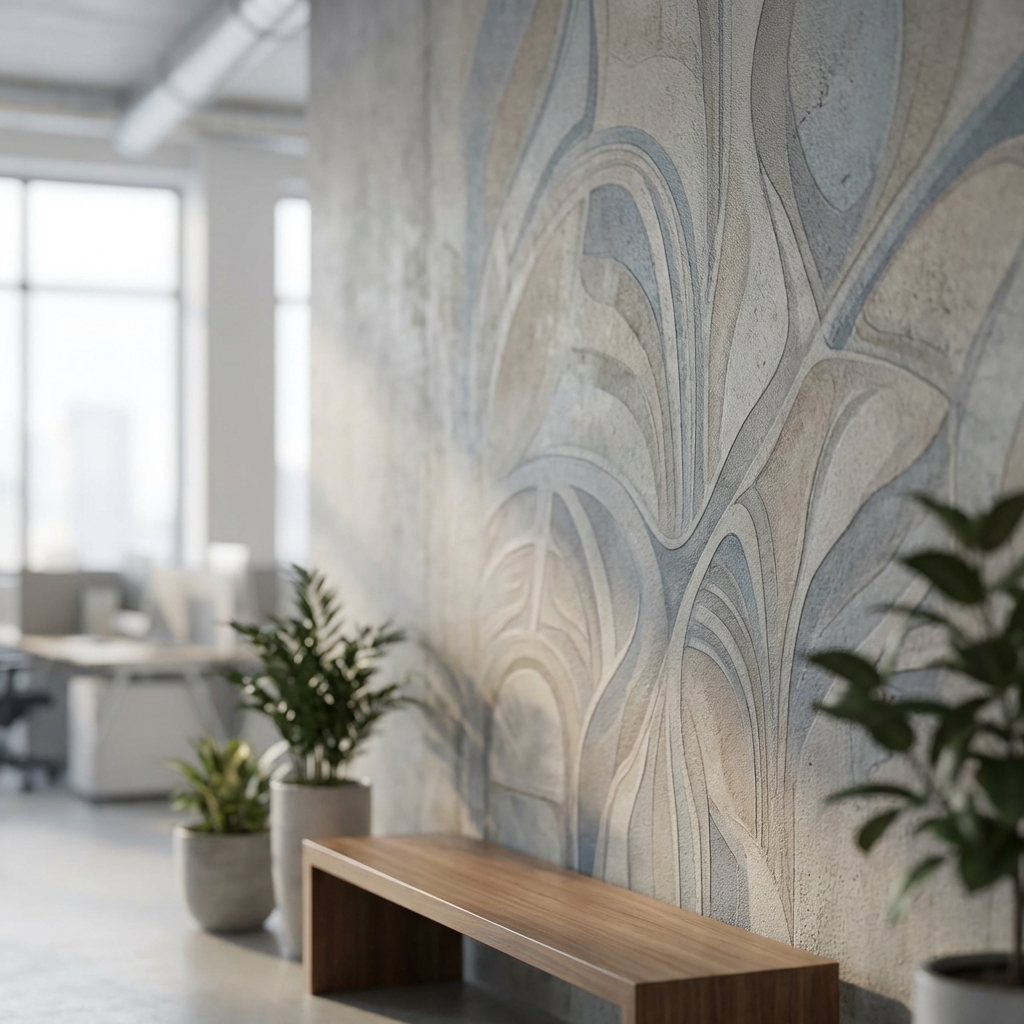
Image 2
To address these pain points, many teams now evaluate facility signage alternatives that blend compliant tactile plaques with large-scale backgrounds delivered via custom wall printing. EastCoast MuralPros helps bridge this gap by pairing code-compliant placards with direct-to-wall printing fields that carry zone colors, pictograms, and directional logic—reducing plaque counts, speeding updates, and improving legibility without sacrificing compliance.
Comparison: Aesthetic Integration and Architectural Seamlessness
Traditional plaques and vinyl panels can read as add-ons: seams telegraph under light, edges lift near corners, and mounting hardware interrupts sightlines. Integrated ADA signage murals created with direct-to-wall printing embed regulatory wayfinding graphics directly into the architecture, so color bands, arrows, icons, and level identifiers feel designed with the wall, not stuck on it. The result is a quieter visual field that reduces signage clutter in elevator lobbies, patient corridors, and classroom wings.
Because custom wall printing tracks reveals, door frames, and millwork precisely, graphics can align with datum lines and architectural joints across long runs without panel breaks. Photoreal imagery and crisp vector type scale cleanly over drywall, CMU, concrete, or brick, preserving material texture while delivering legible guidance. In a hospital, for example, a continuous color-coded route can lead to Imaging while small compliant plaques handle room IDs at the door.
Code-required tactile and Braille plaques remain in place for permanent room identification, but murals handle the heavy lifting of orientation and behavior cues. High-contrast typographic systems, universally recognized pictograms, and zone color fields deliver fast comprehension for diverse users. This pairing elevates commercial interior branding while meeting accessibility expectations without over-signing.
Compared with traditional signage assemblies, direct-to-wall printing offers:
Visual cohesion: one continuous surface versus mixed substrates, frames, and fasteners.
Architectural scale: uninterrupted bands that span corridors and atriums without seams or overlaps.
Lower disruption: on-site production in occupied spaces—often completed in under five hours—without drilling or shipping delays.
Cleanability and lifecycle efficiency: durable finishes that resist abrasions and can be painted over during future changes, avoiding wall patching.
Consistency at scale: identical color and type execution across multi-location rollouts.
EastCoast MuralPros integrates these capabilities into facility signage alternatives that balance compliance and design intent. Their team collaborates with architects and brands to engineer integrated ADA signage murals and wayfinding systems, delivering fast, predictable results for campuses, hospitals, and multi-site workplaces.
Comparison: Durability, Maintenance, and Lifecycle Efficiency
For integrated ADA signage murals, durability starts with how the graphic meets the wall. Traditional vinyl, wallpaper, and panel signs rely on adhesives and seams that can fail under cleaning regimens, humidity swings, and impact. Direct-to-wall printing creates a seam-free image embedded onto drywall, CMU, concrete, or brick, eliminating edges that lift and collect dirt. In high-traffic corridors or stair towers, fewer failure points translate into fewer work orders and a cleaner, more integrated look.
Maintenance profiles differ just as sharply. With custom wall printing, routine care mirrors painted walls—standard wipe-downs and periodic scuff touchups—rather than replacements. When regulatory wayfinding graphics or emergency messaging changes, teams can update targeted zones in hours without removing hardware or patching anchor holes.
Digital, on-site updates: reprint a revised arrow stack, floor number, or color zone along a corridor without disturbing adjacent areas.
Traditional signage: reorder plaques or panels, schedule removal and patch/paint, then coordinate reinstallation and punch-list fixes.
Vinyl/wallcoverings: address seam repairs, bubbling, and adhesive failure; reprint and rehang full drops to correct localized damage.
Lifecycle efficiency favors facility signage alternatives that minimize disruption and extend service life. Integrated ADA strategies often pair printed backgrounds—color-contrast bands, icons, stair/level IDs, and code-required notices—with a reduced set of compliant tactile plaques at door locations. This approach preserves ADA conformance while cutting the quantity of physical signs that get bent, stolen, or misaligned, and it prevents “signage clutter” on already tight walls.
EastCoast MuralPros advances this model with direct-to-wall printing that installs in under five hours per area, produces photoreal, high-resolution imagery at architectural scale, and delivers durable, cleanable surfaces for hospitals, schools, and offices. Paint-over-ready finishes make end-of-lease or program changes straightforward: roll a new coat, reprint, and move on—no adhesive residue or panel removal. For multi-site commercial interior branding and regulatory wayfinding graphics, their campus-scale execution and subscription refresh options drive predictable costs and consistent outcomes across locations.
Comparison: Installation Speed and Impact on Building Operations
When installing integrated ADA signage murals and regulatory wayfinding graphics, the critical variables are how quickly the work can be completed and how little it disrupts daily operations. Traditional sign packages often involve weeks of fabrication, shipping, and on-site drilling of plaques, plus seam alignment for vinyl or wallpaper. That means corridor closures, dust containment, odor from adhesives, and punch-list returns that extend timelines and frustrate occupants.
Direct-to-wall printing compresses this into a single on-site visit. Technicians print high-resolution, seam-free visuals directly to drywall, CMU, concrete, or brick, eliminating vinyl, adhesives, and panel hardware. EastCoast MuralPros routinely completes a lobby, corridor, or clinic zone in under five hours with a minimal equipment footprint, allowing work to occur during routine maintenance windows in occupied buildings. On-site production also removes shipping delays and reduces fabrication errors that cause rework.
ADA requirements remain straightforward: murals can carry high-contrast typography, color zoning, pictograms, and large numerals, while code-mandated tactile/Braille room IDs are mounted where required. In a hospital, for example, a weekend refresh might print color-coded wings, floor numbers, and directional bands across block walls, then install low-profile compliant plaques at doors—reopening for patients Monday morning. The same approach works for K–12 corridors and university labs that can’t spare multi-day shutdowns.
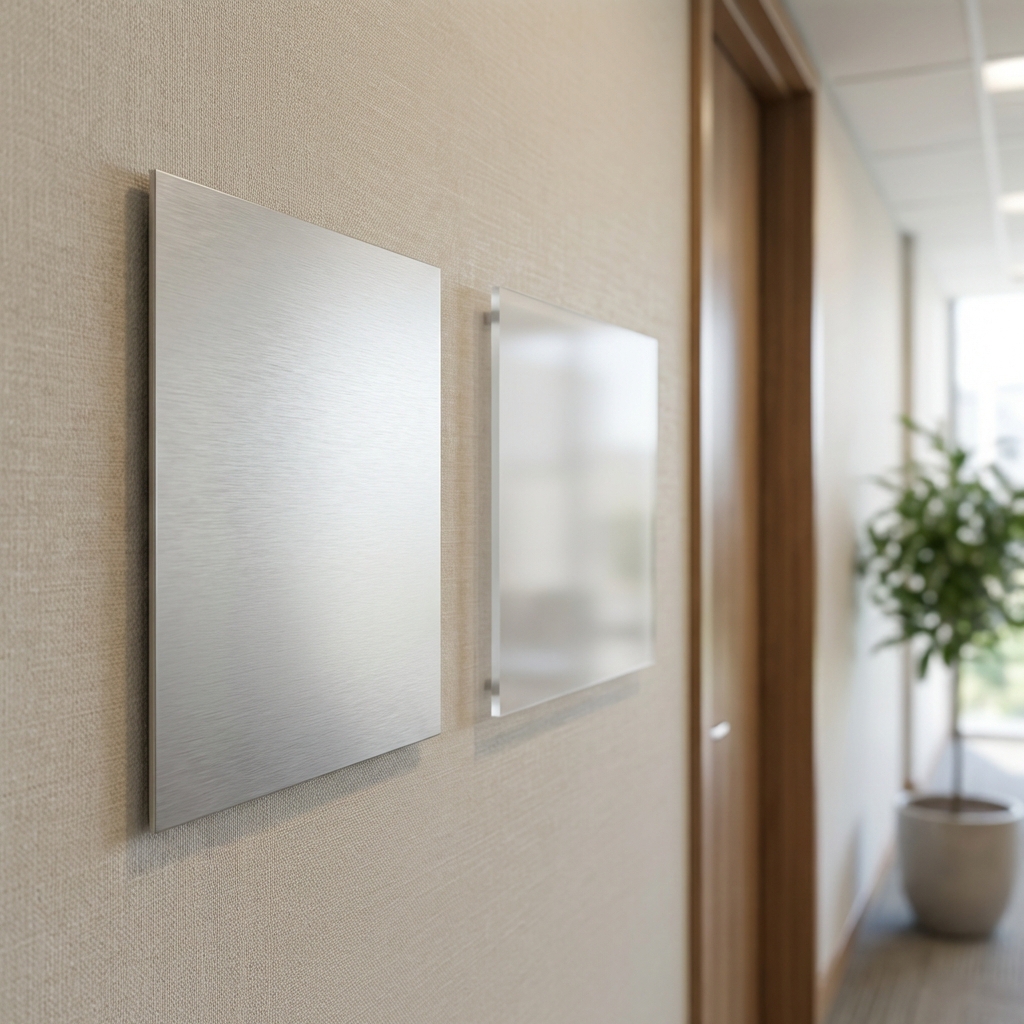
Image 3
Operational impacts to weigh:
Traditional plaques/vinyl: drilling and patch/paint, noise and dust controls, corridor or suite closures, and frequent punch-list adjustments tied to mis-ships or alignment issues.
Custom wall printing: no wall penetrations, no adhesives or seams, low odor, quick turnover, paint-over-ready finishes for future tenant changes, and consistent execution across multi-location rollouts.
For teams comparing facility signage alternatives, direct-to-wall printing supports commercial interior branding and regulatory wayfinding graphics with speed and schedule certainty. EastCoast MuralPros adds options like subscription-based refreshes and in-studio printing for doors, tables, and standees, helping facilities keep environments current without recurring disruption.
Pros and Cons of Digital Murals vs Conventional Signage
Digital murals excel at integrating brand, wayfinding, and compliance cues directly into the architecture. As integrated ADA signage murals, they deliver high-contrast visuals, legible typography, and consistent iconography at scale, reducing plaque clutter and installation hardware. They are not a wholesale substitute for tactile and Braille room IDs, but they streamline the large share of visual-only regulatory wayfinding graphics that facilities manage.
Compared with conventional plaques and vinyl, direct-to-wall printing offers speed, low disruption, and predictable results. EastCoast MuralPros completes most installations in under five hours with seam-free, photoreal output that’s durable and cleanable, even on CMU, brick, concrete, or unfinished drywall. Because there’s no vinyl or adhesives, it’s a lifecycle-efficient and more sustainable choice for commercial interior branding and campus-wide standards.
Best-fit use cases for digital murals:
Corridor directionals, color-coded zones, floor numbers, and line-of-travel arrows where tactile is not required
Safety reminders, PPE icons, and occupancy or queue graphics that need high visibility without hardware
Large-format maps, department headers, and instructional walls in hospitals and schools
Branded backdrops that embed cues—e.g., pharmacy cross + arrow within a healthcare mural, or STEM icons guiding students to labs
Limitations to plan for:
ADA tactile/Braille requirements still apply for room identification; pair murals with small, code-compliant plaques
Updates require overprinting or paint-over (which EastCoast MuralPros supports with paint-over-ready finishes and refresh subscriptions)
Projecting visibility in crowded spaces may still need flag-mounted signs or ceiling drops
Substrate prep and moisture conditions must be suitable to ensure longevity
Conventional signage remains strong for modularity, quick plaque-level changes, and meeting tactile/Braille rules out of the box. Its tradeoffs include longer lead times, hardware damage points, color drift across vendors, and visual clutter. Many teams adopt a hybrid: use custom wall printing as the facility signage alternative for broad, standardized visuals, then layer minimal tactile plaques. EastCoast MuralPros can coordinate placement, print alignment guides, and deliver consistent execution across multi-location rollouts.
Conclusion: Strategic Recommendations for Facilities and Procurement Teams
For most facilities, the pragmatic path is a hybrid system: use integrated ADA signage murals to unify color-coding, pictograms, floor/wing identifiers, and emergency instructions, while retaining code-required tactile/Braille plaques for room identification. This approach delivers the scale and flexibility of custom wall printing for regulatory wayfinding graphics and commercial interior branding, without compromising compliance. Direct-to-wall printing excels at corridor zones, lobbies, stair cores, and large-format messaging where traditional plaques and panels create clutter.
To operationalize this, build a simple, procurement-ready framework:
Map all regulated content (tactile plaques, evacuation info, NFPA symbols) versus printed layers, including contrast and viewing distance targets.
Conduct substrate testing and a pilot print on representative surfaces (drywall, CMU, concrete, brick) to validate adhesion-free performance and edge quality.
Specify cleaning protocols and chemicals; require scratch, stain, and disinfectant resistance for high-traffic areas.
Set SLAs for low-disruption installs (e.g., <5 hours per zone, occupied-building ready) and overnight turnovers.
Standardize art templates, color libraries, and naming to support multi-location rollouts and rapid change-orders.
Define end-of-life and refresh rules (paint-over-ready finish, subscription cadence, and criteria for content updates).
In practice, a hospital can re-route a wing over a weekend with color zones, floor numerals, and infection-control reminders printed directly to walls, while leaving ADA plaques untouched. A university can add semester-specific orientation cues and donor recognition, then paint over or refresh without demolition waste. EastCoast MuralPros helps teams execute this model with on-site direct-to-wall printing, consistent national deployment, and full-campus planning—an efficient facility signage alternative to vinyl wraps and wallpaper.
Measure before you scale. Pilot one corridor or floor and track:
Downtime avoided and actual install duration
User comprehension and wayfinding accuracy
Cleaning time and damage incidence
Lifecycle cost versus vinyl and panel systems
Waste reduction and sustainability metrics
Partner with EastCoast MuralPros and your ADA consultant to align compliance, branding, and speed—then standardize the playbook across your portfolio.