
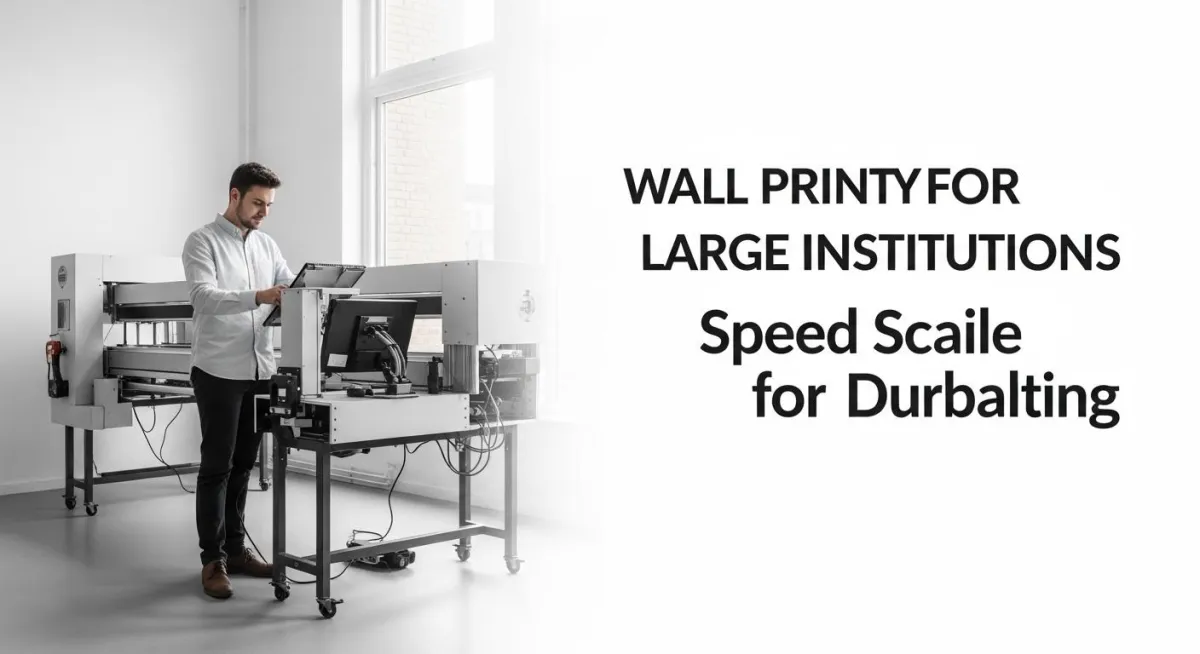
Wall Printing for Large Institutions: Speed, Scale, and Durability
Introduction: The Challenge of Institutional Wall Graphics
Large institutions live at the intersection of brand, operations, and the built environment. A hospital needs calm, legible visuals that support care and wayfinding without disrupting infection control. A university wants cohesive campus branding that carries from residence halls to arenas. Corporate workplaces must adapt interiors to cultural programs and leadership changes—on tight timelines and tighter budgets. Across these settings, wall graphics do more than decorate; they inform, guide, and shape experience at scale.
The difficulty is not just design. It is speed, durability, and coordination. Institutional teams face constant turnover, phased renovations, and stakeholders with different risk tolerances. Traditional vinyl wall coverings, wallpaper, and hand-painted murals often struggle to meet these realities. As procurement leaders assess lifecycle cost, facilities teams prioritize uptime, and brand owners demand flawless execution, the question becomes: what wall solution can meet institutional standards for speed, scale, and durability?
Wall printing for institutions—specifically, high-resolution direct-to-wall printing—has emerged as a performance-based alternative designed for these constraints. Providers like EastCoast MuralPros combine advanced printing systems with a process built for occupied buildings, multi-location consistency, and institutional-grade outcomes.
Traditional Solutions and Their Limitations
Vinyl wall coverings and wallpaper have been the default for decades. They are familiar to procurement, easy to specify, and widely available. But in complex, high-traffic environments, their weaknesses surface quickly.
Seams and adhesion failures: Temperature swings, humidity, and surface irregularities lead to bubbling, peeling, and visible seams—especially on long walls and CMU or concrete substrates.
Installation disruption: Adhesives, staging, and long install windows force closures and off-hours labor. When a seam fails, the repair often means another disruptive service call.
Lifecycle waste: Vinyl is hard to recycle. When branding changes, entire runs come down, adding labor and landfill impact.
Inconsistent fit: Mismeasurements, shipping errors, and conditions discovered on-site can make pre-fabricated panels unusable, forcing reprints and delays.
Maintenance friction: Cleaning chemicals can haze or lift edges. In healthcare and education, this is a persistent headache.
Scalability risk: Across multiple buildings or locations, color drift, inconsistent wall prep, and vendor variance compound into brand inconsistency.
Hand-painted murals bring craft and nuance, but they require extended wall access, specialized artists, and multi-day dry times. They can be difficult to replicate across locations and are not as cleanable as modern performance coatings without extensive sealing. Rigid panels and framed graphics add dimensionality but create protrusions, mounting penetrations, and signage clutter—counterproductive when you need a clean, integrated environment.
Institutions need a systemized approach that prints at architectural scale, eliminates seams and adhesives, installs fast in occupied buildings, and holds up under institutional cleaning protocols.
How Modern Wall Printing Technology Works
Direct-to-wall printing places high-resolution imagery directly onto a wall without vinyl or adhesives. A mobile print unit travels on a calibrated vertical gantry, using industrial inkjet heads to deposit micro-droplets of ink that cure instantly under controlled light. The result is a crisp, photoreal image bonded to the wall surface.
What makes it suitable for institutional environments:
Digital-to-surface precision: Artwork files are color-managed and preflighted to the exact wall dimensions. On-site alignment tools ensure imagery lands precisely around doors, monitors, outlets, and architectural reveals.
Seam-free at scale: Because the system prints continuously across the wall, the finished graphic has no visible seams. Large-format imagery—think 30, 60, or 100+ feet—remains uniform end-to-end.
Compatible substrates: Properly prepared drywall, CMU, concrete, and even sealed brick can be printed directly. Finished and unfinished surfaces can be addressed with light prep when necessary to optimize adhesion and smoothness.
Immediate cure, low disruption: The cured ink film is dry to the touch right away. No adhesive off-gassing or days-long dry times means spaces can remain occupied and return to service quickly.
Photoreal resolution: Modern heads deliver fine detail and smooth gradients suitable for galleries and museums, branding programs, and instructional graphics that demand legibility.
A process built for institutions matters as much as the machine. EastCoast MuralPros typically starts with a site assessment, test swatches, and file preflight to eliminate surprises. Color proofs and stakeholder reviews happen before a crew arrives, and collaborative tools help digital artists scale their work across multiple walls and buildings. While most projects are printed on-site, in-studio production supports complementary elements—doors, tables, wayfinding standees—so everything arrives coordinated on day one.
Key Benefits for Large Institutions
Wall printing for institutions is about performance, not novelty. Done right, it offers a measurable step forward over vinyl, wallpaper, panels, and many painted solutions.
Adhesive-free execution: No vinyl, no paste, no panel hardware—reducing failure points, off-gassing, and waste.
Speed under pressure: Installations often complete in under five hours per wall, coordinated around business hours, patient flows, classes, or shift changes.
Seam-free, architectural scale: Long corridors, atria, and campus commons read as designed surfaces, not tiled graphics.
Durable, cleanable finishes: Engineered for high-traffic environments and compatible with common institutional cleaners per manufacturer guidance.
Paint-over-ready: When programs change, paint can restore a neutral finish without demolition or adhesive remediation.
Broad compatibility: Drywall, CMU, concrete, and brick can be printed after routine surface preparation, enabling upgrades without construction.
On-site certainty: Printing in place eliminates shipping delays, fit issues, and fabrication errors.
Multi-location consistency: Centralized color management and repeatable methods produce the same brand results from one building—or state—to the next.
Lifecycle efficiency: Fewer replacements, less maintenance, and shorter downtimes reduce total cost of ownership.
Integrated communication: Wayfinding, safety, and instructional content can be embedded into walls, reducing clutter from separate plaques and signs.
Sustainability: Far less material consumption than vinyl or wallpaper, with fewer removals heading to landfill.
Subscription-ready: A managed refresh cadence—seasonal, quarterly, or aligned to program calendars—keeps spaces current without project-by-project friction.
These attributes map directly to the pressures institutional teams face: speed, predictability, scale, and defensible performance.
Speed and Minimal Disruption to Operations
Institutional interiors rarely sit idle. A workable solution must move at the speed of the schedule—not the other way around. Direct-to-wall printing was built with this constraint in mind.
Tight time windows: A typical wall can be prepped and printed in under five hours. Long runs in corridors or lobbies can be executed overnight or during low-traffic windows to preserve operations.
Low-impact staging: The mobile print system requires a modest footprint and standard power. No adhesives, cutting tables, or panel storage means fewer carts in the corridor and less interference with life safety paths.
Immediate turnover: Cured imagery is touch-dry and ready for normal use right away. That means classrooms, patient halls, and meeting rooms return to service as soon as crews demobilize.
On-site agility: Because printing happens in place, late discoveries—an unexpected fire strobe, a relocated monitor—are managed with live adjustments to the image layout, not a reprint cycle.
A typical institutional timeline might look like this:
Week 0–1: Site walk, substrate evaluation, and selection of candidate walls.
Week 1–2: Art development, content approvals, and preflight with brand and facilities stakeholders.
Week 2–3: Test swatches where needed; finalize schedule around operational rhythms.
Install night or weekend: Crew completes printing; space reopens before the next shift or morning bell.
For EastCoast MuralPros, this rhythm is standard practice. Teams are accustomed to working in occupied buildings, coordinating with environmental services, security, and infection prevention to minimize impact.
Durability and Maintenance in High-Traffic Environments
Cleanability and wear resistance separate decorative graphics from institutional solutions. The cured ink film used in direct-to-wall printing forms a thin, continuous layer that bonds to the substrate and resists scuffs and routine cleaning. This is critical in healthcare corridors, school common areas, and retail back-of-house where carts, backpacks, and hands constantly contact walls.
Key considerations:
Cleaning protocols: The printed surface is designed to withstand common non-abrasive, water-based cleaners used by environmental services teams. Always confirm chemistries with the provider’s maintenance guide.
Finish selection: A matte or satin appearance minimizes glare and preserves legibility of wayfinding and instructional graphics under varied lighting.
Edge integrity: With no seams or panel edges to catch, there are fewer points of failure compared to vinyl installations.
Repairability: Minor abrasion can often be spot-touched or repainted. When a program changes entirely, a standard repaint returns the wall to baseline quickly.
In healthcare, the question of safety is paramount. For a deeper look at how printing integrates with patient care environments, infection control workflows, and approvals, see this overview on Healthcare wall printing safety.
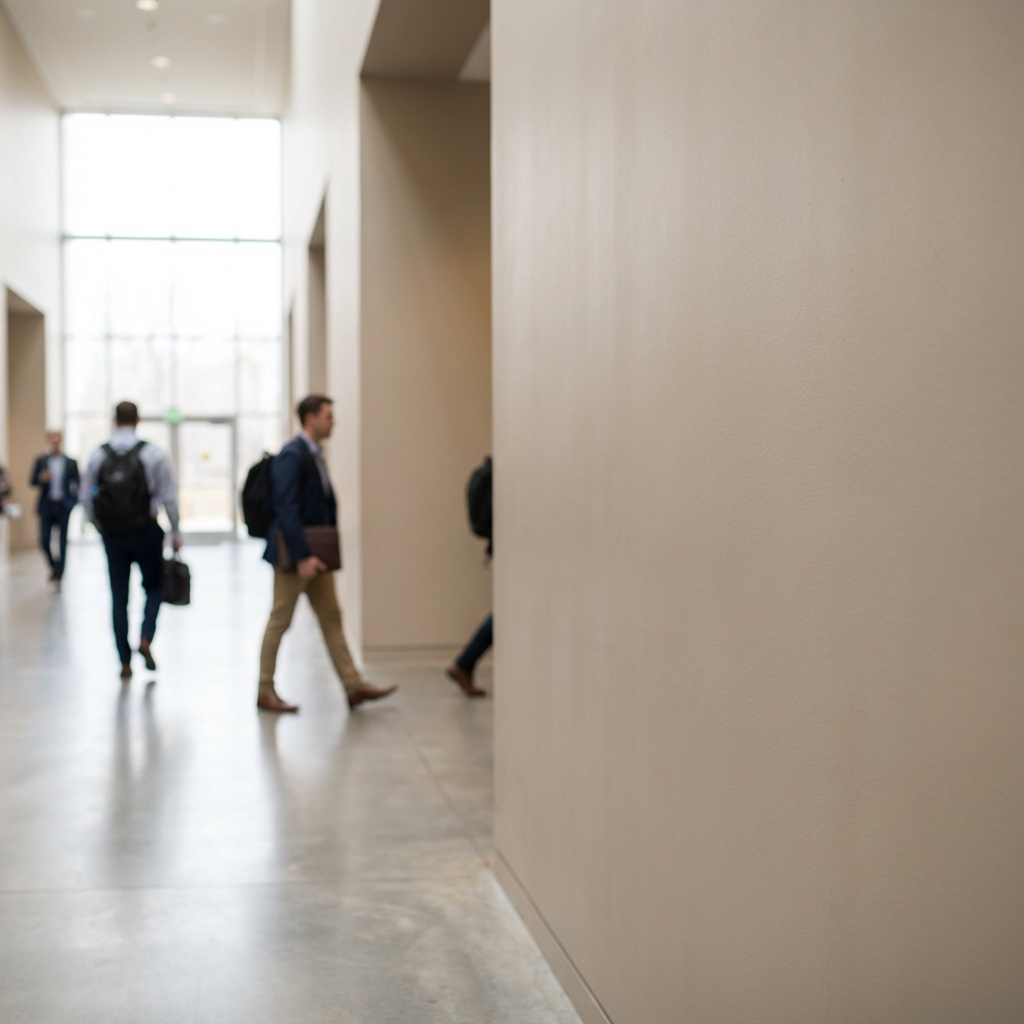
Illustration 1
Educational and corporate facilities benefit similarly. A busy stair tower or elevator lobby that would quickly telegraph seam failures in vinyl maintains its appearance month after month with direct prints that read like part of the architecture.
Scalability Across Multi-Location Rollouts
What works for one wall must scale to hundreds. Institutional wall graphics are most powerful when they can be specified once and executed predictably across multiple buildings, floors, and cities.
How modern wall printing enables scale:
Centralized color management: Master profiles and proofing workflows keep brand colors consistent—critical for national rollouts and multi-campus systems.
Repeatable file templates: Artboards align to standard wall sizes, door locations, and obstruction patterns, reducing custom layout time at each site.
On-site calibration: Each location gets the same surface testing and print swatches to tune variables like porosity and light reflectance.
Coordinated crews: Trained teams travel with standardized kits and documented SOPs, so a corridor in Boston looks and performs like the one in Raleigh.
Integrated inventory: In-studio elements—tabletops, wayfinding standees, donor plaques—are produced in parallel and arrive aligned to the wall graphics program.
For institutions scheduling rolling brand refreshes, a subscription model creates a managed cadence of updates. Athletics seasons, academic calendars, fundraising drives, or corporate campaigns can rotate content on set intervals without restarting procurement or design every time. On campuses, that means consistent campus branding with wall printing in residence halls, dining, student services, and arenas, orchestrated as one system.
Cost Efficiency and Lifecycle Benefits
Total cost of ownership matters more than the initial line item. A solution that installs cheaply but fails early is expensive. Wall printing for institutions is built to reduce both direct and indirect costs over the life of the space.
Direct cost drivers:
No material waste: Printing eliminates the overage common with vinyl and wallpaper, and there are no panels to fabricate, ship, or inventory.
Labor efficiency: Faster installs, fewer return visits, and minimal surface remediation drive down labor hours.
Reduced reprint risk: On-site adjustments for surprises (outlets, devices, datum shifts) prevent “back to the shop” delays and re-fabrication.
Indirect savings:
Less downtime: Quicker turnovers mean fewer hours of classroom, corridor, or patient-flow disruption.
Fewer failures: No seams or adhesive lines to lift under humidity cuts down on emergency service calls.
Paint-over reversibility: When branding changes, a repaint restores neutrality—no demolition or adhesive removal.
A simple scenario illustrates the math. Consider a 120-foot corridor refresh across 10 locations:
Vinyl approach: Panels fabricated and shipped; two-night installs per corridor; 10–15% reprint rate due to site variances; periodic seam repairs in year 2–3.
Direct-to-wall approach: On-site prints in a single overnight; live alignment around devices; no shipments; no seams to fail; paint-over at end of program.
Even when initial unit pricing is comparable, wall printing typically reduces ancillary costs—travel, shipping, return visits, and out-of-hours premiums—while compressing schedules and risk. Over multiple refresh cycles, these efficiencies compound into measurable budget relief.
Real-World Applications: Healthcare, Education, and Corporate
The strength of wall printing for institutions is its flexibility across verticals, from strictly regulated healthcare spaces to brand-forward corporate environments.
Healthcare
Integrated wayfinding: Color-coded zones, floor numerals, and department identifiers print directly onto corridor walls, so patients and families have line-of-sight guidance without a forest of plaques.
Calming environments: Photoreal nature scenes and artwork create a composed visual field in waiting rooms and infusion bays, printed matte to reduce glare and anxiety.
Safety and instruction: Hand-hygiene prompts, isolation room procedures, and staff-only indicators can be embedded where they’re needed—legible, cleanable, and aligned with infection prevention.
Durable finishes: The cured print stands up to routine cleaning while avoiding vinyl seams that trap grime. See more on Healthcare wall printing safety.
Education
Campus identity: Mascots, mottos, and institutional history unify halls, commons, gyms, and arenas. Large-scale prints deliver a sense of place from first-year move-in to commencement.
Instructional graphics: Lab safety steps, makerspace tool diagrams, and studio technique references can live right on the wall where learning happens.
Wayfinding without clutter: Building names, floor directions, and department markers integrate into the architecture—no protruding signs. For a strategic overview, explore this guide to campus branding with wall printing.
Seasonal refreshes: Athletics highlights, exhibition calendars, and donor recognitions can rotate each term under a subscription model.
Corporate and Workplace
Brand alignment: Culture statements, product narratives, and leadership messages scale from HQ to regional offices with color-consistent execution.
Agile spaces: Project rooms, meeting suites, and innovation labs can update graphics to support new initiatives without construction or furniture moves.
Visitor experience: Lobby features and executive corridors get museum-quality imagery at architectural scale, with in-studio printed elements—tables, doors, standees—completing the story.
ESG communication: Sustainability dashboards and community commitments can be integrated cleanly, paint-over-ready when metrics change.
Across all settings, consistency is the differentiator: a single, seam-free, durable surface that reads as part of the building—cleanable, legible, and built for throughput.
Implementation and Procurement Considerations
Institutional buyers need clarity on process, risk, and compliance. A well-run wall printing program should feel familiar to facilities and procurement teams accustomed to capital projects, even though it avoids construction.
Practical steps to plan and execute:
Site surveys: Document wall dimensions, obstructions, substrate conditions, and access. Identify any moisture or patching needs early.
Substrate prep: Standardize cleaning, light fill/sanding, and priming where necessary to deliver a uniform print surface. Confirm sheen and paint chemistry for optimal adhesion.
Art preflight: Lock color targets, image resolution, and content approvals. Use templated artboards for repeat spaces (e.g., standard classroom, patient hall).
Pilot walls: Where risk tolerance is low, start with a high-visibility but low-complexity zone to validate durability, cleanability, and stakeholder satisfaction.
Scheduling: Coordinate install windows with security, EVS, and life safety. Overnight or weekend slots are typical for occupied buildings.
Safety and compliance: Confirm equipment footprints do not impede egress. Review MSDS for inks and confirm housekeeping compatibility. In healthcare, align with infection prevention protocols.
Documentation: Capture as-builts, print settings, and color profiles for each location to streamline subsequent phases or new sites.
Procurement and contracting tips:
Scope definition: Specify substrates, square footage, resolution, finish, and required cleanability. Call out performance targets rather than prescriptive materials.
Service levels: Include response times, warranty terms, and refresh cadence if using a subscription model.
Risk controls: Require COIs, background checks where needed, and method-of-procedure (MOP) documents for sensitive environments.
Integration: Ensure the vendor can support in-studio pieces (doors, tables, standees) and coordinate delivery with on-site printing.
Metrics: Track cycle time (art approval to install), install duration per wall, first-pass yield (no rework), and post-occupancy maintenance tickets.
EastCoast MuralPros regularly partners with facilities directors, architects, and brand teams to align these steps under a single account team. For multi-building campuses or national portfolios, a master agreement and standardized playbook keep each subsequent phase faster and simpler.
Conclusion: The Future of Institutional Interior Branding
Institutions need more from their walls than decoration. They need legibility, identity, and wayfinding—at scale, with minimal disruption, and with performance that stands up to daily use. Direct-to-wall printing brings a production-grade approach to all three, delivering seam-free visuals, fast installs, and durable, cleanable finishes without vinyl or adhesives.
As campuses evolve, healthcare standards tighten, and workplaces refresh more often, wall printing for institutions offers a lifecycle-efficient alternative to wallpaper and vinyl. It reduces waste, eliminates common failure points, and puts brand and instructional content exactly where people need it—integrated into the architecture, not layered on top of it.
For teams evaluating upgrades across a building, a campus, or a national portfolio, the path forward is clear: define outcomes, pilot a corridor, measure the impact on uptime and maintenance, and scale with confidence. Providers like EastCoast MuralPros combine high-definition direct-to-wall technology with a process purpose-built for large organizations—speed where it matters, consistency across locations, and durability from day one.
Contact us to learn more


