Best Wall Graphic Technologies for UV Resistance and Longevity in High-Traffic Commercial Environments
Evaluation Criteria for UV Resistance and Color Retention in Professional Environments
Evaluating UV resistance and color stability starts with understanding real-world exposure. Sunlit lobbies, glass-lined corridors, and atriums can deliver thousands of lux-hours per day, accelerating pigment fade and binder degradation. For UV resistant wall graphics, specify performance based on exposure modeling, not generic “indoor” claims, and require measurable color targets over time.
Use these criteria to compare technologies and vendors:
Ink chemistry and lightfastness: Favor pigment-based, UV-curable systems with documented Blue Wool or ASTM D4303 ratings and ΔE2000 reporting. Set acceptance criteria (for example, ΔE ≤ 3 after defined exposure) and ask for datasheets and third-party tests.
Curing and crosslinking: UV-LED curing creates a hard, crosslinked film with strong adhesion on mineral substrates, reducing softening or plasticizer issues seen in some vinyl systems. It also enables immediate handling and faster turnarounds.
Protective strategy without laminate: With vinyl, laminates can add UV blockers but introduce seams and adhesive failure points. For vinyl laminate alternatives, look for built-in UV absorbers and matte clear formulations that resist glare, burnishing, and cleaning chemicals without added film.
Substrate compatibility: Verify performance on primed drywall, CMU, concrete, and brick, including vapor permeability and pH tolerance. Require guidance on sealers and primers to prevent efflorescence or alkali burn that can undercut color.
Accelerated and field testing: Request ASTM G154/G155 or ISO 4892 weathering data and on-site mockups measured with a spectrophotometer over 30/90/180 days. Tie acceptance to ΔE thresholds, gloss retention, and micro-cracking checks.
Cleanability and chemicals: In healthcare and education, specify resistance to quats, diluted bleach, alcohol, and frequent wipe-downs. Require scrub and stain-resistance data and written cleaning protocols.
Lifecycle documentation: Ask for expected service life by exposure zone (interior, high-sun, near glazing) and maintenance schedules. Include provisions for touch-ups and end-of-life removal or paint-over.
Compare print platforms based on how integrated the finish is with the wall. Direct-to-wall printing avoids seams, adhesives, and lamination, which can reduce UV ingress at edges and eliminate substrate off-gassing that yellows films. Vinyl systems can perform well but often trade durability for added material layers and maintenance complexity.
EastCoast MuralPros brings direct-to-wall printing optimized for fade resistant mural technology in high-traffic environments. Their UV-curable, pigment-forward process produces durable commercial wall graphics with cleanable matte finishes, consistent color management, and paint-over readiness for future changes. As part of a broader commitment to sustainable interior branding, their sustainable vinyl-free alternatives minimize plastics, cut shipping waste through on-site printing, and maintain visual integrity across campuses and multi-location rollouts.
UV-Cured Direct-to-Wall Ink for Maximum Durability and Zero-Adhesive Integration
UV-cured inks create a hard, crosslinked film the moment they’re printed and cured, resulting in UV resistant wall graphics that hold color and detail even in windowed corridors, atriums, and lobbies. Because the image is printed directly onto the substrate, there are no seams, edges, or adhesives to fail—an immediate advantage over vinyl laminate alternatives that can bubble, peel, or trap dirt. The result is a photoreal, high-resolution finish that looks integrated with the architecture instead of applied to it.
In UV curing, pigments are locked into a durable polymer matrix, which helps deliver fade resistant mural technology for interior environments. While actual longevity depends on light exposure, pigment set, and surface preparation, UV-cured direct-to-wall printing consistently outperforms traditional wallcoverings for indoor color stability. It also supports precise dot control for crisp text and branded color fields at architectural scale, ideal for wayfinding, compliance graphics, and large-format storytelling.
Key performance benefits for durable commercial wall graphics include:
Strong UV and color fade resistance for sun-exposed interiors
Excellent scuff and abrasion resistance for high-traffic zones
Cleanable surfaces that tolerate routine wipe-downs and many common disinfectants
Seam-free visuals with no edges to snag, peel, or harbor grime
Compatibility with drywall, CMU, sealed concrete, and brick (finished and unfinished)
Paint-over-ready finishes to simplify turnover and program changes
For facilities and workplace teams, the zero-adhesive integration solves both risk and maintenance. In hospitals, daily disinfecting no longer threatens adhesive bonds or laminate edges. In schools and universities, integrated wayfinding and instructional graphics survive backpack traffic and custodial cycles. Retail and hospitality projects get gallery-grade images that won’t telegraph seams under accent lighting, even near storefront glazing.
EastCoast MuralPros delivers this capability on site, with most installations completed in under five hours to minimize disruption in occupied buildings. On-demand, direct-to-wall printing technology removes shipping and fabrication variables, keeps national rollouts consistent, and supports sustainable interior branding by eliminating PVC, adhesives, and frequent replacements. For campuses and multi-location brands, their subscription model enables seasonal refreshes without construction, giving you lifecycle-efficient graphics that perform like part of the building—until you’re ready to paint and move on.
High-Performance UV-Protective Vinyl Laminates for Short-Term Flexible Applications
UV-protective overlaminates can make printed films viable for UV resistant wall graphics when you need fast, flexible deployment. These clear topcoats incorporate UV absorbers and abrasion resistance, shielding the ink layer from sunlight, cleaning chemicals, and scuffs common in corridors, lobbies, and retail. Indoors, premium systems can maintain color for multiple seasonal cycles, but they’re best suited to short-term use where frequent refreshes are expected.
Material selection matters. Cast PVC laminates conform better over uneven surfaces and resist shrinkage, while calendered PVC is economical for flat walls in 3–12 month campaigns. PVC-free options (polypropylene or PET) reduce chlorine content and can be paired with low-VOC inks to support sustainable interior branding, and matte or luster finishes cut glare under high-output LEDs. Pairing quality laminates with latex, eco-solvent, or UV-curable inks improves fade resistant mural technology outcomes.
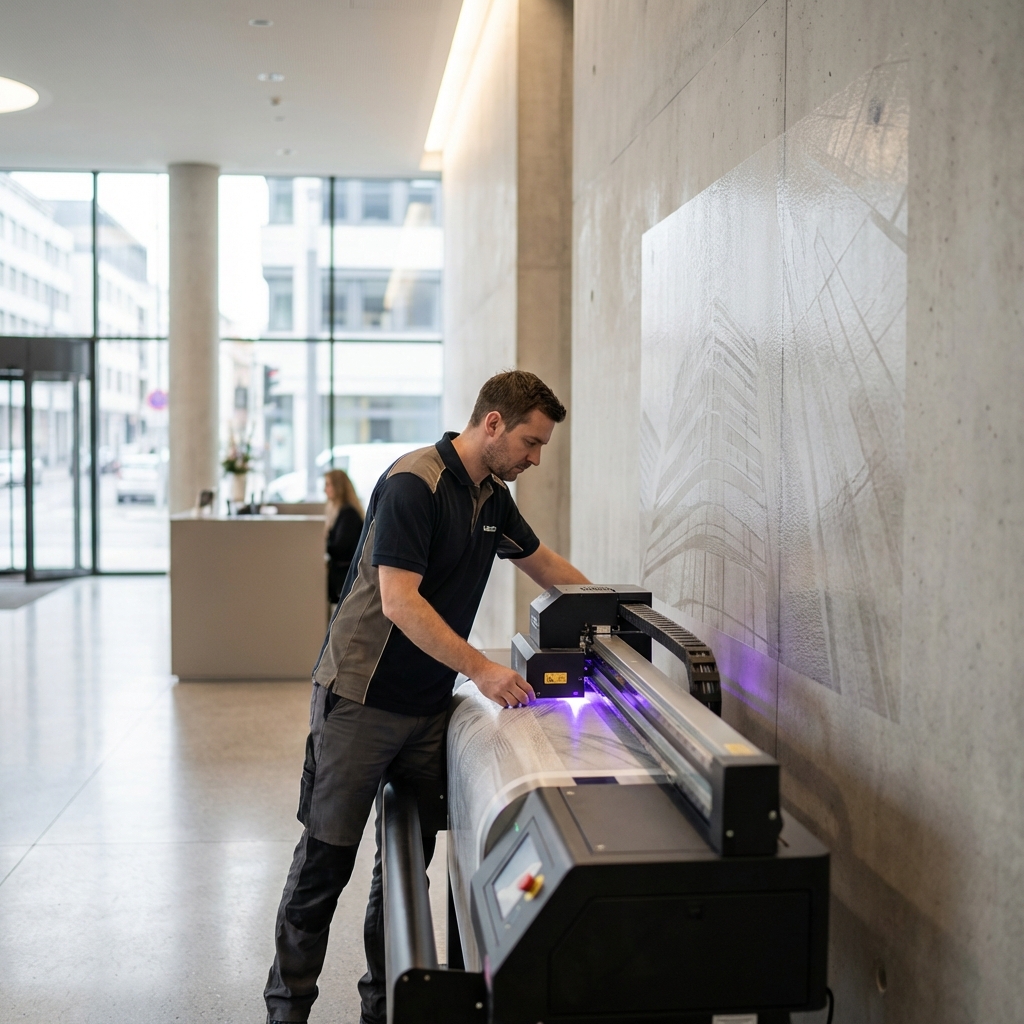
Image 2
For short-term, high-traffic deployments, build to spec and process rigorously:
Match film and laminate families to control shrinkage; target 2–3 mil laminate thickness for walls.
Laminate only after proper ink outgassing to prevent silvering and delamination.
Prepare walls meticulously (clean, dry, sealed), and avoid heavy orange-peel textures.
Use edge-seals at vulnerable terminations; avoid seam placement at handrails or corners.
Verify indoor fire testing (e.g., ASTM E84 Class A) and choose PVC-free if sustainability is a priority.
Maintain with pH-neutral cleaners and soft cloths; avoid strong solvents and steam.
Expect planned change-outs aligned to marketing cycles (e.g., 3, 6, or 12 months).
Typical applications include seasonal retail features, event branding in convention centers, university move-in campaigns, and hospital wayfinding pilots during renovations. In these scenarios, removability and speed outweigh maximum longevity, and the laminate extends the usable window while keeping graphics cleanable and presentable.
Know the trade-offs. Even with high-performance laminates, large walls require seams, edges can lift under aggressive cleaning, and adhesives may struggle on CMU, brick, or low-VOC paints. Waste from removal and frequent reprints also undercuts sustainability goals. When you need durable commercial wall graphics that are seam-free, paint-over-ready, and installed with minimal disruption, consider vinyl laminate alternatives like direct-to-wall printing from EastCoast MuralPros. Their on-site process delivers photoreal results without adhesives, scales consistently across campuses and multi-location rollouts, and offers cleanable surfaces designed for high-traffic environments.
Pigment-Based Direct Printing for Indoor Settings with High Natural Light Exposure
Natural-light–rich interiors accelerate color fade, so UV resistant wall graphics need ink systems engineered for lightfastness. Pigment-based direct printing cures pigmented inks directly onto the wall, forming a crosslinked, abrasion-resistant film without vinyl or adhesives. Because pigments sit within a cured polymer matrix rather than soaking into a media, they resist photodegradation and ozone far better than dye-based approaches. This makes them ideal for atriums, perimeter corridors, and glass-lined lobbies.
Compared with dye inks, modern UV-curable pigment sets deliver excellent fade resistance behind architectural glass, often meeting high lightfastness ratings when specified correctly. While low‑E glazing reduces UV transmission, visible light still contributes to fading; pigment load, binder chemistry, and cure energy all matter. A well-tuned system yields fade resistant mural technology that maintains brand colors and photographic detail over years of daylight exposure. The result is durable commercial wall graphics that look integrated, not applied.
Direct-to-wall printing is a strong vinyl laminate alternative in high-traffic spaces with sunlight. There are no seams to lift or trap dirt, no adhesive creep, and no plasticizers to off-gas. EastCoast MuralPros leverages this approach to create seam-free, high-resolution murals on drywall, CMU, concrete, and even brick—typically installed in under five hours with minimal disruption.
For longevity, the process is as important as the ink. Controlled UV curing builds a dense, uniform surface that stands up to routine cleaning with commercial disinfectants without chalking or gloss shifts. In most indoor sunlit environments, that means multi‑year color stability without an added laminate, while remaining paint‑over‑ready when programs, tenants, or exhibits change.
To optimize pigment-based direct printing in bright interiors, align on a few technical checkpoints:
Substrate preparation: prime and seal porous surfaces to ensure uniform cure and color.
Sheen and glare: specify a matte or low‑gloss finish to mitigate specular highlights in south- and west-facing zones.
Color management: use spectrally accurate profiles and spot-color targets for critical brand hues.
Placement testing: conduct on‑site proofs near glazing to validate contrast and legibility at viewing distance.
Cleaning protocol: define approved solvents and frequencies to preserve surface integrity.
Consider a university atrium with floor‑to‑ceiling glass: photoreal campus imagery can span multiple levels, aid wayfinding, and endure daily sun and student traffic. Healthcare corridors that track along window walls benefit similarly, integrating safety icons and instructional graphics without signage clutter. EastCoast MuralPros delivers these outcomes at scale—on-site, consistently across locations, and as part of a sustainable interior branding strategy that eliminates vinyl waste and shipping-intensive fabrication.
Side-by-Side Analysis of Ink Longevity Versus Laminate Film Degradation
When wall graphics fail indoors, it’s rarely because the image was printed “too soft.” The dominant failure modes split into two buckets: pigment durability under UV and visible light, and mechanical/chemical degradation of laminate films and adhesives. Comparing these side-by-side clarifies why UV resistant wall graphics produced with modern direct-to-wall printing often outlast laminated vinyl in high-traffic spaces.
UV-curable inks form a crosslinked, hard polymer film that locks pigments in place at the surface. This chemistry delivers strong lightfastness and abrasion resistance, so color shift tends to be gradual and uniform rather than patchy. In typical commercial interiors with managed lighting, fade resistant mural technology can maintain ΔE color change below visibly noticeable thresholds for years, with the biggest risk being localized exposure near windows or skylights. Cleaning with quats, diluted bleach, or peroxide wipes is generally tolerated when the print is fully cured and profiled for maintenance protocols.
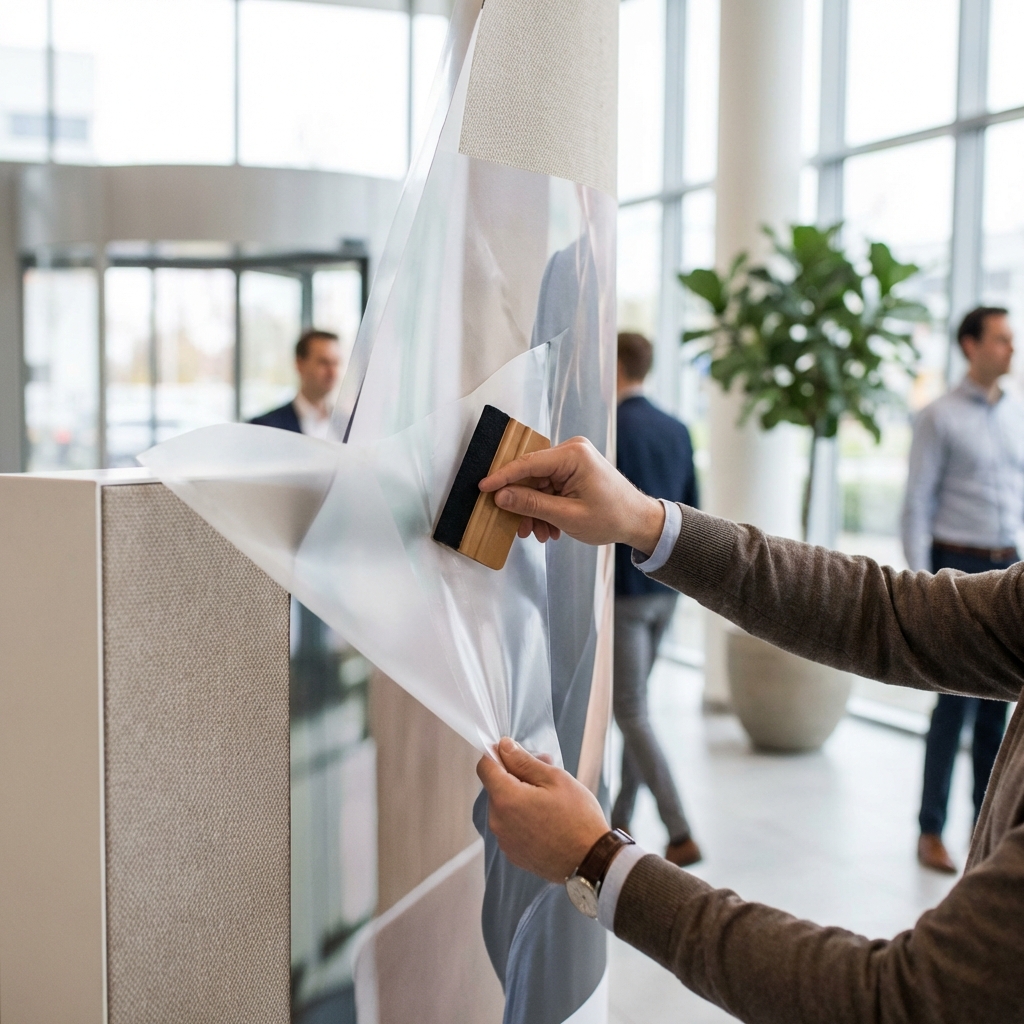
Image 3
Laminated vinyl systems more often fail mechanically before they fade. Common issues include edge lift at seams, shrinkage from plasticizer migration, gloss loss from micro-scratching, and haze or yellowing in PVC over time. Heat and humidity cycles accelerate adhesive creep, trapping dirt along edges and making sanitation harder in hospitals and schools. Strong cleaners can cloud overlaminate films, and removals may scar paint or drywall paper—adding hidden lifecycle costs to “durable” commercial wall graphics.
A useful way to compare longevity is by the first mode of failure you’re likely to see, not just the maximum theoretical life of pigments or films. Direct-to-wall printing eliminates the laminate/adhesive layer entirely, removing the most common points of failure and the visibility of seams. It also avoids fabrication and shipping steps that can introduce scratches or misfits, and it’s paint-over-ready at end-of-life—a clear win for sustainable interior branding.
Evaluate solutions using criteria tied to your environment and maintenance plan:
Light exposure zones (core, perimeter, atrium) and expected ΔE color tolerance.
Cleaning chemistry and frequency, especially in healthcare and education.
Substrate movement and texture (drywall, CMU, brick) that can challenge adhesives.
Seam density and edge hygiene in wayfinding corridors and food service areas.
Refresh cadence and change management across multi-site portfolios.
EastCoast MuralPros deploys vinyl laminate alternatives using on-site direct-to-wall printing that installs in hours, not days, with seam-free results on finished or unfinished surfaces. The cured print layer delivers the durability teams expect while simplifying cleaning, reducing replacement cycles, and enabling consistent execution across campuses and national rollouts. For organizations prioritizing UV resistant wall graphics with lower disruption and better lifecycle economics, this approach is a practical upgrade over laminated vinyl.
Selecting the Right Wall Graphic Solution Based on Sunlight Exposure and Lifecycle Needs
Start by mapping each wall’s daylight conditions and how long the graphic needs to perform. South- and west-facing atriums, glass corridors, and skylit lobbies demand UV resistant wall graphics and robust cleaning tolerance, while interior cores or shaded floors are lower risk. Align exposure level, refresh cadence, and maintenance protocols to avoid over- or under-specifying.
Direct sun accelerates fading, yellowing, and heat-induced failure—especially at seams and edges on traditional vinyl. Lamination helps, but it adds cost, thickness, and more failure points, and can still haze or peel under disinfectants. If you’re seeking vinyl laminate alternatives that hold color, protect substrates, and clean well without adhesive issues, look for fade resistant mural technology that’s integrated into the ink and print process.
For high-exposure zones, direct-to-wall printing with UV-curable inks and high-lightfast pigments delivers architectural-scale color that resists sunlight, abrasion, and frequent wipe-downs. Pair with low-E glazing or window films to further reduce UV load, and consider clear protective topcoats in splash-prone or solvent-cleaned areas. Example: a glassy, south-facing university lobby where wayfinding, brand color, and image detail must remain consistent semester after semester.
Match solution to exposure and lifecycle needs:
High sun + long lifecycle: direct-to-wall UV print system with high lightfast ratings (ask for independent fade testing), optional anti-graffiti/topcoat, and a cleanable, seam-free finish.
Moderate sun + planned refresh: direct-to-wall printing designed for periodic updates; ensure paint-over-ready finishes to simplify future changes without demolition or adhesive removal.
Low light + short-cycle content: direct-to-wall for walls, complemented by in-studio printed standees, doors, and tables for seasonal storytelling without wall rework.
Sensitive environments (healthcare, labs): prioritize non-porous, disinfectant-tolerant surfaces and graphics integrated into the wall plane to avoid harboring edges.
Lifecycle cost matters as much as initial cost. Durable commercial wall graphics that eliminate seams and adhesives reduce touch-ups, replacement labor, and downtime—critical for hospitals, schools, and multi-location brands. You’ll also gain sustainability wins by cutting vinyl waste, shipping, and frequent re-fabrication, supporting sustainable interior branding goals.
EastCoast MuralPros helps facilities and design teams audit daylight exposure, cleaning requirements, and rollout timelines, then specify direct-to-wall printing that performs across campuses and portfolios. On-site production avoids shipping delays and fabrication errors, maintains consistency at scale, and leaves a paint-over-ready surface when programs change. The result is a performance-based alternative to wallpaper and vinyl that stays vivid in sunlit spaces and efficient across its lifecycle.


