The Future of Office Design: Why Walls Matter More Than Furniture
Office design has been reimagined countless times—from cubicles to open plans to flexible hoteling. Yet when workers themselves were asked what they actually want from office spaces, the answers weren’t about desks or chairs. They were about focus, belonging, and environments that support how work really happens.

When The Wall Street Journal surveyed readers on the office-design changes they most want to see, responses consistently highlighted noise, distraction, lack of identity, and one-size-fits-all layouts.
These challenges point to an often-overlooked truth: the future of office design is less about furniture—and more about walls.
Open offices failed because they ignored focus
Many employees cited noise and constant interruptions as the biggest obstacles to productivity. This aligns with extensive research showing that open offices reduce face-to-face interaction and increase distraction rather than collaboration.
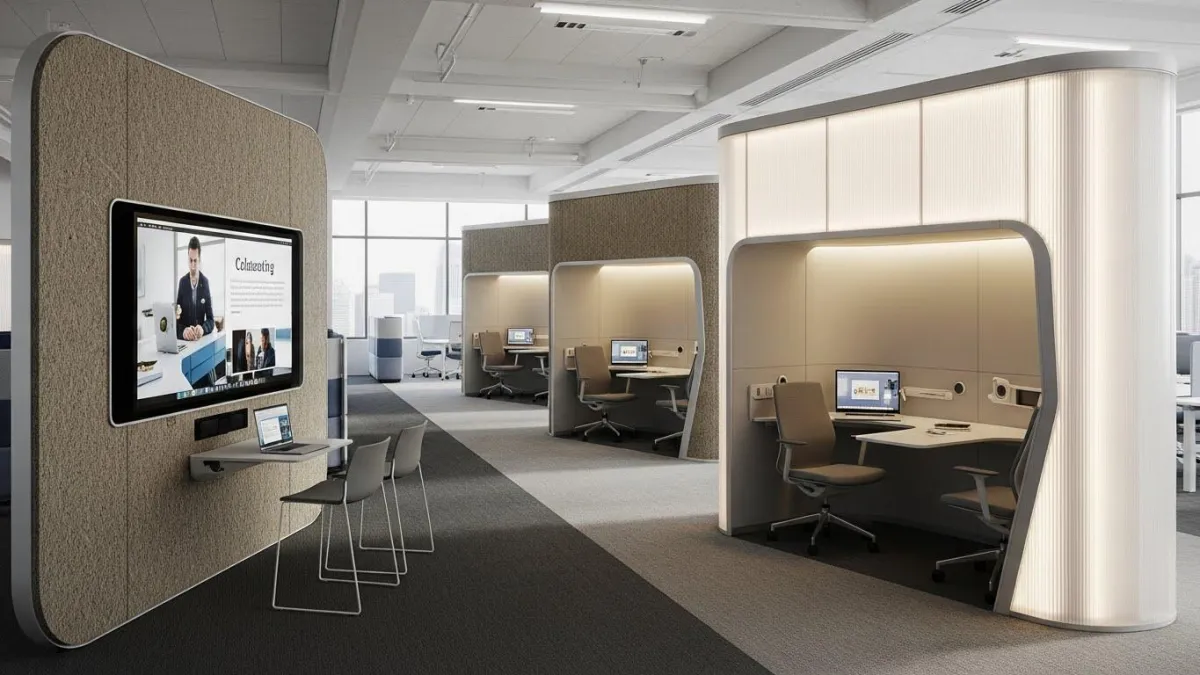
Walls are not just structural elements—they define attention. High Resolution wall graphics and environmental design can:
Visually separate quiet zones from collaboration zones
Reduce cognitive overload through calmer visual fields
Communicate how a space should be used without signage clutter
Rather than rebuilding offices, companies can redefine them visually.
Assigned desks disappeared—but the need for belonging didn’t
Another common frustration was full hoteling. Employees didn’t object to flexibility; they objected to daily instability. Research from MIT Sloan confirms that hot-desking often undermines place attachment and team identity.
How environmental graphics help:
When desks rotate, walls become the most consistent surface in the office. Organizations increasingly use wall graphics to:
Anchor team or department identity
Reinforce purpose within shared environments
Replace desk-level personalization with shared visual ownership
This approach scales particularly well in corporate offices, education campuses, and healthcare facilities.
One-size office design doesn’t work anymore
WSJ readers repeatedly emphasized that different roles require different environments. Engineers, creatives, managers, and call-heavy roles all work differently.
Research supports this: people need fewer interruptions—not more forced collaboration—to do deep work.
Why wall printing is a strategic advantage:
Furniture changes are expensive and slow. Wall printing allows organizations to:
Customize environments by function, not hierarchy
Adjust tone without construction or downtime
Refresh spaces as teams evolve
Walls become the fastest lever for aligning space with productivity.
Walls influence mood, not just aesthetics
Beyond efficiency, many workers described mental fatigue. The American Psychological Association has documented how constant context switching increases stress and reduces focus.
Walls dominate peripheral vision. They quietly shape how a space feels—calm or chaotic, intentional or generic.