
Workplace Branding Ideas That Transform Office Design
Introduction
Workplace branding has become a major focus in modern office design. Companies increasingly want environments that reflect their culture, values, and mission.
Rather than relying solely on logos or signage, workplace branding uses architecture and visual design to communicate identity throughout a space.
When implemented well, workplace branding transforms offices into environments that inspire employees and leave lasting impressions on visitors.
Many organizations accomplish this through environmental branding in office design.
What Is Workplace Branding?
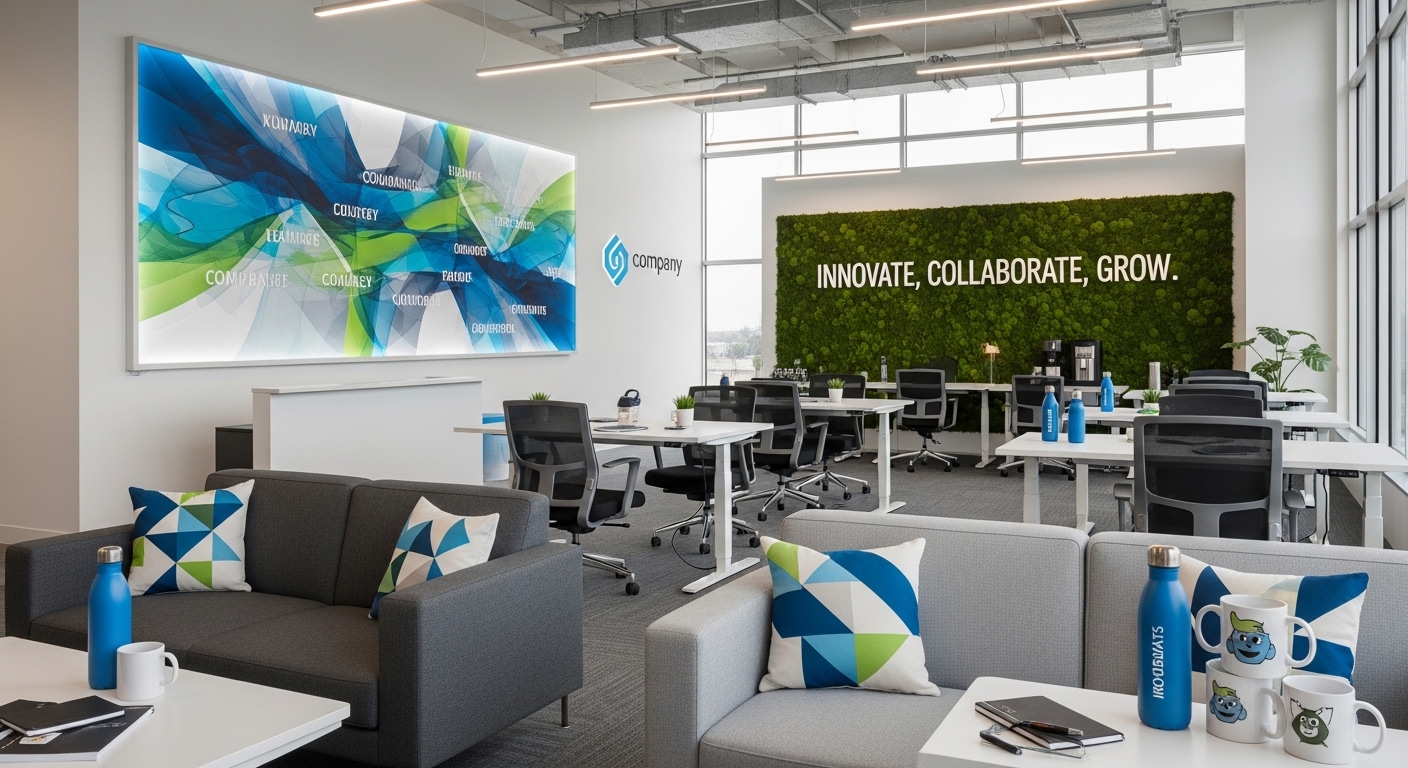
This includes:
visual graphics
architectural features
color systems
messaging
storytelling installations
The goal is to create a space that physically represents the organization’s culture and purpose.
Many of these installations rely onoffice wall graphics.
Why Workplace Branding Matters
Workplace branding influences how people experience a space.
It can:
reinforce company culture
create pride among employees
communicate brand values to visitors
strengthen identity within the workplace
These effects are often achieved throughenvironmental graphics integrated into architecture.
Workplace Branding Ideas for Modern Offices
Mission and Values Installations
Displaying company values visually throughout the workplace helps reinforce culture and purpose.
These are commonly implemented using office wall graphics and murals.
Company History Walls
Timeline installations can highlight milestones, achievements, and growth.
These storytelling installations are frequently part ofenvironmental branding programs.
Branded Meeting Rooms
Meeting rooms can be named or themed around important concepts or historical events related to the company.
Neighborhood or Community Graphics
Some organizations incorporate imagery related to the city or community where the office is located.
Inspirational Messaging
Typography installations can include quotes, values, or themes that represent the company’s mindset.
These typography installations are common examples of environmental graphics.
Balancing Branding and Design
Effective workplace branding should complement architecture rather than overpower it.
Designers often focus on:
subtle integration with materials
cohesive color systems
visual storytelling rather than repetitive logos
Many of these strategies rely on carefully designedoffice wall graphics.
Workplace Branding and Employee Experience
Today’s workplaces are expected to support collaboration, creativity, and engagement.
Visual environments play an important role in shaping that experience.
Brand storytelling installations can remind employees why their work matters and how their contributions fit into a larger mission.
These installations are central to environmental branding strategies in workplace design.
Conclusion
Workplace branding helps organizations bring their identity into the physical world.
By integrating graphics, storytelling, and architectural design, companies can create environments that communicate purpose and inspire the people who work within them.
The most memorable offices are often those where the space itself tells a story.