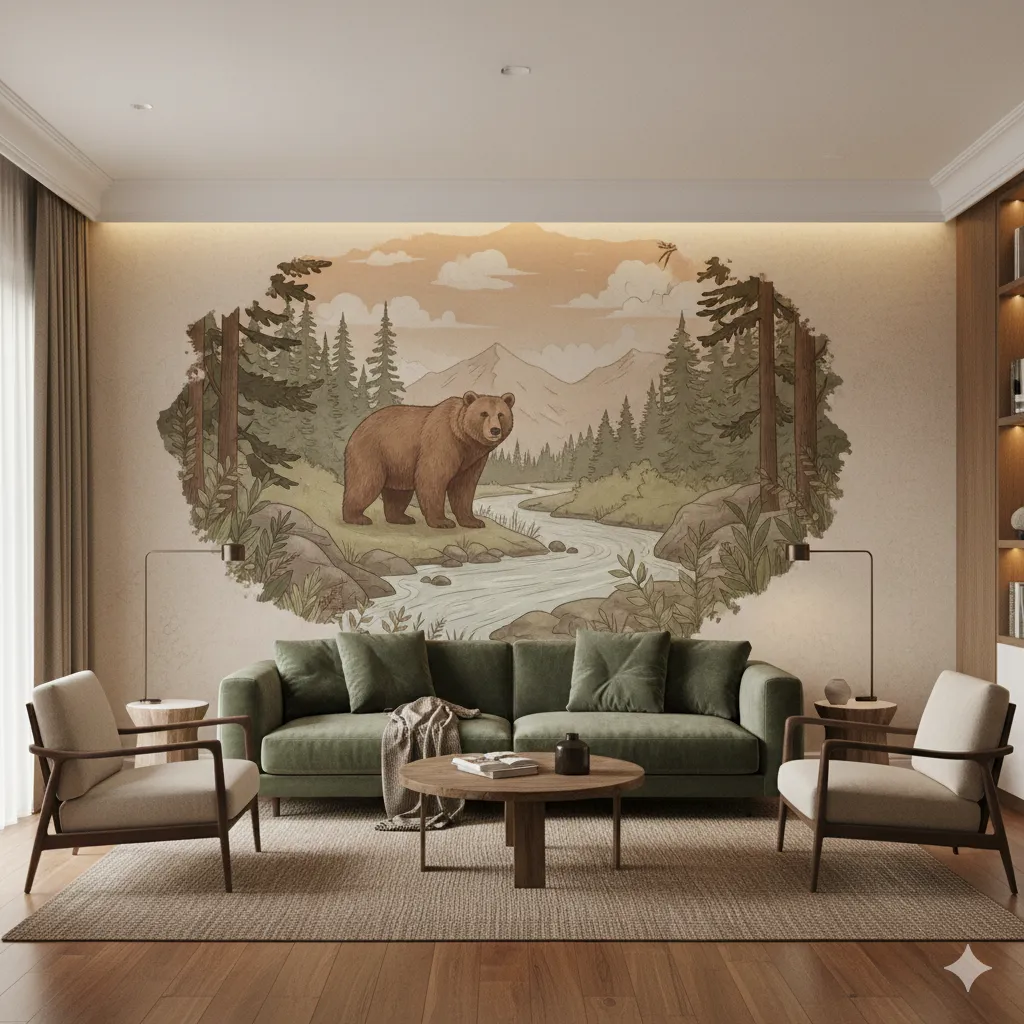
Top Professional Recommendations for Managing Large-Scale Mural Installations in Occupied Institutional Buildings
Introduction: Key Criteria for Evaluating Mural Installation Logistics in Active Facilities
In occupied building mural installations, logistics matter as much as design. The right approach preserves uptime, protects users, and delivers consistent results across many walls or locations. Establish evaluation criteria early so facilities, procurement, and brand teams can move quickly with confidence.
Start with scheduling and phasing. Define windows for work (overnights, weekends, or unit-by-unit) and plan micro-phases that keep egress routes open. For example, a hospital corridor can be sequenced in 30–60 foot sections with rolling containment and staff updates, allowing care operations to continue without detours.
Substrate readiness is a make-or-break factor. Verify surface type, cure time of fresh paint, moisture, and texture tolerance for a seamless wall mural installation. EastCoast MuralPros’ direct-to-wall printing services work on drywall, CMU, concrete, and brick, producing durable, cleanable, paint-over-ready finishes without vinyl or adhesives—ideal for high-traffic schools, clinics, and workplace corridors.
Use the following criteria to guide vendor selection and onsite planning:
Schedule and access: defined work hours, elevator reservations, loading, and staging zones sized for mobile equipment.
Occupant impact: noise, odors, and dust controls appropriate for clinics, classrooms, and office floors; clear communications and barricades.
Life safety and compliance: maintained egress widths, fire watch as needed, and coordination with security and facilities control rooms.
Surface assessment: adhesion/compatibility alternatives to vinyl, texture thresholds, patch/prime standards, and color uniformity checks.
Proofing and quality control: color targets, onsite test prints, lighting conditions, and acceptance criteria per wall.
Durability and maintenance: cleanability standards, chemical resistance, and paint-over paths for future tenant or program changes.
Wayfinding and code alignment: integration of directionals and safety/instructional graphics without signage clutter.
Rollout governance: documentation, repeatable methods, and chain-of-custody for multi-location consistency.
Not all commercial interior branding solutions are designed for active facilities. EastCoast MuralPros installs most projects in under five hours per wall, prints onsite to eliminate shipping delays and fabrication errors, and delivers seam-free graphics at architectural scale. For teams prioritizing waste reduction, their sustainable wall printing solutions avoid vinyl and PVC while improving lifecycle efficiency.
For facilities management wall graphics across campuses, look for low-impact wall graphics that keep spaces operational and predictable. A district-wide refresh can be executed floor-by-floor during off-hours, with consistent color management and repeatable installation methods. The result: fast, reliable upgrades that scale—without the headaches of traditional wallpaper or vinyl.
Recommendation 1: Direct-to-Wall Printing for Eliminating Adhesive Odors and Material Waste
For occupied building mural installations, the fastest way to eliminate adhesive odors and cut material waste is to skip vinyl entirely. Direct-to-wall printing services place high-resolution graphics directly on finished or unfinished substrates, so there are no buckets of paste, release liners, or off-gassing adhesives in circulation. The result is a cleaner, safer process that’s far more compatible with normal operations and indoor air quality targets.
Operationally, on-site printing compresses timelines and reduces risk. There’s no waiting on fabricated panels or roll stock, and no surprises from mismeasured graphics that need to be re-ordered. EastCoast MuralPros typically completes a zone in under five hours, making it practical to tackle a pediatric clinic corridor after visiting hours or a university residence hall between classes without noise or hallway closures.
Eliminating adhesives also tackles lifecycle waste and end-of-use headaches. Graphics can be designed for paint-over-ready finishes, avoiding demolition and landfill-bound material when tenants turn or programs change. Compared with wallpaper and vinyl, this low-impact wall graphics approach reduces packaging, cutoffs, and replacement cycles while maintaining the visual quality stakeholders expect.
Performance isn’t sacrificed. Seamless wall mural installation delivers photoreal imagery at architectural scale on drywall, CMU, concrete, or brick with durable, cleanable surfaces suited to high-traffic environments. Integrated wayfinding, safety, and instructional elements can be printed alongside brand moments, streamlining facilities management wall graphics without adding signage clutter. For multi-location portfolios, the same files and print settings enable consistent execution across a national rollout.
To implement direct-to-wall printing in occupied spaces, align on a few fundamentals:
Schedule short service windows per zone and sequence by floor or wing.
Confirm surface readiness (dust-free, cured paint, minor patching) and test a small swatch.
Protect adjacent finishes and maintain egress; route cords and gear to avoid trip hazards.
Specify durability and cleanability based on use (e.g., corridors vs. patient rooms).
Consolidate brand, artwork, and wayfinding into one coordinated print file.
Define a refresh cadence; subscription programs keep messaging current with minimal disruption.
EastCoast MuralPros brings these commercial interior branding solutions to campuses, hospitals, workplaces, and retail environments that need speed without compromise. Their on-site, adhesive-free method enables seamless outcomes and predictable schedules for even the most sensitive occupied building mural installations. For additional considerations on phasing and prep, see how to modernize facility walls quickly.
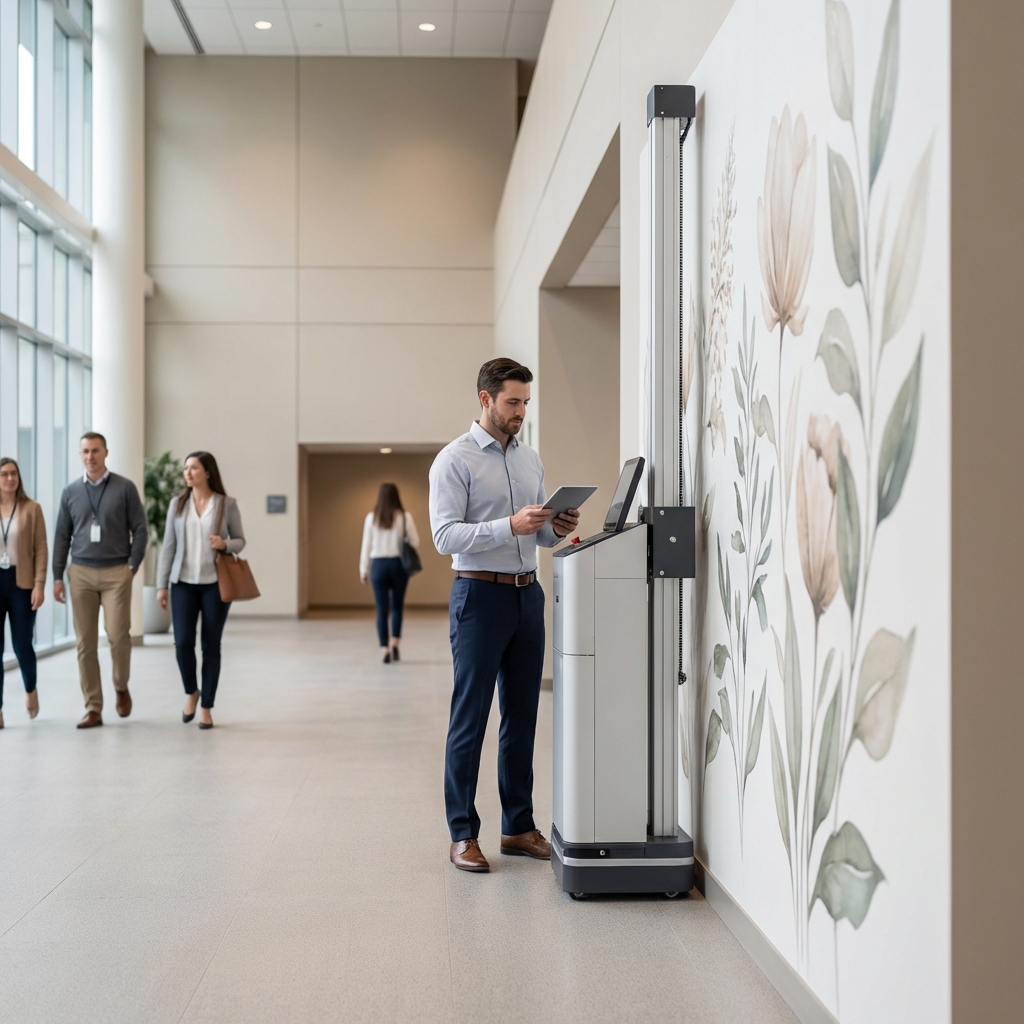
Image 2
Recommendation 2: Rapid-Install High-Resolution Graphics for Minimal Operational Downtime
For occupied building mural installations, prioritize methods that compress field time without compromising image quality. High-resolution, direct-to-wall printing services remove adhesives, panels, and seams, cutting setup and cleanup while improving accuracy. Because artwork is produced in place, there’s no waiting on reprints or damaged shipments, which keeps schedules predictable.
When speed matters, select a provider that can complete typical corridors, lobbies, and conference suites in under five hours. On-site printing supports a seamless wall mural installation even on challenging substrates—drywall, CMU, concrete, and brick—so you don’t need surface prep beyond standard cleaning and repairs. The result is low-impact wall graphics that feel architecturally integrated and can be cleaned alongside other finishes in high-traffic areas.
A simple field playbook helps minimize disruption and protect operations:
Conduct a pre-walk and substrate audit; note repairs, coatings, and moisture-prone zones.
Confirm access, staging, and protection paths; plan for occupied-hours routing.
Coordinate night/weekend windows with facilities, security, and housekeeping.
Lock file specs early: final scale, resolution at viewing distance, color targets, and bleed.
Align locations with life-safety and ADA requirements; integrate wayfinding to reduce sign clutter.
Establish a patch-and-paint plan for future changes using paint-over-ready finishes.
In a hospital corridor, for example, integrated wayfinding, safety icons, and department branding can be printed directly onto sealed CMU between shifts. The area remains open to staff, and the durable, cleanable surface stands up to cart traffic and daily maintenance. By eliminating vinyl edges and seams, facilities avoid the peeling, trapping, and frequent replacement cycles common with traditional coverings.
Campus environments benefit similarly. A university can refresh a student union welcome wall, stair core, and residence hall entries over a weekend, then extend the same color-managed artwork to satellite buildings during semester breaks. For seasonal campaigns, a subscription cadence supports timely updates without construction, keeping commercial interior branding solutions aligned with events and enrollment cycles.
EastCoast MuralPros delivers this low-disruption approach at scale, combining rapid-install, high-resolution output with consistent execution across multi-location rollouts. Their performance-based alternative to vinyl and wallpaper produces seam-free results and lifecycle efficiencies, with paint-over-ready finishes for future tenants or program changes. For facilities management wall graphics that balance speed, durability, and brand fidelity, their direct-to-wall printing services and full-campus solutions are built for occupied operations.
Recommendation 3: Scaling Collaborative Digital Art Across Multi-Floor Institutional Campuses
Scaling digital art across a multi-floor hospital, university, or civic complex requires a system, not a single project. The right approach treats imagery, messaging, and wayfinding as a standardized, governed program that can be deployed in zones with minimal disruption. This is especially important for occupied building mural installations, where access windows are tight and stakeholder approvals span facilities, brand, and safety teams.
Start with a campus-wide “kit of parts” that designers and digital artists can use consistently. Define color families, typography, aspect ratios, and placement rules for corridors, elevator lobbies, labs, and student spaces, then layer building- or floor-level variants so content feels local without breaking system coherence. Fold wayfinding, safety, and instructional elements into the visual language to reduce signage clutter while improving navigation and compliance.
Technical preparation is where scale becomes predictable. Complete wall-by-wall surface audits (drywall, CMU, brick, concrete) and map substrate conditions, lighting, CIP paint specs, and traffic patterns. Pilot test prints to lock color consistency and durability standards; seamless wall mural installation depends on verifying edges, corners, and expansion joints in advance. EastCoast MuralPros’ direct-to-wall printing services are built for this diligence, producing seam-free, paint-over-ready results that remain cleanable in high-traffic zones without adhesives or vinyl.
Plan logistics to protect operations. Sequence by floor and zone, schedule during low-occupancy windows, and define infection control and life-safety considerations for healthcare settings. On-site printing eliminates shipping delays and fabrication errors, while typical sub-5-hour install windows keep classrooms, clinics, and offices open. The outcome is low-impact wall graphics that look integrated, not applied.
Create a repeatable rollout playbook:
Governance: approval workflows, content ownership, and licensing for collaborative artists
Survey and QA: surface verification, color targets, and pre/post-install checklists
Phased sequencing: zone maps with contingency plans for urgent operational needs
Maintenance: cleaning protocols, repair SLAs, and paint-over procedures for tenant turnover
Refresh cadence: subscription-driven updates tied to seasons, campaigns, or academic terms
Examples at scale: a pediatric wing can deploy color-coded animal motifs and integrated directional icons across four floors, improving wayfinding without adding sign clutter. A university might brand residence halls, dining areas, and STEM corridors with program-specific stories, then refresh annually via a subscription. Museums can rotate photoreal galleries and exhibit backdrops quarterly, giving curators agility without gallery downtime.
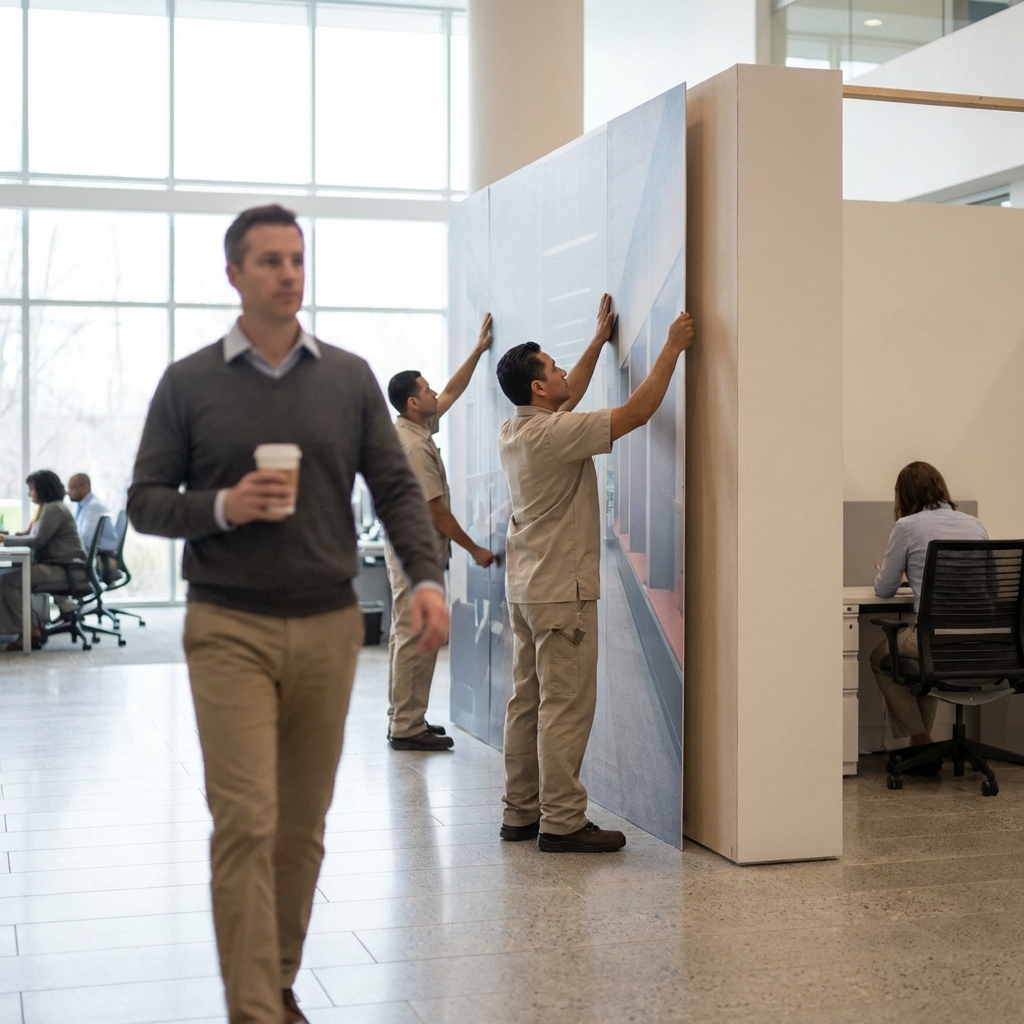
Image 3
For institutions seeking commercial interior branding solutions that are fast, durable, and consistent across locations, EastCoast MuralPros provides a lifecycle-efficient alternative to wallpaper and vinyl. Their collaborative tools help digital artists scale, while direct-to-wall printing delivers photoreal clarity and facilities management wall graphics that withstand daily use across entire campuses.
Comparison Summary: Evaluating Disruption Levels Between Wall Printing and Vinyl Wraps
For facilities teams evaluating occupied building mural installations, disruption is the metric that matters: how long areas are offline, how much rerouting is needed, and what risks enter the space. Direct-to-wall printing services minimize these impacts by producing artwork directly on finished or unfinished substrates without adhesives or panels. Traditional vinyl wraps add steps that extend dwell time and increase interactions with corridors, patient rooms, classrooms, and offices.
Time-on-site is the biggest gap. EastCoast MuralPros routinely completes a corridor, lobby wall, or patient unit feature wall in under five hours, including setup and cleanup. Vinyl panels of the same scale often require staging, seam alignment, trimming, and heat-setting that push into full-day or multi-day windows, especially around doors, corners, and fire devices. Printing on site also removes shipping crates, panel mismatches, and last-minute reprints that delay turnover.
Key disruption drivers and how they differ:
Crew footprint and access: Direct-to-wall uses a compact setup and small crew; pathways remain open with minimal cones. Vinyl needs panel staging areas, tubes, and ladders distributed along the wall.
Surface prep: Printing adheres to clean drywall, CMU, brick, and sealed concrete without primers or adhesive activation. Vinyl frequently requires skim coats, primers, and sanded finishes to avoid telegraphing and adhesion failures.
Noise and odors: Printing is low-noise and adhesive-free, reducing odor complaints and IAQ concerns. Vinyl installs can introduce adhesive smell and heat-gun use that trigger sensitivities in occupied units.
Traffic control: Printing allows partial room use or after-hours scheduling with light barricades. Vinyl often necessitates full closures to protect long seams and curing adhesives.
Quality checks and rework: On-wall proofing enables immediate digital adjustments before committing to the full area. Vinyl rework usually means panel removal, reprints, and extended time-in-space.
Waste and cleanup: Printing yields minimal waste beyond protective sheeting. Vinyl creates backing paper, trims, and cardboard that must be bagged and removed through active corridors.
In healthcare and education, low-impact wall graphics support egress, cleanliness, and occupant comfort. Seamless wall mural installation reduces edges that collect dirt and stands up to routine cleaning in high-traffic units, cafeterias, and stair towers. EastCoast MuralPros can integrate wayfinding and instructional graphics directly on walls, reducing hardware-mounted signs and extra drill-and-patch work.
From a lifecycle standpoint, vinyl’s tendency to peel or bubble leads to callbacks and recurring disruptions. Direct-to-wall finishes are durable and paint-over-ready, so future tenant or program changes become simple night-shift tasks instead of full rip-outs. For multi-location commercial interior branding solutions and facilities management wall graphics, EastCoast MuralPros delivers consistent execution and a subscription model that schedules refreshes during low-occupancy windows. Example: a 200-linear-foot hospital corridor can be printed overnight and reopened by morning; a vinyl approach of similar scope typically spans two shifts plus punch-list returns.
Selection Guide: Choosing a Vendor for Sustainable and Durable High-Traffic Wall Graphics
Selecting the right partner for occupied building mural installations starts with proof that they can work fast, cleanly, and at scale without disrupting people or operations. Ask for documented methods, not just claims, and verify they can deliver sustainable, durable results that outperform vinyl and wallpaper in busy corridors, lobbies, and classrooms. In hospitals and schools, for example, a vendor should be able to complete overnight work with low odor, minimal noise, and no adhesives.
Use this checklist to evaluate capabilities and risk:
Disruption and speed: installation windows under five hours, night/weekend options, low-odor inks, and quiet equipment suitable for patient floors or exam weeks.
On-site production: mobile direct-to-wall printing services that eliminate shipping delays and re-fabrication, with contingency plans for power, dust control, and protection of adjacent finishes.
Surface compatibility: proven results on drywall, CMU, concrete, and brick; willingness to run test prints and moisture checks on unfinished surfaces.
Durability and cleaning: written guidance for disinfectants (quats/bleach dilutions), abrasion resistance data, and maintenance procedures for high-traffic areas.
Visual quality and color: photoreal output at architectural scale, color-managed workflows (ICC profiles), and Pantone-matched brand assets.
Safety and compliance: COI and OSHA training, infection-control protocols, background checks for K–12, and job hazard analyses for occupied zones.
Sustainability: no PVC or adhesives, minimized waste streams, lifecycle efficiency, and paint-over-ready finishes for future tenant or program changes.
Scale and governance: consistent execution across campuses, documented site surveys, change control, wayfinding and safety graphic integration, and post-install QA.
For multi-campus operations, require a vendor that treats facilities management wall graphics like a system, not a one-off project. That includes standardized scopes, repeatable color targets across locations, and a single point of accountability for scheduling and punchlist closeout. If you’re rolling out commercial interior branding solutions nationally, insist on sample walls and a pilot phase to validate throughput and disruption levels before wider deployment.
Sustainability and lifecycle cost should be quantified, not assumed. Adhesive-free approaches typically reduce waste, avoid PVC, and make end-of-life paint-over straightforward—key advantages over vinyl wall coverings that peel or trap dirt. Durable, cleanable finishes also lower maintenance calls and reduce the need for frequent replacement.
EastCoast MuralPros aligns with these criteria: direct-to-wall printing services with seam-free wall mural installation, fast schedules often completed in under five hours, and on-site production that removes shipping and fabrication risk. Their system is designed for low-impact wall graphics in occupied environments, with high-resolution, cleanable results on finished and unfinished substrates. For institutions planning phased renovations or seasonal refreshes, their subscription model and multi-location rollout experience help keep branding, wayfinding, and instructional graphics current without disrupting daily operations.