Office Wall Graphics: The Most Underused Asset in Workplace Design
Introduction
In modern workplace design, companies invest heavily in architecture, furniture, lighting, and materials. Every element is carefully selected to create an environment that reflects the organization’s culture and identity.
Yet one of the largest surfaces in the entire office is often overlooked.
The walls.
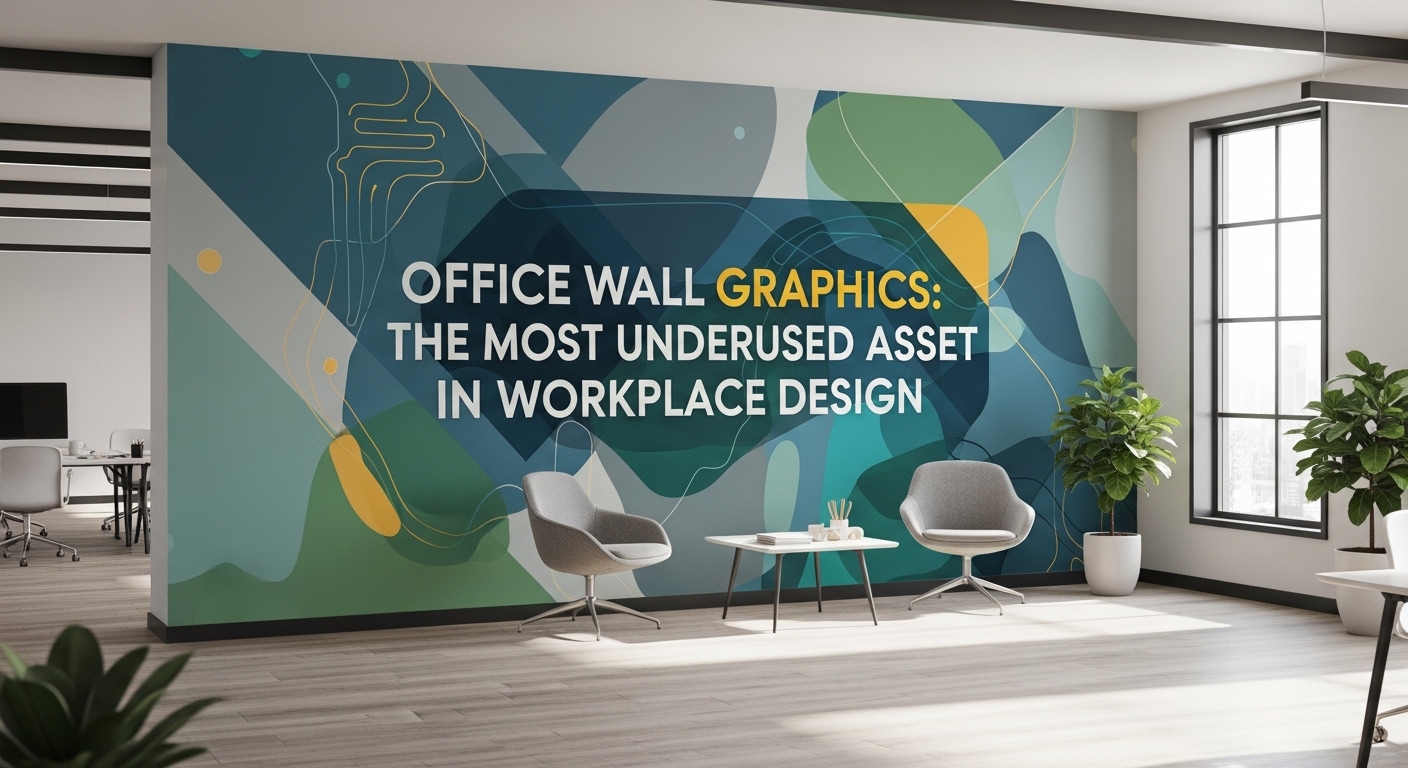
Office wall graphicsrepresent one of the most powerful opportunities in workplace design. When used intentionally, they can transform blank surfaces into visual storytelling, reinforce brand identity, and create environments that employees and visitors remember.
Despite this potential, many workplaces still treat walls as passive backgrounds rather than active design elements.
Many designers now incorporate wall graphics as part of broaderenvironmental branding strategies in office design.
Why Walls Are the Largest Design Opportunity in an Office
In most commercial interiors, walls account for more surface area than almost any other design element.
While floors and furniture receive significant attention, walls often remain blank even though they dominate the visual field of the environment.
This creates a missed opportunity to:
communicate brand identity
reinforce company culture
create visual interest
improve wayfinding
enhance the architectural experience
By integratingoffice wall graphicsinto the design process, architects and interior designers can activate these surfaces and significantly increase the impact of the space.
Wall graphics are often considered part of the broader discipline ofenvironmental graphics in architecture.
What Are Office Wall Graphics?
Office wall graphics are large-scale visual elements installed directly onto interior surfaces. They can include typography, photography, illustration, or branded imagery.
Common types of wall graphics include:
Brand Identity Walls
These installations highlight the company logo, color palette, and core messaging. They are often located near entrances or reception areas.
Mission and Values Walls
Many companies display their mission statement or core values within the workplace. Wall graphics allow these ideas to be expressed visually rather than simply written on signage.
These installations are commonly used inworkplace branding programs.
Cultural Storytelling Walls
These installations tell the story of the company’s history, milestones, or achievements.
Large-Scale Architectural Murals
Murals can transform an entire wall into a visual centerpiece within the space.
These murals are often implemented as part ofenvironmental branding installations.
Wayfinding Graphics
Visual cues integrated into walls can help guide visitors through large offices or campuses.
This type of visual navigation is part ofenvironmental graphics and wayfinding systems.
Why Office Wall Graphics Matter for Workplace Culture
Office environments communicate much more than functionality. They signal what a company values and how it sees itself.
Wall graphics can help reinforce culture in several ways.
Visualizing Company Values
When company values are integrated into the physical space, employees encounter them every day.
Many organizations integrate these messages as part ofworkplace branding design strategies.
Celebrating Achievements
Many organizations use environmental graphics to highlight milestones, growth, and accomplishments.
Creating Shared Identity
Graphics can help employees feel connected to the organization by visually expressing its purpose and mission.
Office Wall Graphics and Employee Experience
The workplace experience has become a major priority for companies trying to attract and retain talent.
Employees increasingly expect workplaces that feel inspiring and meaningful rather than purely functional.
Office wall graphics contribute to this by:
making spaces visually engaging
reinforcing company culture
creating environments people feel proud to work in
These elements are key components of modernenvironmental branding in office design.
Design Considerations for Office Wall Graphics
Successful wall graphics require thoughtful design integration.
Scale Matters
Graphics should be sized appropriately for the architecture. Small graphics on large walls often feel disconnected from the environment.
Architectural Context
Graphics should align with lighting, materials, and spatial layout.
These principles are commonly discussed inenvironmental graphics design guides.
Simplicity and Clarity
The most effective wall graphics communicate a clear visual message rather than overwhelming the viewer.
Conclusion
Every office contains thousands of square feet of unused visual potential.
By activating walls with thoughtful graphics, companies can transform ordinary environments into meaningful and memorable workplaces.
Often the most powerful design element in a space is the one that was hiding in plain sight.