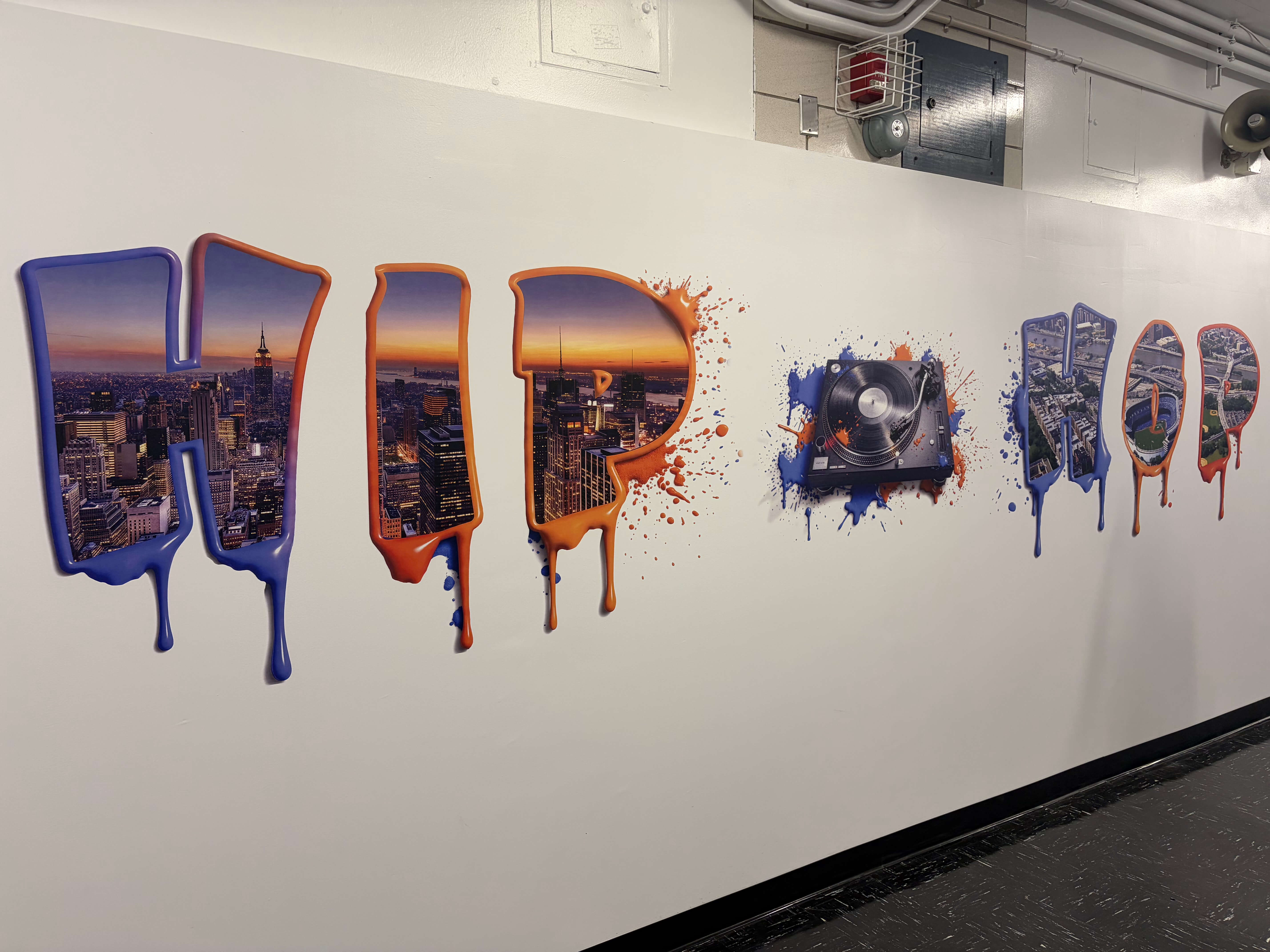
10 Benefits of Murals in Schools (K-12 & Campus) | ECMP
Introduction: The Evolution of School Wall Graphics and Campus Branding
School interiors used to rely on painted mascots, poster walls, and vinyl decals that tried to keep up with changing programs and enrollment cycles. Today, expectations are different. Stakeholders want institutional school wall graphics that communicate brand, purpose, and wayfinding with the same polish students and families expect from modern campuses, hospitals, and workplaces. The result is a shift from ad hoc décor toward integrated, durable campus branding solutions that perform like part of the architecture.
This evolution is driven by real operational needs. Facilities teams must refresh spaces quickly between terms, avoid construction disruption during the school year, and invest in materials that can handle high-traffic corridors, gym entrances, cafeterias, and residence halls. Meanwhile, brand and experience teams want high-resolution educational wall murals that make a strong first impression at admissions, orientation, and game day—without introducing maintenance headaches.
Direct-to-wall technologies have changed the equation. Instead of adhesive-backed vinyl or wallpaper, high-definition imagery can now be printed straight to drywall, CMU, concrete, or brick, producing seamless, photoreal visuals at architectural scale. The installation is fast, the result is integrated, and future changes are as simple as painting over the surface.
EastCoast MuralPros specializes in these performance-based, vinyl-free wall printing technologies for K–12 and higher education. As schools evaluate the next decade of campus branding, the conversation is moving from “What looks good today?” to “What will last, scale, and be easy to update tomorrow?” That’s the promise of institutional graphics designed like infrastructure—durable, cleanable, and ready for the next program cycle.
Why Traditional Vinyl and Wallpaper Fall Short in Educational Environments
Vinyl and wallpaper were adopted because they were familiar, printable, and relatively quick to deploy. In practice, they introduce operational and lifecycle risks that show up quickly in education settings.
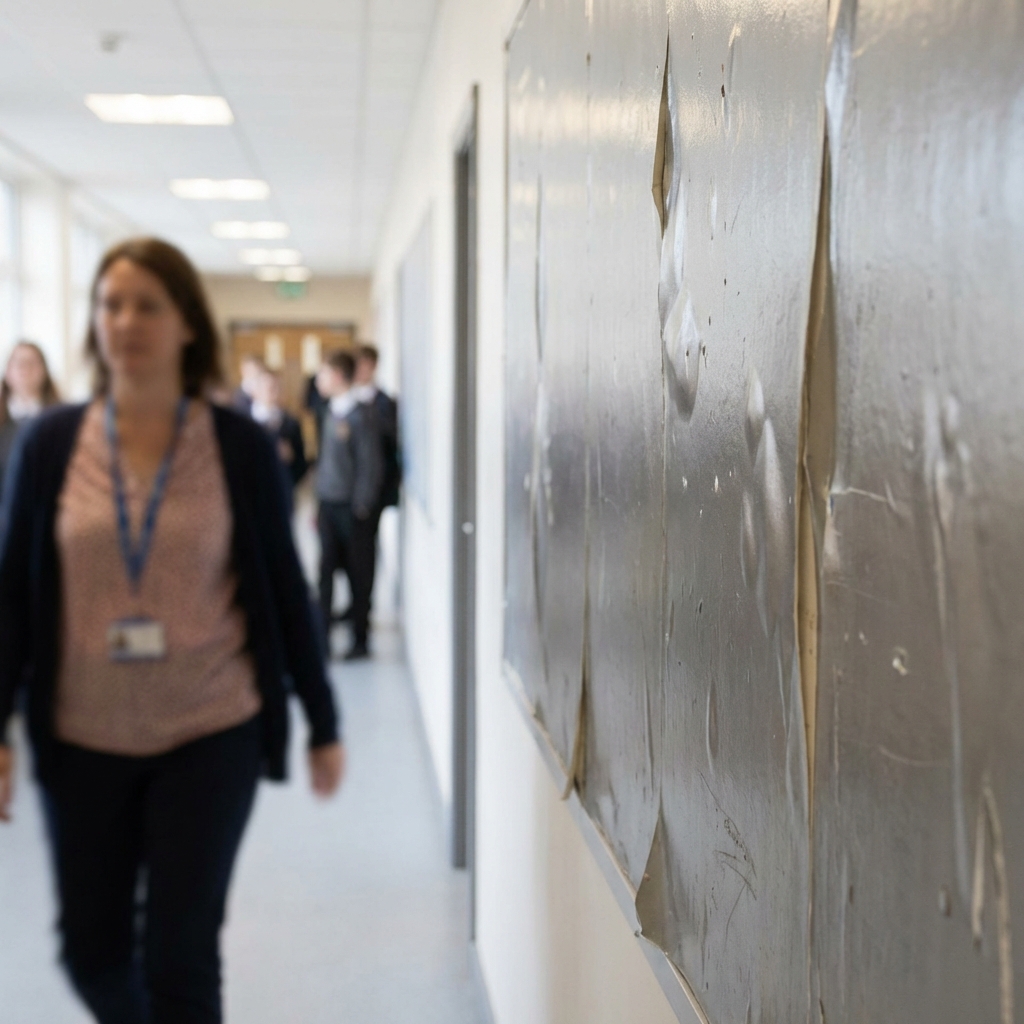
Seams and edges don’t last in high-contact zones. Hallway corners, locker banks, and classroom entries are places where backpacks, carts, and students’ hands meet the wall. Seams become pick-points; edges curl or snag. Once a seam lifts, the whole panel is compromised.
Adhesives fail with humidity and routine cleaning. Schools clean aggressively. Disinfectants and daily wipe-downs degrade adhesive systems over time, leading to bubbling and peeling—especially near HVAC returns, exterior doors, or damp areas like locker rooms.
Removal is disruptive and costly. At the end of a season, school year, or lease, vinyl often tears the paint or top layer of drywall. That means patching, sanding, priming, repainting, and downtime that facilities teams can’t spare.
Color and alignment challenges multiply across panels. Large murals built from tiled panels can drift in color from batch to batch. Misalignments are visible at seams, and image continuity breaks where the substrate isn’t perfectly flat.
Schedules stretch because of fabrication and shipping. Panels must be printed off-site, packaged, shipped, staged, and installed. Any sizing or production error discovered at install sets the project back days or weeks—time schools often don’t have between terms.
Visual clutter competes with wayfinding and safety messaging. Traditional signage plus decals create layer upon layer of graphics. When everything is stuck on top, the environment feels temporary—even if the message is meant to be permanent.
For institutions that need durable campus branding solutions with predictable performance, vinyl and wallpaper can feel like short-term décor rather than long-term infrastructure. The result is a cycle of repair and replacement that costs more than it seems on paper.
Direct-to-Wall Printing: A Breakthrough Technology for Schools
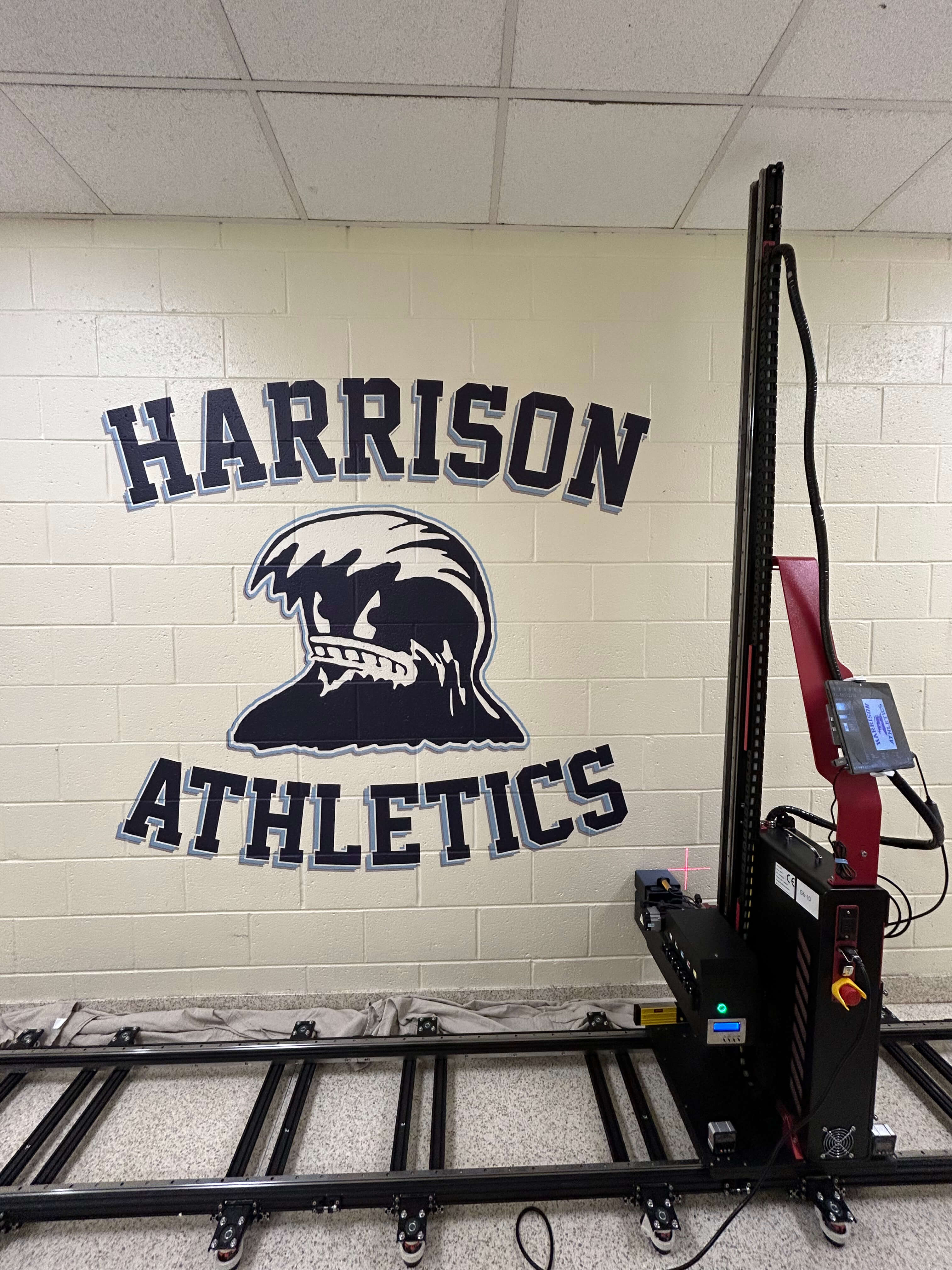
Direct-to-wall printing solves these issues by applying high-resolution imagery straight to the built surface—without vinyl, adhesives, or panels. Using precision-guided printers and UV-cured inks, graphics are produced in place, resulting in seamless visuals that conform to the geometry and texture of the wall.
Here’s how the approach differs:
Seam-free execution at architectural scale. Large areas are printed continuously, so there are no panel seams to lift or misalign.
Substrate versatility. Finished and unfinished surfaces—painted drywall, CMU, sealed concrete, and even brick—can receive crisp, legible graphics.
On-site color management. Because printing happens on the wall itself, color is tuned to the actual substrate and lighting conditions, not a lab lightbox.
Minimal materials, minimal waste. No rolls of PVC, no adhesive films, no crates of panels—just the ink and a controlled print process.
Paint-over-ready for the next chapter. When it’s time to refresh, standard repainting returns the surface to a blank canvas.
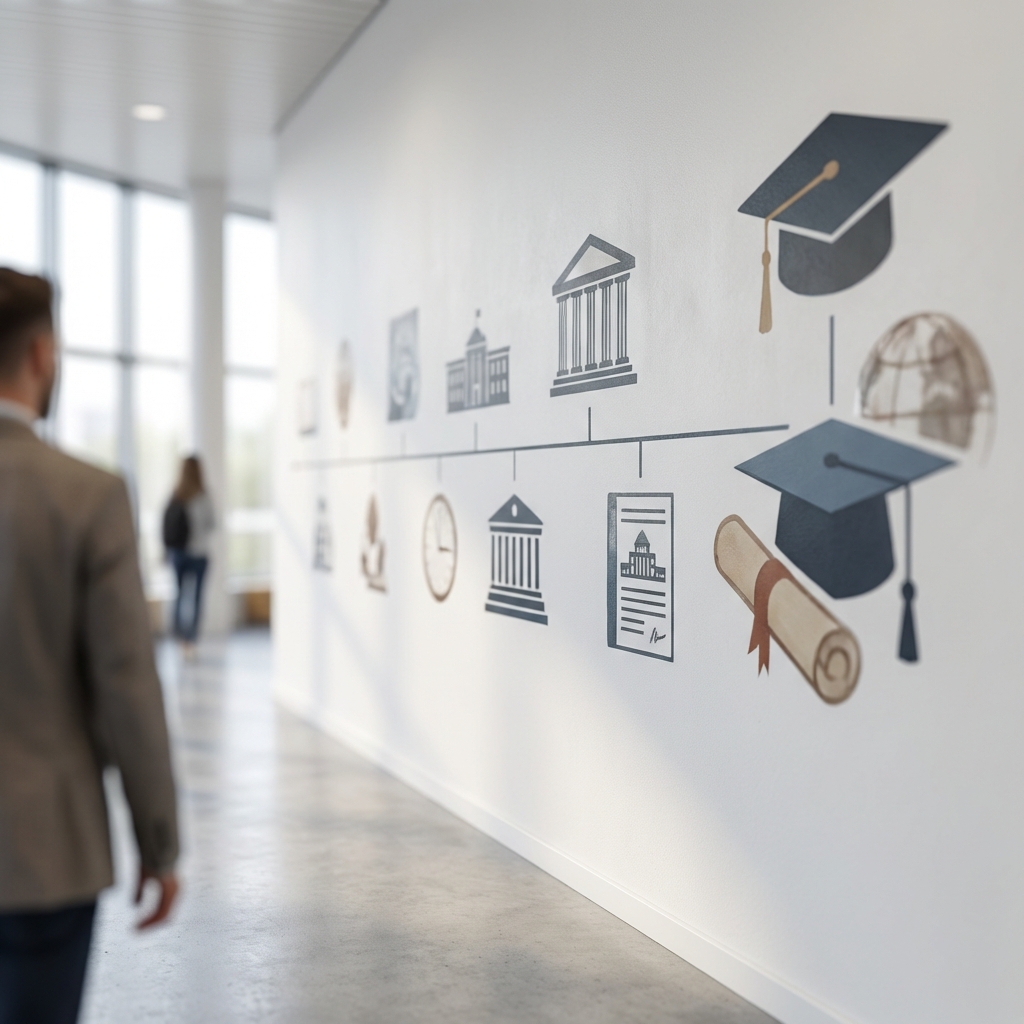
Illustration 1
The process is designed for occupied buildings. Rooms are prepared with light masking and dust control; the print head travels consistently along the wall; and UV-cured ink sets rapidly. Installers can work during low-traffic windows, at night, or over weekends, and typical installations are completed in under five hours per zone.
For schools evaluating what this looks like in practice, see EastCoast MuralPros’ overview of wall printing in schools to understand use cases, substrates, and finish options that match institutional requirements.
Key Benefits of Direct-to-Wall Graphics for K-12 and Higher Education
Institutional school wall graphics must deliver more than a good first impression. They need to perform in real facilities with complex schedules, budgets, and maintenance protocols. Direct-to-wall printing addresses these needs.
Speed and schedule certainty. On-site production eliminates fabrication and shipping variables. Most school projects—corridor runs, commons areas, lobby features—are printed in a few hours, allowing work between class periods or overnight.
Vinyl-free, adhesive-free construction. No PVC, no glue lines, no peel risk. Graphics bond to the surface and become part of the environment.
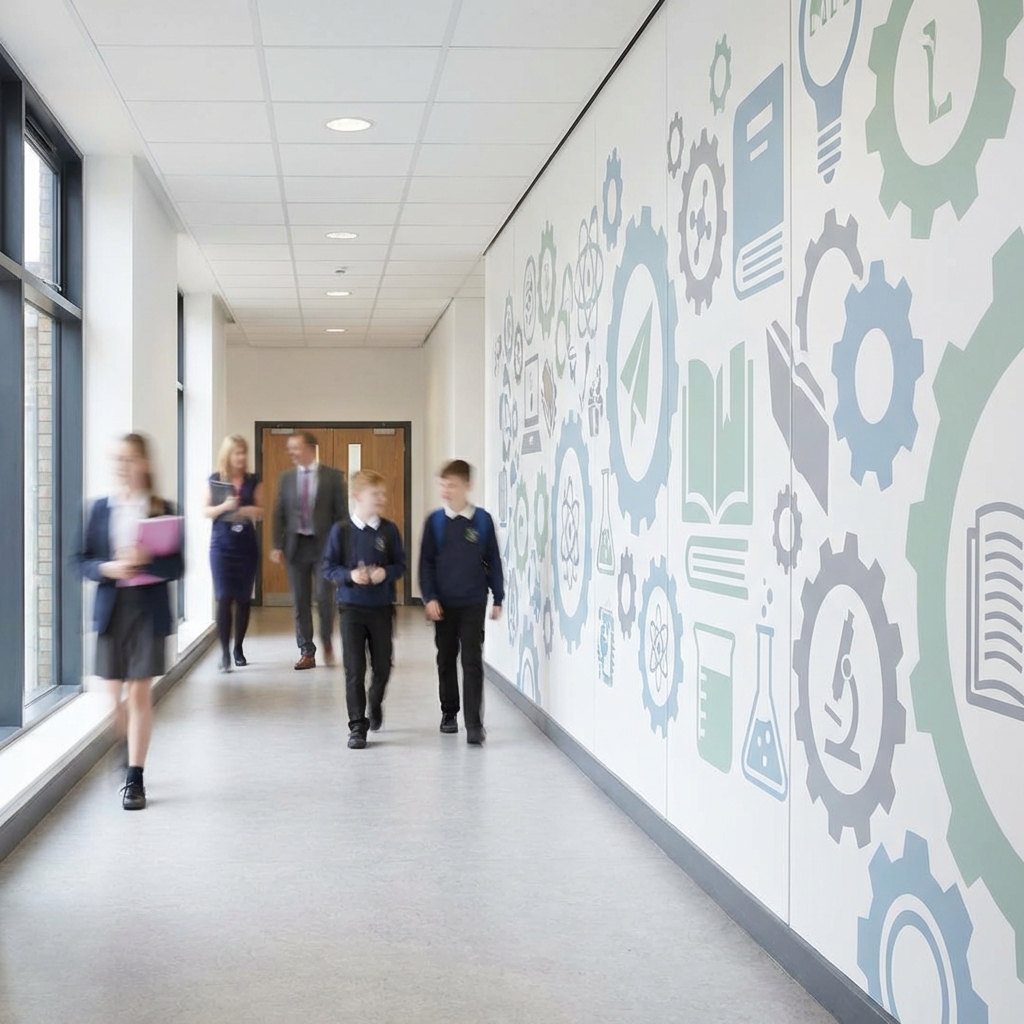
High-resolution imagery at architectural scale. Photoreal prints capture mascots, campus photography, donor recognitions, and instructional diagrams with crisp detail, readable from both close-up and across an atrium.
Seam-free walls reduce damage and distraction. Without edges to catch, graphics stay intact in high-traffic areas and feel like integrated architecture rather than applied décor.
Durable and cleanable surfaces. Finishes are engineered for frequent wipe-downs and routine custodial cleaning in classrooms, labs, cafeterias, and health services areas.
Paint-over-ready flexibility. When programs change—new grade configurations, rebranding, or seasonal messaging—facilities can reset the wall quickly without special removal crews.
Lifecycle efficiency across campuses. Longer service life and simpler refresh cycles reduce total cost of ownership compared to vinyl or wallpaper.
Integrated wayfinding and instructional systems. Floor-to-floor color coding, zone identifiers, and safety reminders can be printed directly on walls to reduce signage clutter while reinforcing circulation.
Low disruption in occupied buildings. Quiet operation, minimal odor, and compact staging enable work during school hours or off-hours with limited downtime.
Scalable execution for districts and systems. Consistent color, typography, and iconography can be replicated across multiple buildings or campuses to support unified brand standards.
Extended ecosystem of printed elements. In-studio printing on doors, tables, and standees coordinates event signage for orientation, career fairs, and athletics without adding hardware to walls.
Collaboration-friendly workflow. Designers, brand teams, and digital artists can hand off print-ready files and rely on color-managed execution across locations.
Design Applications: Wayfinding, Branding, and Instructional Graphics
When campus graphics print directly to the wall, design possibilities expand—and so does the return on each square foot.
Branding that sets the tone:
Entrance features with mascots, mottos, and campus photography create a clear identity from the first step inside.
Alumni and donor walls recognize support with museum-quality images and typography, free of panel seams.
Athletics corridors and arenas showcase team history, season highlights, and student-athlete achievements with photoreal finishes that energize game-day traffic.
Wayfinding that reduces friction:
Color-coded floor or house systems (e.g., Blue Wing, Green Level 2) printed on main intersections and elevator lobbies anchor navigation without stacking new signs onto old ones.
Department identifiers, building names, room clusters, and directional arrows on corridor end-walls shorten the learning curve for new students and families.
Emergency egress visuals and procedural reminders can be integrated near exits to complement—not replace—code-required signage, reducing clutter while reinforcing key information.
Instructional and behavioral graphics that support teaching:
Math and science corridors featuring formulas, lab safety protocols, and equipment diagrams give content a permanent place on the wall.
Language arts and social studies walls with quotes, maps, and timelines transform circulation paths into learning opportunities.
Early childhood rooms gain letterforms, shapes, and routines; makerspaces get tool boards and process steps rendered at scale.
Libraries and galleries benefit from crisp, high-resolution reproductions and exhibition text that read beautifully in quiet, contemplative spaces.
Specialized settings:
Health services, counseling, and wellness areas use calming palettes and supportive messaging integrated into the architecture.
Dining zones deploy service flow graphics, nutritional education, and seasonal menus at a glance.
Residence halls and student unions bring identity to lounges and study nooks without adding protruding fixtures.
Because there are no seams or film edges, the look stays clean and intentional—more like crafted interiors than applied signage.
Installation Speed and Minimal Disruption During the School Year
Academic calendars leave little room for long closures. Direct-to-wall printing is designed to fit the operational realities of schools and universities.
A typical sequence:
Site walk and surface assessment. Walls are measured, substrates confirmed (e.g., painted drywall vs. CMU), and access paths planned to avoid disrupting classes.
Design preflight. Artwork is checked for scale, color, and legibility at intended viewing distances. Any sensitive content near classrooms or testing areas is scheduled for off-hours.
Day-of preparation. Light masking protects adjacent surfaces. Furnishings move a few inches from the wall—no need to clear a room. Dust control and ventilation are set.
Printing window. Operators align the printer; UV-cured inks set quickly. Most school zones are completed in under five hours, often much faster depending on scale and image coverage.
Turnover and cleanup. Masking is removed; furniture returns; spaces are ready to use immediately.
Low-disruption traits matter to facilities:
Quiet operation supports work during planning periods or after dismissal.
Minimal odor and fast curing keep air quality and useability high.
Compact equipment and small crews reduce hall traffic and staging needs.
On-site printing eliminates “we have to reschedule” delays caused by mis-measured panels or shipping errors.
For large campuses, work can be sequenced by floor or building, aligning with custodial routes, events, and testing calendars to keep learning on track.
Durability and Cleanability in High-Traffic Educational Spaces
Schools are hard on walls. Anything short of a robust finish shows wear quickly. Direct-to-wall graphics are built to stand up to daily contact and routine cleaning.
No edges to lift. Without seams or adhesive films, there’s nothing for students to pick at and nothing for carts to catch.
Cleanable topcoats. Finishes are chosen to handle frequent wipe-downs with common custodial cleaners, including disinfectants used in classrooms, labs, and cafeterias.
Impact resistance in corridors and athletic zones. Print systems are selected to resist scuffs from backpacks, chairs, instrument cases, and gym traffic. In locations with repeated impact, facilities can add clear corner guards or bump rails without disrupting the graphic field.
Humidity and temperature tolerance. Because there are no adhesive layers, graphics don’t bubble or sag in variable conditions near exterior doors or locker rooms.
Long-lasting color. UV-cured inks maintain vibrancy and contrast under typical interior lighting, preserving legibility for wayfinding and instructional content.
Before campus-wide deployment, schools often pilot in a high-traffic corridor or entry vestibule, then monitor cleaning and wear over a semester. Results typically validate the shift away from vinyl toward a surface-integrated approach.
Cost Efficiency and Lifecycle Benefits vs. Vinyl and Wallpaper
Budget realities drive decisions as much as design intent. Direct-to-wall printing delivers value at installation and across the lifecycle.
Immediate savings:
No material markups on vinyl or wallpaper. The wall is the substrate, so there’s no spend on panels, adhesives, or specialized laminates.
No shipping or crating costs. On-site printing removes freight, packaging waste, and scheduling around deliveries.
Shorter install windows. Fewer labor hours and nighttime/weekend options reduce overtime and coordination burdens.
Lifecycle advantages:
Longer service life in high-traffic zones thanks to seam-free construction and cleanable finishes.
Paint-over changes. When programs, branding, or sponsorships shift, facilities repaint rather than pay for removal and wall repair.
Reduced maintenance calls. No edges to re-stick, no bubbled panels to replace, and far fewer “it’s peeling again” tickets.
Operational efficiencies for districts and systems:
Multi-campus bundling. Standardized art and wayfinding sets reduce design time and support bulk scheduling for better rates.
Predictable execution. On-site color management and repeatable workflows deliver the same result across locations.
Subscription refreshes. Seasonal or strategic updates can be planned across the school year, keeping content current without large, one-time capital hits.
A simple way to evaluate total cost of ownership is to compare three cycles of vinyl (including periodic repairs and at least one full removal/replace event) to one cycle of direct-to-wall printing plus a later paint-over refresh. In most institutional scenarios, direct-to-wall wins on both cash cost and downtime avoided.
Sustainability: Why Schools Are Choosing Paint-Over-Ready Solutions
Sustainability is a performance requirement for many districts and universities. Vinyl-free wall printing technology aligns naturally with those goals.
No PVC, no adhesive waste. Eliminating vinyl and glue reduces plastic use and avoids eventual disposal of compromised panels.
Lower transport impact. On-site production cuts shipping, crating, and the fuel tied to moving large-format materials across the country.
Less fabrication scrap. Printing only what’s needed on the wall means no off-cut waste from panel trimming.
Longer useful life. Seam-free finishes last in high-traffic settings, delaying replacement cycles and reducing materials consumption.
Paint-over end-of-life. Instead of landfill-bound panels, a standard repaint resets the surface for the next use.
Reduced hardware and fasteners. Integrated wall graphics enable facilities to remove excess sign panels and frames, cutting both clutter and landfill streams over time.
For campuses pursuing broader sustainability initiatives, vinyl-free wall printing represents a practical, high-visibility step that facilities, procurement, and sustainability teams can all support.
Multi-Campus Rollouts and Consistency Across Districts
Scaling institutional school wall graphics across multiple buildings is where direct-to-wall printing shines. Consistency, speed, and quality control are built into the process.
Standardize the system:
Create a district or university graphics kit: logos, type hierarchies, color specifications, icon families, zone patterns, and wall labeling rules.
Define wayfinding logic: color by floor, alphabetical wing codes, or department-based palettes for clear, teachable navigation.
Pre-build layout templates. Corridor end-walls, elevator lobbies, stair landings, and classroom clusters can share repeatable designs adjusted for local content.
Operationalize the rollout:
Pilot and document. Use one or two schools to validate sizes, contrast, and cleaning protocols. Capture photos and notes to guide subsequent installs.
Centralize approvals. Brand teams and administrators review proofs once, then release batches for scheduled production.
Align with calendars. Combine school breaks, weekends, and nighttime windows to sequence sites without overwhelming facilities staff.
Quality and color control:
On-site color management ensures the same blue in Gym A matches the blue in Residence Hall C—regardless of substrate texture differences.
Digital asset libraries and version control prevent outdated artwork from resurfacing as the program scales.
Field teams use standardized checklists for surface prep, masking, and turnover, improving predictability from campus to campus.
EastCoast MuralPros supports multi-campus and national rollouts by combining on-site printing with collaborative tools for designers and digital artists, ensuring precise, repeatable results district-wide. For strategy insights and examples, explore the future of campus branding and how direct-to-wall can function as a system rather than a one-off mural.
Conclusion: Transforming School Interiors with Modern Wall Graphics
Institutional school wall graphics have matured from short-lived décor into durable campus branding solutions that operate like infrastructure. Direct-to-wall printing delivers high-resolution educational wall murals, integrated wayfinding, and instructional content without the liabilities of vinyl and wallpaper. The results are seam-free, cleanable, and paint-over-ready—built for real facilities, real schedules, and real budgets.
For K–12 districts and higher education systems, the advantages are clear: faster installations with minimal disruption, consistent execution across campuses, and a lifecycle model that reduces maintenance and waste. Whether refreshing an elementary corridor, unifying a university science complex, or preparing a residence hall for fall move-in, vinyl-free wall printing technology offers a predictable, sustainable path forward.
As schools plan the next generation of student experiences, interiors can work harder without working facilities harder. Modern, direct-to-wall graphics turn blank surfaces into branded, navigable, and instructional environments—ready for today’s needs and tomorrow’s updates. EastCoast MuralPros partners with institutional teams to scope, schedule, and deliver these transformations at scale, helping campuses move from temporary fixes to enduring, high-performance design.