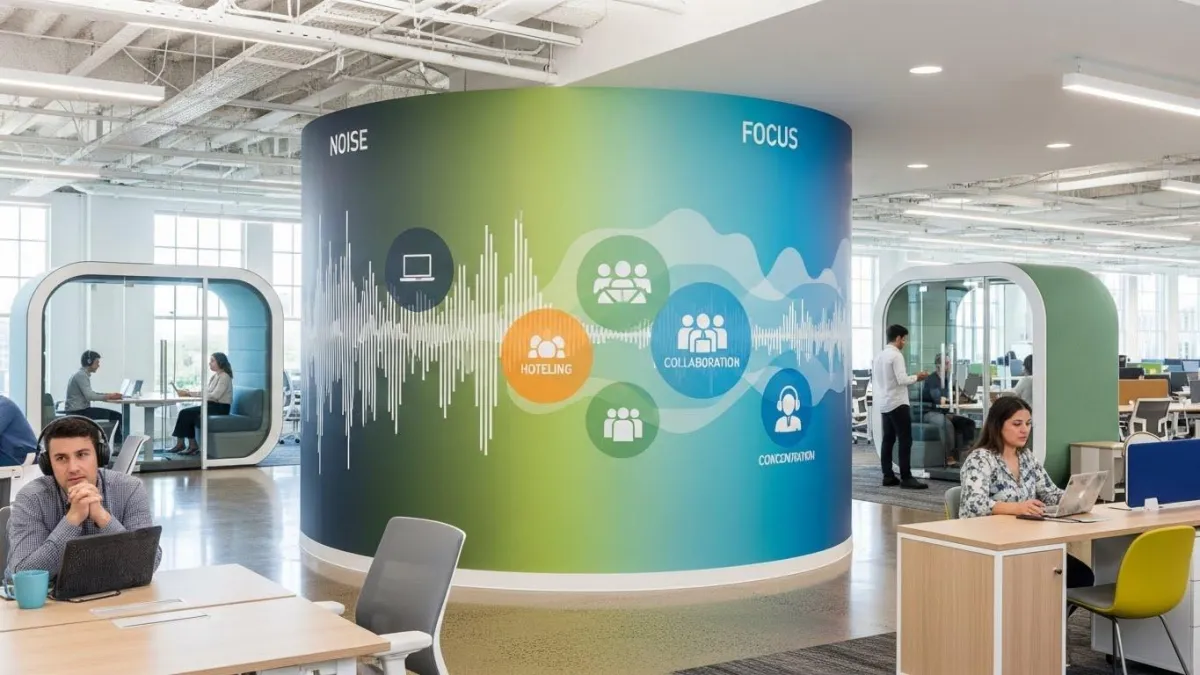
Open Offices, Hoteling, and Noise: How Environmental Graphics Are Reshaping the Modern Workplace
The shift from cubicles to open offices was meant to increase collaboration. Instead, many employees now associate open plans with distraction, noise, and burnout.When TheWall Street Journal asked readers whatoffice-designchange they most wanted, responses pointed to a deeper issue: modern offices don’t match modern work patterns.The solution emerging isn’t a return to cubicles—it’senvironmental zoning, and walls are doing most of the work.
Noise is an office design failure, not an employee problem
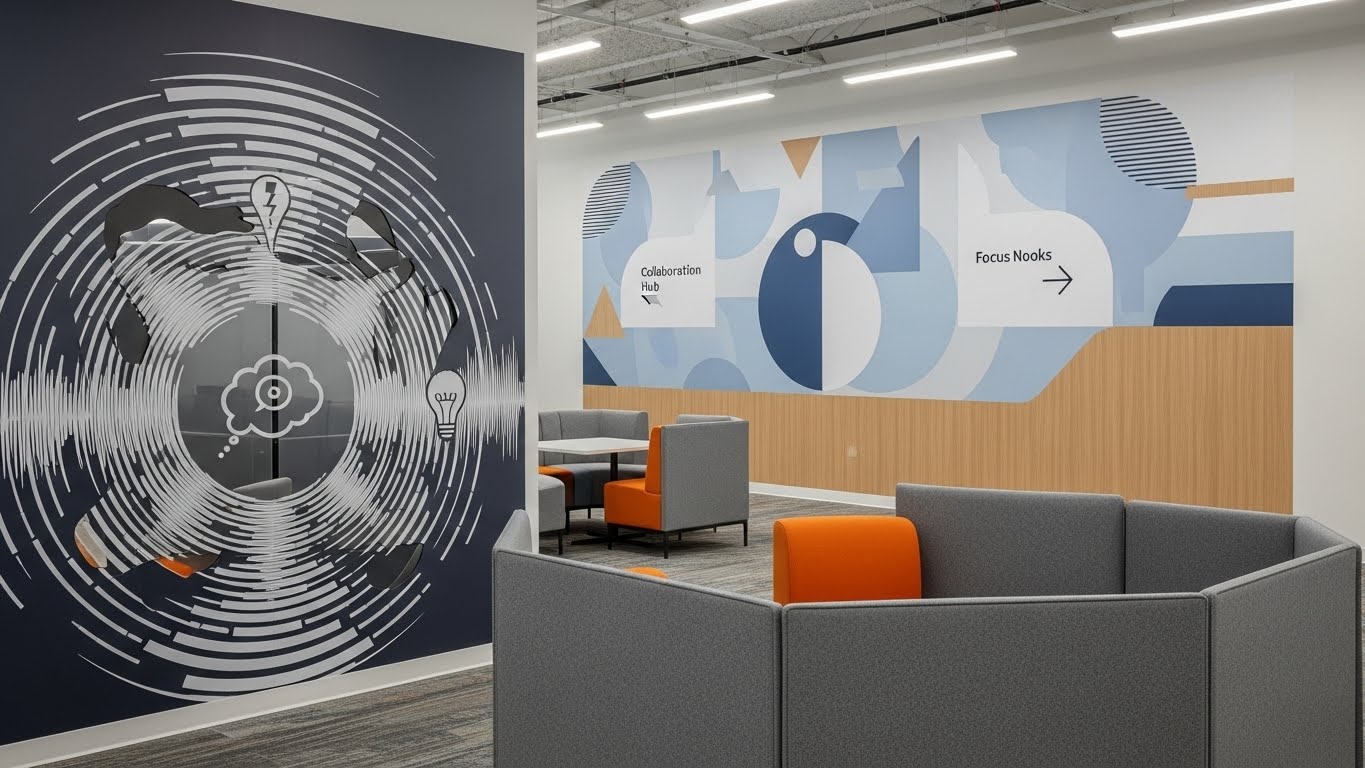
Conference calls now dominate the workday, yet offices were never redesigned for call-heavy roles. Research shows that noise is one of the strongest predictors of dissatisfaction and reduced productivity.How walls solve this:
Environmental graphicscommunicate how a space should function at a glance.
Hoteling removed clutter—but also identity
Many workersdescribed the emotional toll of losing personal space. Gallup’s research shows that a sense of belonging is critical to engagement and performance.
Why walls matter more than desks:
When desks change daily, walls provide continuity. Organizations use wall graphics to:
This is especially effective in education, healthcare, and multi-site corporate environments.
Custom office design without construction
Traditional office renovations are expensive and disruptive.Wall printingchanges the economics of customization.
Scalablewall graphicsand wallpaper replacement allow organizations to:
This directly addresses what workers asked for: environments that adapt to people—not the other way around.Rethinking the office footprint itself
SomeWSJ readerseven proposed decentralized, neighborhood-based offices.Broader research supportsthis move toward distributed work and reduced commute burden.In distributed models, walls become essential for maintaining cohesion and brand continuity across locations.Why this matters nowAs companies reassess the value of physical offices, the real question isn’t “How do we bring people back?”It’s “How do we make the office worth coming to?”Environmental graphicsare one of the fastest, most cost-effective answers.