
Environmental Branding in Office Design: Why It Gets Lost in the Process (and How to Fix It)
Introduction
In many commercial office projects, enormous attention is given to architecture, lighting, materials, and furniture selection. Designers carefully craft spaces that reflect the identity and culture of the organization.
Yet one of the most visible surfaces in any workspace—the wall—is often left underutilized.
Environmental branding frequently begins as a strong idea during early design conversations but disappears somewhere between concept development, budgeting, and construction. The result is a space that functions well but lacks the visual storytelling that brings a workplace to life.
For architects, interior designers, and commercial real estate teams, understanding howenvironmental brandingfits into the design process can make the difference between a workspace that feels generic and one that feels intentional and memorable.
Many designers are now exploring howenvironmental graphics in architecturecan transform blank walls into integrated storytelling elements.
What Is Environmental Branding?
Environmental brandingis the practice of integrating brand identity directly into a physical environment using graphics, architecture, and visual storytelling.
Rather than relying only on logos or signage, environmental branding uses the built environment itself to communicate the identity of an organization.
Common examples include:
large-scale wall graphics and murals
mission and values walls
company history timelines
cultural storytelling installations
wayfinding systems
architectural graphic features
These installations are often implemented throughoffice wall graphics and architectural muralsthat turn blank surfaces into design features.
Environmental branding is commonly used in:
corporate offices
universities and schools
healthcare environments
hospitality spaces
retail environments
public and civic buildings
When implemented well, environmental branding transforms walls and architectural surfaces into meaningful parts of the user experience.
Why Environmental Branding Matters in Workplace Design
Modern workplaces are designed not only to support work but also to express identity and culture.
Environmental graphics play a key role in achieving this.
Reinforcing Brand Identity
Environmental branding allows organizations to express their brand visually throughout a space. Imagery, typography, and color systems reinforce what the company represents.
Many organizations implementworkplace branding strategiesthat integrate brand messaging directly into the architecture.
Strengthening Workplace Culture
Environmental graphics can highlight milestones, values, and shared achievements. These visual elements help employees feel connected to the organization.
Companies increasingly exploreworkplace branding ideas for office designthat transform office environments into cultural storytelling spaces.
Improving Wayfinding
In larger environments, environmental graphics can guide visitors and employees through the space. Color systems and visual cues can make navigation intuitive.
This type of design falls under the broader discipline ofenvironmental graphics and wayfinding systemsused in architecture and interior design.
Creating Memorable Environments
Spaces that incorporate environmental branding often feel more engaging and intentional. Visitors and clients remember environments that include distinctive visual storytelling.
Large-scaleoffice murals and architectural wall graphicsare often used to create these memorable visual moments.
Why Environmental Branding Gets Lost During Construction
Even when environmental branding is part of the early design vision, it often disappears before a project is completed.
Several factors contribute to this.
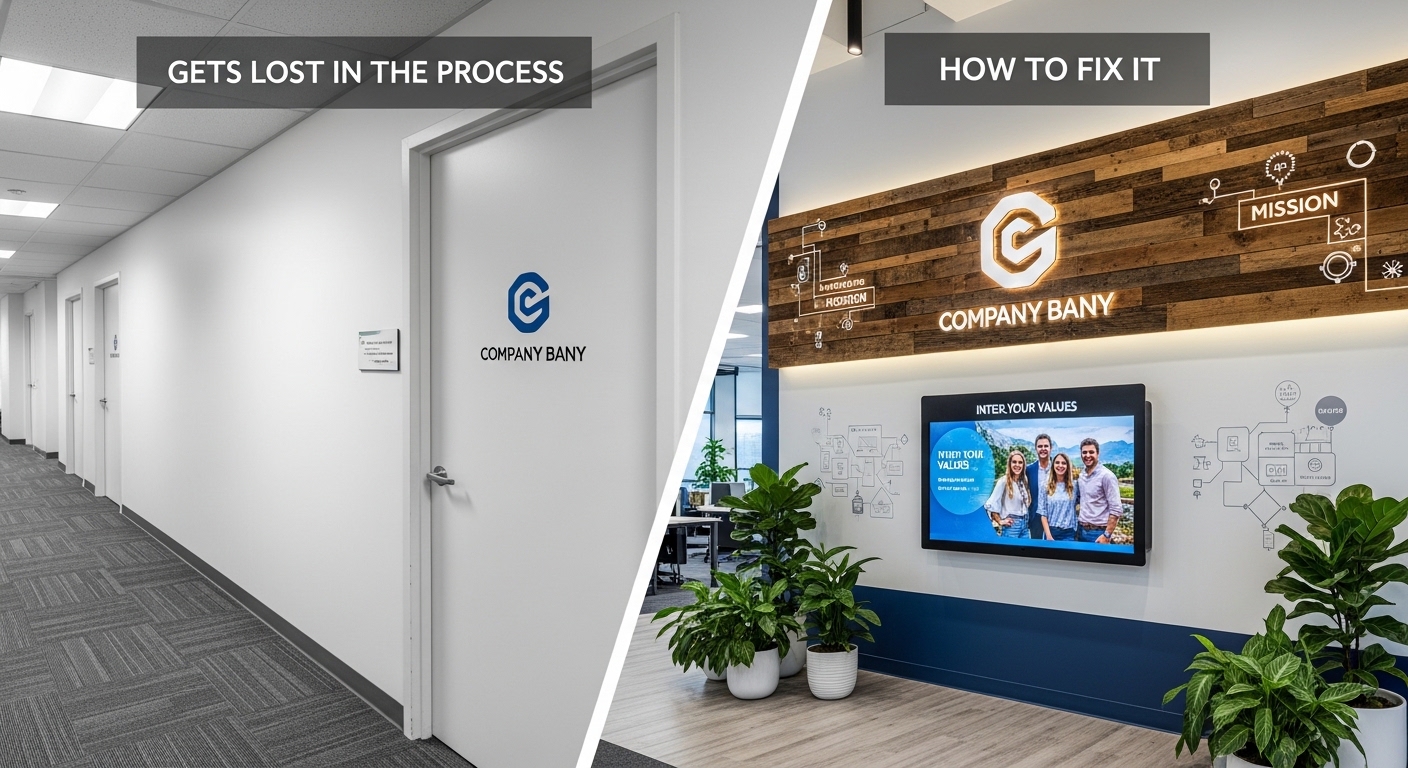
Branding Is Introduced Too Late
Environmental branding is sometimes considered after major architectural decisions have already been finalized. By that stage, budgets and construction schedules are already locked in.
Integrating environmental graphics earlier in the process allows teams to plan forlarge-scale wall graphics in office environmentswithout disrupting construction timelines.
Value Engineering Removes Visual Elements
During construction, project teams often review budgets and identify areas to reduce costs.
Because environmental graphics are sometimes perceived as decorative rather than functional, they may be removed during value engineering.
However, many designers are now recognizing thatenvironmental graphics in workplace designplay an important role in shaping how people experience a space.
Construction Timelines Push Graphics to “Later”
When projects run behind schedule, graphics are sometimes postponed with the intention of installing them after occupancy.
In reality, once a space is operational, it becomes much harder to coordinate installation.
This is one reason many designers are exploring faster installation solutions such asdirect-to-wall printing technology for environmental graphics.
The Hidden Cost of Blank Walls
Walls represent some of the largest visual surfaces in a commercial interior.
When they remain blank, several opportunities are lost:
the space lacks visual identity
brand storytelling disappears
culture becomes invisible within the environment
visitors experience the space as generic rather than distinctive
Many organizations are discovering thatoffice wall graphicscan transform these unused surfaces into powerful visual assets.
Environmental Graphics vs Traditional Wall Coverings
Environmental branding can be implemented using several different methods.
Vinyl Graphics
Vinyl graphics are commonly used for branding installations. They are relatively affordable but can include seams or edges depending on the design.
Wallpaper and Wall Coverings
Wallpaper introduces decorative patterns but may not offer the same flexibility for large-scale branding.
Organizations looking for greater customization often explorearchitectural wall graphicsas an alternative.
Direct-to-Wall Graphics
New printing technologies allow high-resolution graphics to be printed directly onto walls on-site. This eliminates seams and adhesives and integrates imagery directly into the architectural surface.
This approach is increasingly used forlarge-scale environmental graphics in office design.
Environmental Branding in NYC Commercial Real Estate
In cities like New York, commercial office space comes at a premium.
Companies invest heavily in creating workplaces that reflect their brand and attract talent.
Environmental branding allows organizations to maximize the impact of their workspace without increasing square footage.
Walls represent thousands of square feet of unused visual real estate. By incorporatingoffice wall graphics and branded environments, companies can activate these surfaces and strengthen their identity.
Best Practices for Integrating Environmental Branding
Architects and designers who successfully incorporate environmental branding often follow several key practices.
Plan Branding Early
Environmental graphics should be considered during the concept phase of design.
Treat Walls as Design Assets
Walls represent some of the largest surfaces in the environment and should be used intentionally.
Align Graphics With Interior Design
Environmental branding works best when integrated with materials, lighting, and spatial layout.
The Future of Workplace Branding
As workplace design continues to evolve, environmental branding is becoming an essential part of interior architecture.
Companies want environments that communicate identity, culture, and purpose.
Environmental graphics allow organizations to transform blank walls into storytelling surfaces that enhance the overall experience of a space.
Conclusion
Great architecture defines how a space functions.
Environmental branding defines how a space communicates.
When integrated from the beginning of the design process, workplaces become more engaging, memorable, and meaningful.
Often, the difference between a good space and a great one is simply whether the walls were given a voice.