Direct-to-Wall Printing vs. Vinyl Wraps: Comparing Durability and Maintenance in High-Traffic Commercial Corridors
Introduction to Interior Branding in High-Traffic Environments
High-traffic corridors—hospital wings, school hallways, retail back-of-house routes, and corporate egress paths—push wall graphics harder than almost any other environment. Daily abrasion, rolling carts, frequent cleaning, and constant hand contact quickly expose weaknesses in seams, films, and adhesives. That’s why direct-to-wall printing durability is now a primary evaluation factor for facility, branding, and procurement teams looking beyond short-lived vinyl wall wrap alternatives.
Traditional vinyl and wallpaper systems often fail at the edges and seams, especially on CMU/block, brick, and other uneven substrates. Humidity swings, HVAC cycles, and repeated cleanings accelerate peeling, bubbling, and shrinkage, forcing premature replacements and creating inconsistent looks along a corridor. Maintenance teams also contend with adhesive residue, panel misalignment, and lead times for reprints whenever a tenant, program, or code update triggers changes.
Common corridor stressors a durable system must withstand include:
Daily scrubbing and disinfection protocols
Impacts from carts, strollers, and luggage
UV exposure and temperature fluctuations near entrances
Handrail touch zones and corner abrasion
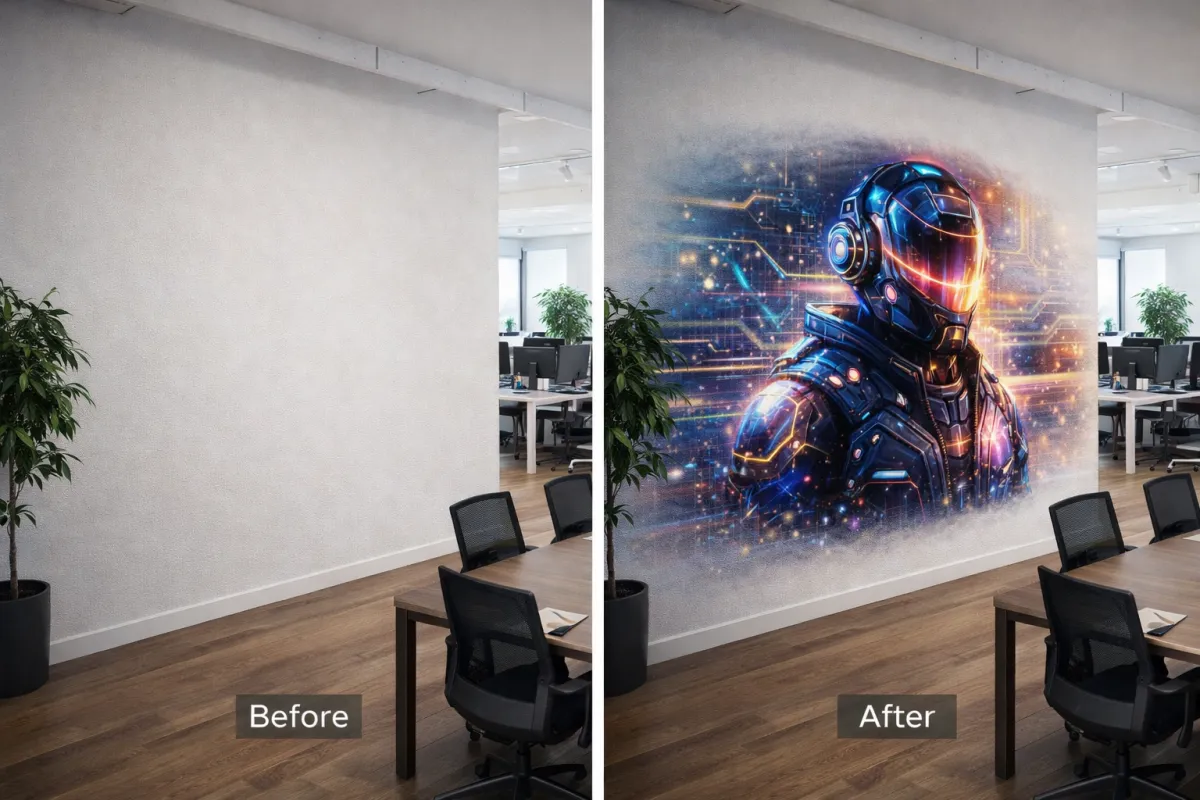
Adhesive-free wall printing addresses these realities by placing high-resolution imagery directly onto finished or unfinished surfaces—drywall, CMU, concrete, and brick—without films or seams. The result is a cleanable, integrated graphic layer that looks architectural, not applied, and can be painted over when programs or tenants change. EastCoast MuralPros executes this approach on site—often in under five hours per area—eliminating shipping delays, minimizing disruption in occupied buildings, and ensuring consistent performance across multi-location rollouts.
For facilities that need commercial wall graphics longevity and high-traffic interior branding, this method also supports integrated wayfinding, safety, and instructional graphics without signage clutter. Hospitals can update unit identity and directional cues overnight; K–12 districts can refresh hallways seasonally through a subscription; workplace teams can roll out brand standards across multiple floors with predictable maintenance. It’s a lifecycle-efficient, performance-based path to sustainable wall mural solutions that meets schedule certainty, durability, and cost-control goals.
The Engineering Behind Direct-to-Wall Printing vs. Vinyl Adhesives
Vinyl wraps are engineered as a layered film bonded to the wall by a pressure-sensitive adhesive. Their performance hinges on adhesive wet-out, surface energy, and the film’s ability to conform around texture, seams, and corners. Direct-to-wall systems print UV-curable inks directly onto the substrate, creating a thin, crosslinked polymer layer that mechanically keys into the wall’s microtexture—eliminating the failure-prone adhesive interface and seams.
In practice, adhesives are vulnerable to thermal cycling, humidity, and plasticizer migration, which cause edge curl, bubbling, and seam lift—especially in painted drywall corridors or porous CMU. Outgassing from fresh paint can form blisters under vinyl, and daily cleaning in healthcare or education can abrade film edges. By contrast, cured ink films don’t creep or shrink, so image stability and registration hold up in high-traffic interior branding applications.
What drives commercial wall graphics longevity comes down to materials science:
Adhesive films: viscoelastic adhesives and plasticized PVC that can creep, attract dirt at edges, and fail on low-energy or textured surfaces.
Direct-to-wall printing: UV-LED inks that polymerize in place, delivering abrasion-resistant, cleanable graphics without seams or adhesive mass to degrade.
Substrate fit: prints can span drywall, CMU, concrete, and brick without heat-forming, primers, or panelization.
Maintenance diverges as well. Vinyl removal often tears, leaves residue, and requires solvents or steam, followed by wall repair; repeated replacements raise lifecycle cost and downtime. Adhesive-free wall printing is paint-over-ready, which shortens refresh cycles and supports sustainable wall mural solutions by avoiding PVC and adhesive waste.
EastCoast MuralPros implements this approach on-site, producing photoreal, high-resolution murals that withstand corridor scuffs, rolling carts, and routine cleaning in hospitals, schools, and multi-location offices. For teams evaluating vinyl wall wrap alternatives that reduce disruption and CapEx while improving predictability, see how to modernize a building without Cap-Ex.
Durability Analysis: Impact Resistance and Longevity in Busy Corridors
Busy corridors are unforgiving environments: carts clip walls, backpacks brush by all day, and custodial teams clean aggressively. Vinyl wraps often fail at the seams and edges, where impacts and friction cause lifting, bubbling, or tearing. With direct-to-wall printing, the cured ink film bonds directly to the painted or unfinished surface, eliminating vulnerable seams and adhesive failure points and improving perceived impact resistance in high-traffic interior branding.
When collisions do occur, vinyl tends to crease or rip, requiring panel replacement. Adhesive-free wall printing transfers force into the wall itself, so the limiting factor is the substrate (drywall, CMU, concrete, brick), not an adhesive layer. Scuffs typically clean off with neutral pH cleaners and microfiber; for heavy-wear zones, a protective clear coat can add abrasion resistance without introducing peel-prone edges.
Longevity is also shaped by cleaning chemistry and environmental exposure. Vinyl’s plasticizers can harden or yellow over time, especially with disinfectants, causing shrinkage at seams and accelerated edge failure. Direct-to-wall systems avoid plasticized films and adhesives, resulting in more predictable commercial wall graphics longevity and a paint-over-ready path when programs or tenants change—an advantage for sustainable wall mural solutions.
To maximize direct-to-wall printing durability in busy corridors:
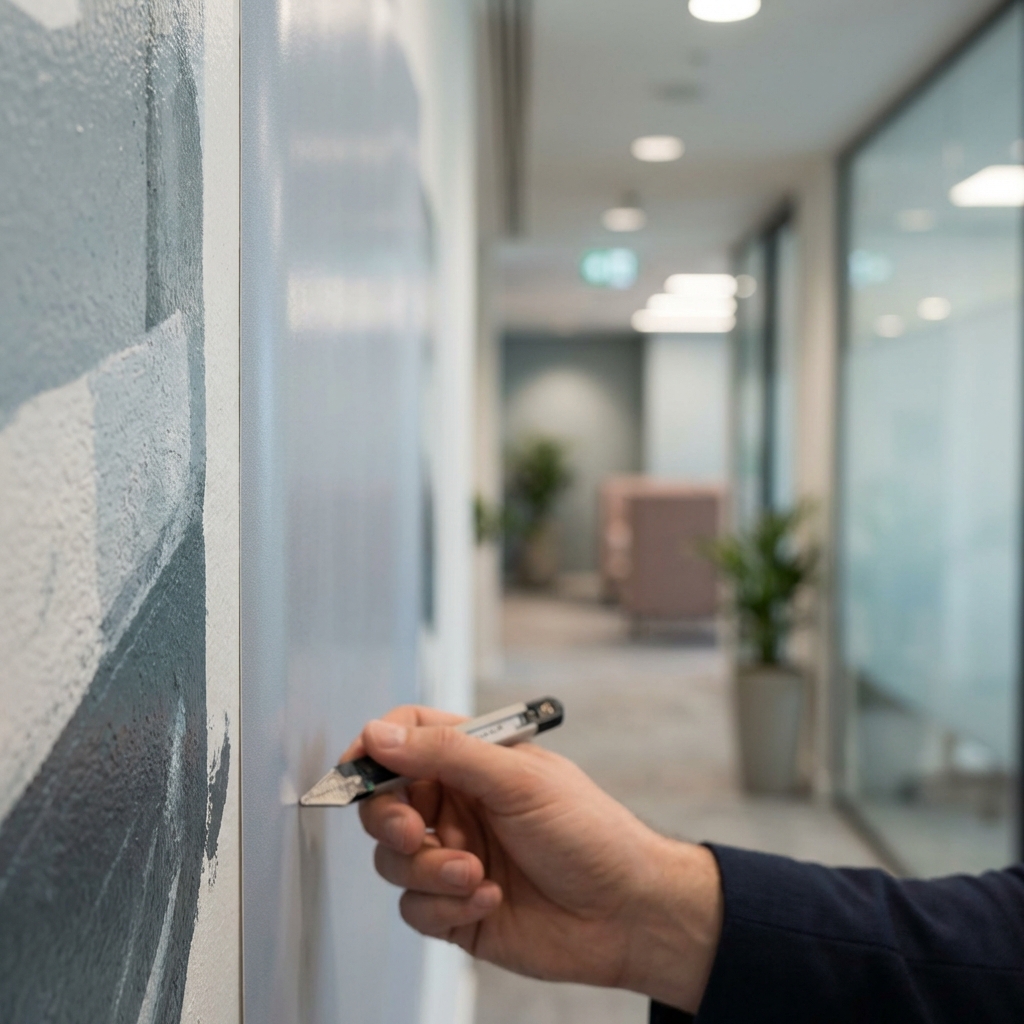
Image 2
Prepare the substrate properly (patch, sand, prime) so the print bonds to a stable surface.
Specify a protective topcoat in pinch points (e.g., corners, elevator lobbies, cart paths).
Use corner guards and chair rails where repeated impacts are inevitable.
Standardize cleaning protocols around neutral cleaners and non-abrasive pads.
Plan for spot reprints or touch-ups during scheduled maintenance windows.
EastCoast MuralPros delivers a performance-based vinyl wall wrap alternative tailored for facilities teams. On-site, adhesive-free wall printing finishes most corridors in under five hours, with seam-free graphics that stay cleanable and durable across campuses and multi-location rollouts. Their subscription options and rapid, consistent execution make long corridors in hospitals, schools, and offices easier to maintain over time—without the waste and failure modes common to vinyl.
Maintenance and Cleanability: Addressing Scuffs and Sanitation Requirements
Scuffs, fingerprints, and cart impacts are unavoidable in corridors, clinics, and classroom wings. With vinyl, seams and raised film edges tend to catch grime and can lift under repeated cleaning, leading to patchwork repairs and hygiene concerns. Direct-to-wall systems eliminate the film layer, minimizing catch points and making routine wipe-downs faster and more consistent across high-traffic interior branding programs.
EastCoast MuralPros prints directly to painted or unfinished substrates, producing a seam-free surface that cleans like a high-quality architectural coating. The result is direct-to-wall printing durability that resists routine abrasion from backpacks, wheelchairs, and janitorial equipment without bubbling or peeling. Because there’s no adhesive or panel, maintenance teams avoid heat-gunning edges, replacing sections, or re-rolling seams after deep cleans.
Recommended care practices for long-term performance and sanitation:
Use microfiber cloths or soft pads with mild, non-abrasive cleaners; avoid scouring pads that can burnish any wall finish.
Follow your facility’s approved disinfectants; start with the least aggressive chemistry that meets your protocol and spot-test in an inconspicuous area.
Remove fresh scuffs promptly with a damp microfiber; for stubborn marks, step up to a neutral pH cleaner before stronger options.
Rinse residue with clean water to prevent streaking and dulling over time.
Schedule periodic visual checks in pinch points (door swings, corners) to address localized wear before it becomes visible at a distance.
For teams seeking vinyl wall wrap alternatives, the maintenance advantage compounds over time. EastCoast MuralPros delivers adhesive-free wall printing with paint-over-ready finishes, so future tenant or program changes are as simple as a standard repaint—no scraping or landfill-bound PVC. This approach supports commercial wall graphics longevity and sustainable wall mural solutions while reducing call-backs, replacement cycles, and downtime across multi-location portfolios.
Environmental Impact and Sustainability of Adhesive-Free Graphics
Choosing graphics for corridors, lobbies, and campuses isn’t only a design decision—it’s a material and lifecycle decision. Adhesive-free wall printing removes PVC films, acrylic glues, and release liners from the equation, replacing them with ink applied directly to the substrate. Fewer inputs mean less waste up front and a smaller end‑of‑life burden, especially compared to peel-and-stick systems that typically head to landfill.
Vinyl systems introduce multilayer materials and packaging: film, adhesive, liner, shipping cores, and protective wraps. Those layers often complicate removal, generate sizable demolition waste, and can require harsh chemicals to strip. Direct-to-wall approaches avoid that stack entirely; once a program changes, you can paint over the surface rather than demo and dispose. In facilities that rebrand frequently, that paint-over-ready reset is a practical, sustainable wall mural solution.
On-site production also cuts freight and overpack. With no panels to crate and ship, you reduce transport emissions and packaging waste—and eliminate reprints from mismatched panels or field fabrication errors. For occupied buildings, low-disruption installation reduces containment materials, temporary barriers, and night-shift energy use often associated with traditional renovations.
Sustainability gains compound over the life of the space:
Increased direct-to-wall printing durability and cleanability supports commercial wall graphics longevity in high-traffic interior branding.
Seam-free imagery removes failure points where dirt, moisture, and peeling begin—common triggers for early vinyl replacement.
Integrated wayfinding and instructional graphics reduce the need for extra hardware, frames, and fasteners.
Consistent execution across multi-location rollouts lowers prototype waste and remediation.
End of life matters, too. In tenant turnovers or departmental moves, vinyl removal can damage finishes and create bags of contaminated waste. Adhesive-free wall printing lets facilities teams reset with standard primers and paint, minimizing material disposal and labor.
EastCoast MuralPros helps owners and operators adopt vinyl wall wrap alternatives without sacrificing performance. Their on-site, adhesive-free process delivers photoreal results at architectural scale and is built for durability in corridors, patient areas, and student commons. With subscription options for planned refreshes, teams can keep environments current while controlling waste and lifecycle costs.
Installation Speed and Operational Downtime Comparison
In high-traffic corridors, every hour of closure affects patient flow, student circulation, and workplace productivity. Direct-to-wall printing durability impacts downtime not just on install day but over the lifecycle—fewer failures and refreshes mean fewer closures. Compared with panel-based vinyl systems, on-site printing compresses scheduling, reduces variables, and keeps adjacent areas open and safe.
Typical vinyl wrap workflow and downtime drivers:

Image 3
Field measure, off-site production, and shipping lead time
Surface priming, seam layout, and alignment across multiple panels
Heat, squeegee, and trim steps that slow progress and increase rework risk
Staging ladders/scaffolds across long corridors and traffic control for passersby
Additional visits if panels are damaged, misprinted, or bubble during install
On-site direct-to-wall workflow with adhesive-free wall printing:
Load approved artwork; calibrate the printer to wall height and surface
Light masking and protection of baseboards, fixtures, and flooring
High-resolution pass with instant curing; no seams or adhesives to manage
Immediate turnover for cleaning staff and occupants; minimal barricades
With EastCoast MuralPros, many corridor installs complete in under 5 hours
For hospitals, this can mean an overnight upgrade that doesn’t disrupt morning rounds. K–12 and university teams can schedule weekend prints that reopen before Monday classes. Corporate and retail environments can phase by zone, keeping egress clear while refreshing high-traffic interior branding. Fewer seams and a harder, cleanable finish support commercial wall graphics longevity in busy spaces.
Multi-location rollouts see even greater gains. On-site printing eliminates shipping delays and fabrication errors, and consistent execution keeps national schedules predictable—valuable for procurement teams evaluating vinyl wall wrap alternatives. As a provider of sustainable wall mural solutions, EastCoast MuralPros also offers paint-over-ready finishes and subscription refresh options, helping facilities update messaging seasonally without construction, waste, or extended closures.
Cost-Efficiency and Lifecycle Value for Institutional Facilities
Institutional facilities evaluate wall graphics on total cost of ownership, not just upfront price. In corridors that see carts, backpacks, and daily cleaning, vinyl seams and adhesives are common failure points that drive unplanned maintenance. Vinyl wall wrap alternatives that use adhesive-free wall printing reduce those risks by eliminating seams and layers that peel, bubble, or trap grime. The result is fewer service tickets and predictable performance, a core reason facilities teams prioritize direct-to-wall printing durability.
Lifecycle value improves when graphics are integrated into the substrate rather than applied on top of it. Seam-free output supports commercial wall graphics longevity because there are no edges to catch, curl, or require trim repairs. Cleanable finishes mean custodial teams can follow routine protocols without worrying about delamination. When branding or programming changes, paint-over-ready surfaces are quick to reset, avoiding costly removal labor and wall repairs typical of adhesive films.
Key cost drivers where adhesive-free wall printing creates value:
Installation speed: On-site production compresses schedules; typical corridors can be completed in under 5 hours, reducing off-hours labor and security costs.
Business continuity: Low-disruption setup suits occupied buildings, minimizing patient, student, and staff detours.
Maintenance: No edge resealing, panel replacements, or adhesive residue remediation—just standard cleaning and occasional touchups.
Refresh flexibility: Paint-over-ready surfaces and subscription options enable scheduled updates without demolition or waste.
Logistics: On-site printing eliminates shipping, crating, and re-fab for damaged panels, and delivers consistent execution across multi-location rollouts.
Consider a hospital that needs integrated wayfinding across multiple wings. With EastCoast MuralPros, teams can print photoreal, high-traffic interior branding and code-compliant instructional graphics in place over a weekend, then clean them daily without edge failures. A university can refresh program graphics each semester via a subscription, painting over retired content and printing new work without disrupting classes. Compared to wallpaper or film, this approach functions as a sustainable wall mural solution that lowers lifecycle spend by cutting replacement cycles, avoiding adhesive-related repairs, and reducing waste.
Conclusion: Choosing the Right Solution for Long-Term Interior Performance
In high-traffic interior branding, long-term performance comes down to how graphics handle abrasion, cleaning, and edge failure. Direct-to-wall printing durability outpaces vinyl in these conditions because cured inks bond directly to the surface, eliminating seams and adhesives that can peel, bubble, or trap grime. This approach maintains crisp detail and color over years of use without the recurring seam repairs typical of large-format wraps.
Consider common corridor realities. Hospitals disinfect walls daily; schools see constant backpack scuffs; retail and transit corridors endure carts and luggage. Adhesive systems often fail at edges under repeated cleaning and impact, whereas a printed-on-wall film is easier to wipe down and far less likely to lift—preserving commercial wall graphics longevity with fewer service calls.
Use these criteria to choose between vinyl wall wrap alternatives and adhesive-based wraps:
Abrasion and impact: resistance to carts, gurneys, and rolling equipment.
Cleanability: tolerance for hospital-grade cleaners and frequent wipe-downs.
Environmental shifts: performance in fluctuating humidity or temperature.
Scale and continuity: ability to cover long runs without seams or overlaps.
Lifecycle strategy: paint-over-ready removal versus tear-out and replacement.
Installation window: speed, noise, and disruption in occupied buildings.
Sustainability: adhesives, waste, and replacement frequency over the asset life.
Vinyl can still make sense for short-term promotions or spaces with planned, frequent turnover. For long-horizon corridors, adhesive-free wall printing reduces failure points, shortens maintenance cycles, and simplifies future updates with a repaint rather than a full re-skin—an important advantage for sustainable wall mural solutions and capital planning.
EastCoast MuralPros brings predictable performance to these environments with fast, on-site execution typically under five hours, cleanable finishes, and consistent results across drywall, concrete, CMU, and brick. Their direct-to-wall, adhesive-free wall printing and subscription refresh options help facilities, healthcare, and education teams standardize corridor systems at scale—delivering durable visuals today and a straightforward path to updates tomorrow.