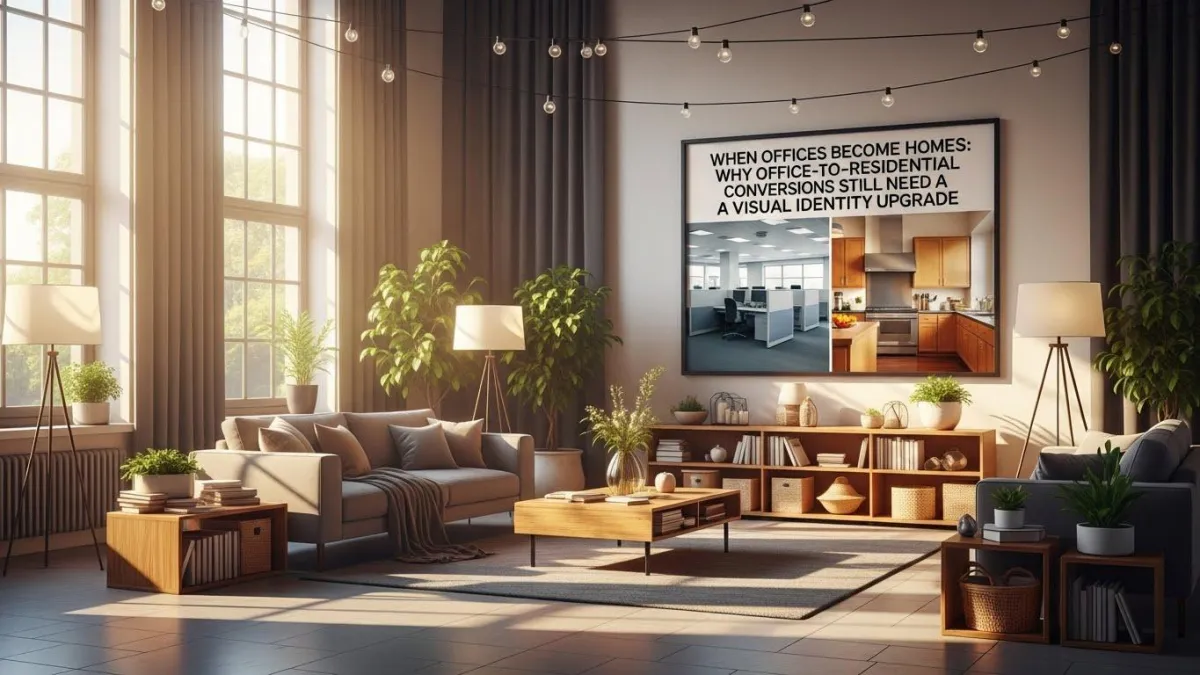
When Offices Become Homes: Why Office-to-Residential Conversions Still Need a Visual Identity Upgrade
Introduction
New York City is undergoing one of the most consequential real estate shifts in decades. As office vacancies rise and housing shortages intensify, owners and policymakers are increasingly embracing office-to-residential conversion as a critical pathway forward.
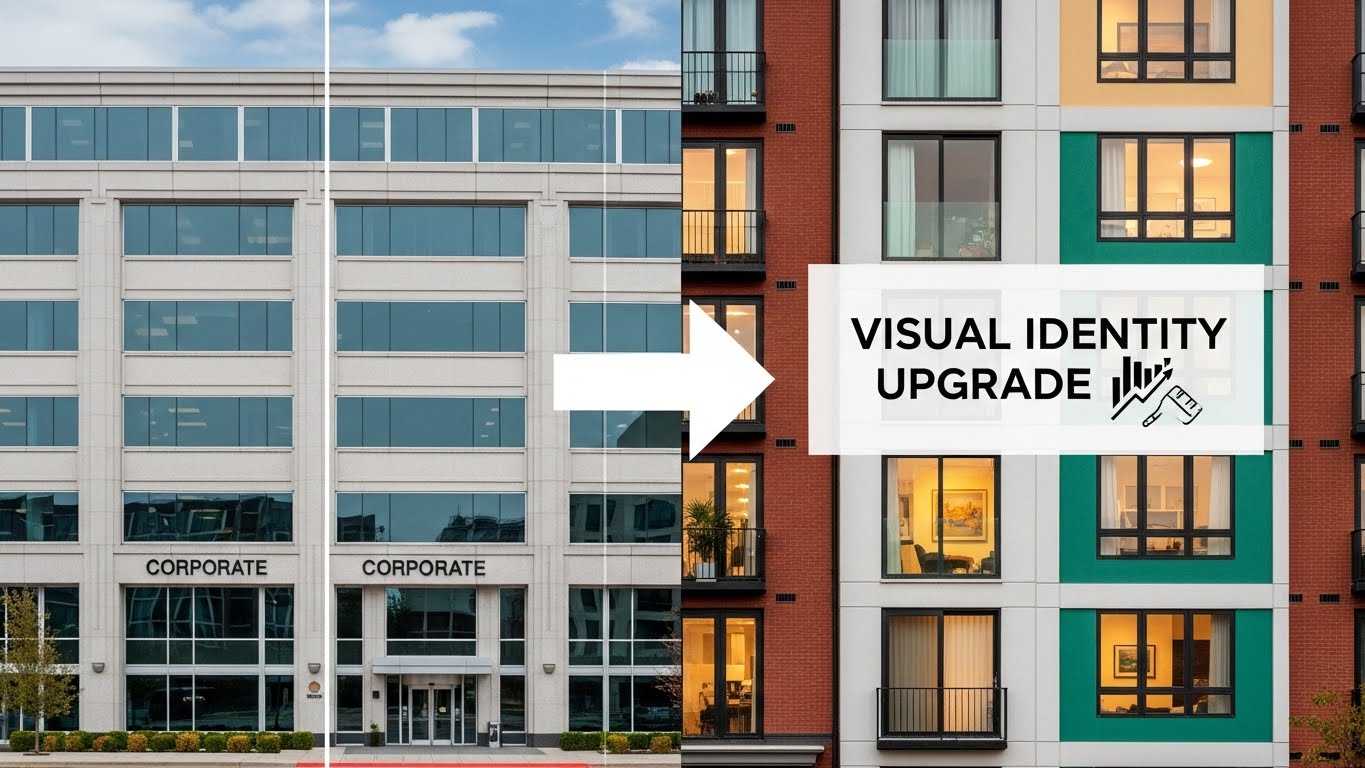
But while the structural conversion solves use, it doesn’t guarantee appeal.
A converted building can still look like an outdated office tower — and that undermines leasing velocity and long-term asset value.
Below is a full breakdown of what’s happening in the market and why visual identity and environmental graphics are emerging as the next must-have layer in repositioned buildings.
Market Shift — Conversions Are Accelerating
The Wall Street Journal reports that NYC is seeing a historic push toward converting obsolete office towers into much-needed housing stock.
WSJ (paywall): https://www.wsj.com/real-estate/commercial/nyc-office-residential-conversions-housing-4723b702
Supporting public sources:
• Cushman & Wakefield analysis: https://www.cushmanwakefield.com/en/united-states/insights/the-rise-of-office-to-residential-conversions-in-new-york-city
• Cushman conversion surge report: https://www.cushmanwakefield.com/en/united-states/news/2025/10/office-to-residential-conversions-surge-to-record-levels-in-new-york-city
• NYC Comptroller policy analysis (467-m): https://comptroller.nyc.gov/reports/office-to-residential-conversions-in-nyc-economics-and-fiscal-estimates/
• EliteAgent conversion volume review: https://eliteagent.com/manhattan-office-conversions-rise-as-housing-demand-grows/
• Governor Hochul & Mayor Adams redevelopment announcement: https://www.governor.ny.gov/news/governor-hochul-and-mayor-adams-announce-major-office-housing-transformation-5-times-square
Together these confirm that conversions are becoming structural to NYC's housing and CRE strategy.
The Blind Spot — Conversions Still Look Like Offices
Even when the use changes, the feel often doesn’t:
• Old elevator landings
• Bland commercial-grade corridors
• Corporate-style lobbies
• Fluorescent-lit amenity spaces
• Dated signage
• Sterile transitional areas
This “office‑leftover aesthetic” undermines desirability before prospective residents even see an apartment.
Conversions solve the floor plan, not the perception — and perception is what residential tenants pay for.
Why Visual Experience Drives Residential Value
Converted buildings compete with:
• purpose-built Class A rentals
• new luxury developments
• lifestyle-focused mixed-use buildings
• renovated multi-family stock
Environmental graphics and high-resolution wall printing help conversions:
1. Create warmth and emotional connection
2. Build a sense of place with local or cultural identity
3. Modernize without demolition
4. Differentiate from competing conversions
5. Speed up lease-up by improving first impressions
Where Wall Printing Has the Biggest Impact
High‑value surfaces in conversions include:
• Lobby and entry experience
• Elevator banks & landings
• Residential corridors
• Amenity spaces (lounges, co-working, fitness)
• Stairwells & vertical circulation areas
• Back-of-house common areas
Economics — High Impact Without Blowing the Budget
Traditional interior refreshes in conversions (drywall, skim-coating, wallpaper removal, painting, lighting, millwork) are slow and expensive.
Direct‑to‑wall murals deliver:
• 2–3 hour installs
• zero demolition
• no adhesives
• no VOCs post-cure
• minimal labor
• zero waste
• 100% paint-over removability
• consistent design across 10–40 floors
This strongly aligns with ESG and sustainability goals now common in development financing.
Conclusion — Adaptive Reuse Needs Adaptive Design
NYC office-to-residential conversions are accelerating rapidly — but the buildings that succeed won’t just be converted, they’ll be transformed.
High-resolution wall printing allows buildings to elevate visual identity without the cost, downtime, or waste of traditional renovation.
For owners, asset managers, developers, and PMs, this upgrade:
• enhances first impressions
• accelerates lease-up
• increases perceived value
• supports ESG goals
• creates a true residential feel
When offices become homes, the walls tell the story.