Best Wall Branding Solutions for Strategic Facility Refresh Cycles in Large Institutions
Introduction: Defining Performance Criteria for Institutional Refresh Solutions
Large campuses, hospitals, and multi-location brands treat refreshes as an operational program, not a one-off project. To support strategic facility refresh cycles, solutions must be evaluated against measurable outcomes: uptime, safety, brand consistency, and long-term cost. The right approach shortens schedules, reduces disruption, and creates durable wall graphics that feel integrated with the architecture—without committing to construction-heavy commercial interior upgrades.
Use a scorecard that captures the following criteria:
Speed and predictability: install windows under five hours, low noise/odor, and minimal space closures.
Durability and cleanability: abrasion-resistant surfaces that tolerate routine cleaning in high-traffic corridors and clinical areas.
Seam-free, architectural fit: crisp, photoreal imagery at scale with no panel seams or edges that peel, bubble, or collect dirt.
Scalability and consistency: repeatable color management, on-site execution that eliminates shipping delays, and multi-surface compatibility (drywall, CMU, concrete, brick).
Wayfinding and messaging integration: institutional wayfinding, safety, and instructional graphics embedded on walls without signage clutter.
Lifecycle efficiency: paint-over-ready finishes for tenant turnover and program changes, reduced replacement frequency, and predictable maintenance.
Sustainability: no vinyl or adhesives, less waste, and fewer replacements to support sustainable facility management and procurement goals.
Risk and procurement alignment: clear performance specs, mockups/approvals, and national rollout capability for multi-site governance.
Consider practical scenarios. A hospital can update department wayfinding overnight between shifts, with cleanable, seam-free graphics that won’t snag carts or fail at edges. A university can brand stair towers and CMU-block corridors with high-resolution imagery that spans floors, then paint over for future renovations. A retail operator can coordinate a quarter’s worth of location refreshes with on-site printing to avoid fabrication errors and keep branding consistent nationwide.
EastCoast MuralPros fits these criteria with direct-to-wall printing that avoids vinyl and adhesives, delivers photoreal results at architectural scale, and installs quickly in occupied buildings. Their on-site approach reduces logistics risk, supports full-campus solutions, and provides durable, cleanable finishes that are paint-over-ready for the next cycle. For teams balancing outcomes with budgets, their subscription model enables scheduled updates and institutional wayfinding changes without new construction—ideal for modernizing buildings without capital expenditure.
Recommendation 1: Direct-to-Wall Printing for Seamless Branding and Durability
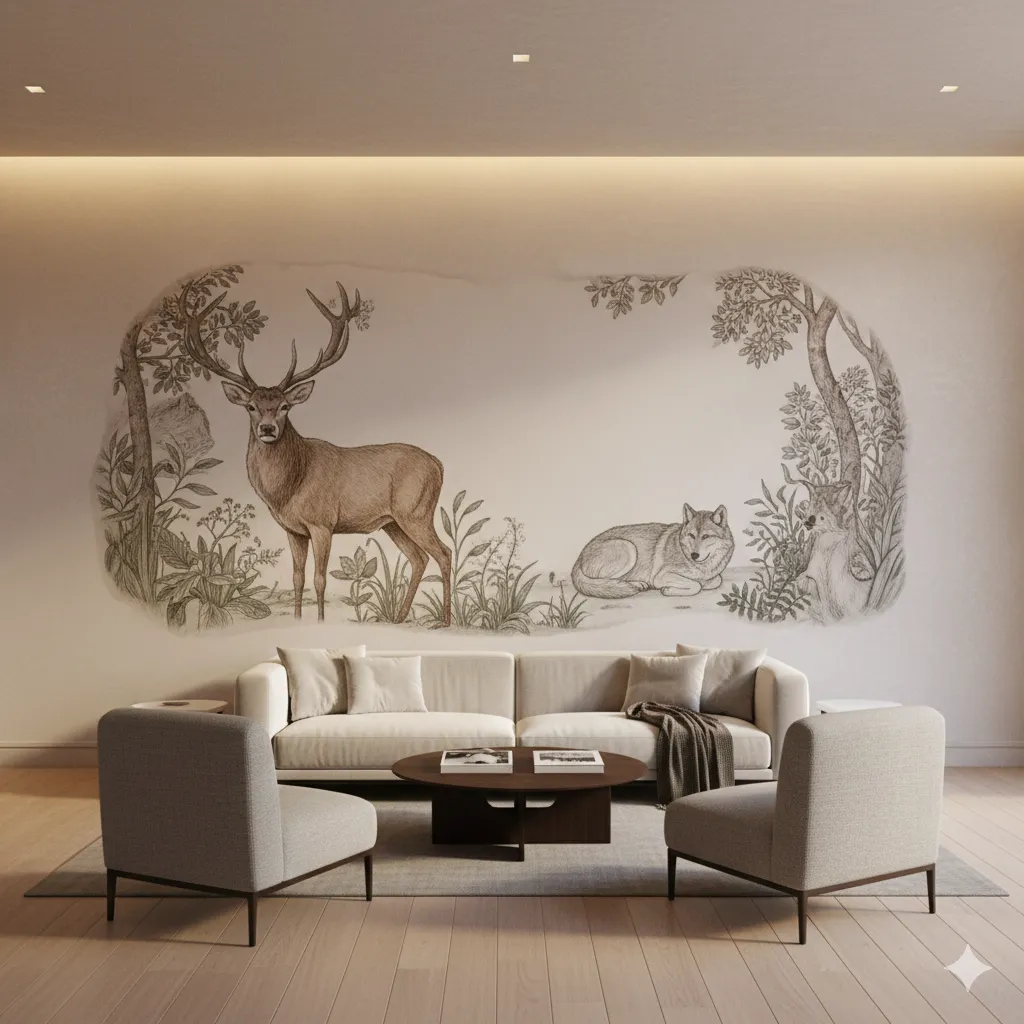
For strategic facility refresh cycles, direct-to-wall printing delivers the speed, consistency, and quality large institutions need without the headaches of vinyl or construction-heavy methods. By producing durable wall graphics directly on finished or unfinished surfaces, facilities teams can execute commercial interior upgrades that look integrated with the architecture rather than applied on top of it. EastCoast MuralPros brings this capability on site, enabling high-resolution branding and institutional wayfinding to be installed quickly with minimal disruption.
The process is straightforward and predictable. Technicians print in place on drywall, CMU, concrete, or brick—no adhesives, panels, or seams—so the result reads as part of the building, even at architectural scale. Most walls are completed in under five hours, making it practical for occupied buildings and off-hours work windows. The finish is durable, cleanable, and paint-over-ready, supporting future tenant changes or program updates without demolition or waste.
Lifecycle performance is where this approach stands apart. On-site printing eliminates shipping delays and fabrication errors while ensuring consistent execution across multi-location rollouts. Compared with vinyl wall coverings and wallpaper, it is a performance-based alternative that reduces replacement cycles and ongoing maintenance, aligning with sustainable facility management goals. If your procurement team is evaluating sustainable alternatives to vinyl wraps, direct-to-wall printing is a proven, no-PVC path with strong total-cost-of-ownership advantages.
Practical applications span across facilities and programs:
Hospitals: color-coded corridors, safety instructions, and room identifiers integrated as institutional wayfinding without signage clutter.
Schools and campuses: mascots, donor recognition, testing protocols, and academic wayfinding refreshed between terms.
Corporate workplaces: brand pillars, values, and HR messaging rolled out consistently across regional offices.
Retail and hospitality: seasonal campaigns and local storytelling executed via a subscription model for scheduled refreshes.
Museums and cultural spaces: photoreal, high-resolution imagery and exhibit graphics that meet gallery standards.
EastCoast MuralPros supports teams from pilot through national deployment, with collaborative tools that help designers and digital artists scale their work across sites. For facilities directors and procurement leaders seeking schedule certainty and measurable performance, direct-to-wall printing provides a fast, low-disruption path to durable wall graphics that elevate the environment today and remain flexible for tomorrow’s updates.
Recommendation 2: Architectural Finishes and Performance Coatings
Architectural finishes and performance coatings form the backbone of long-term wall systems in strategic facility refresh cycles. By specifying the right substrate preparation and topcoat, institutions can lock in a durable, cleanable surface and then update messaging, branding, and institutional wayfinding on a predictable cadence without redoing the base finish. This decouples lifecycle painting (every 5–10 years) from faster graphic refreshes (quarterly to annually), reducing disruption and cost across portfolios.
Focus on coatings that match the duty cycle of each zone and substrate. For example, healthcare corridors, stair towers, classrooms, and lobbies have different abrasion, cleaning, and glare requirements. Common high-performing options include:
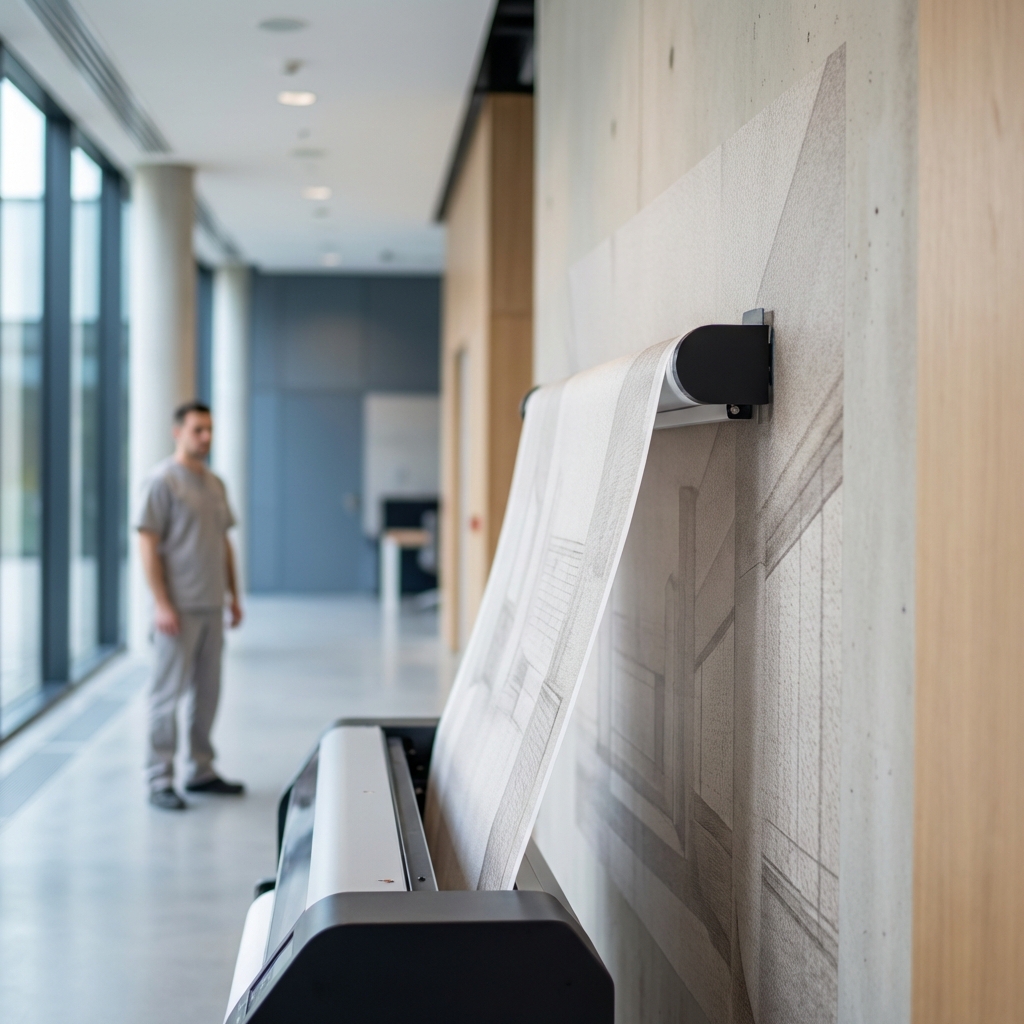
Image 2
High-build primers and block fillers for CMU to create a smooth print-ready plane
Scuff-resistant waterborne polyurethanes or 2K urethane topcoats in high-traffic corridors
Low-VOC, low-odor, fast-curing paints to minimize downtime during commercial interior upgrades
Antimicrobial or microbicidal and highly scrubbable coatings for patient-facing areas
Elastomeric or flexible coatings to bridge hairline cracks on interior masonry
Sacrificial or permanent anti-graffiti clears for public-facing walls and transit-adjacent spaces
Matte or low-sheen systems in galleries and museums to control glare on photoreal content
When paired with direct-to-wall printing, these finishes unlock fast, adhesive-free updates without compromising the envelope. After the coating fully cures per manufacturer guidelines, EastCoast MuralPros can print high-resolution, seam-free imagery directly on finished or unfinished surfaces—drywall, CMU, concrete, and brick—eliminating vinyl seams and failure points. Specifying Level 4–5 drywall in new work and a consistent sheen/profile across campuses yields uniform results during national rollouts.
A coatings-plus-print strategy also advances sustainable facility management. The base finish remains in place for multiple cycles, while graphics change with programming, seasons, or tenant turnover via EastCoast MuralPros’ subscription model. On-site printing avoids shipping, reduces fabrication waste, and supports rapid updates to durable wall graphics for wayfinding, safety, and instructional needs without signage clutter.
For procurement-led programs, standardize a coatings spec by space type, then pilot one building to validate cleanability, glare, and color before scaling. EastCoast MuralPros routinely conducts site surveys and test prints to confirm adhesion and visual standards, then executes low-disruption installations—often in under five hours per zone—across multi-location portfolios. The result is a predictable, performance-based alternative to vinyl wall coverings that aligns with both facilities budgets and brand outcomes.
Recommendation 3: Integrated Digital Wayfinding and Interactive Graphics
Bringing static and digital wayfinding together creates a flexible backbone for complex environments while reducing sign clutter and maintenance. By planning for interactive layers during strategic facility refresh cycles, institutions can deliver clear guidance today and update content as operations change—without reprinting entire systems. The result is a cleaner visual field, better visitor throughput, and fewer service tickets.
A proven approach pairs a permanent, printed “spine” with scannable, dynamic touchpoints. Direct-to-wall printing establishes durable wall graphics—arrows, zone IDs, color-coded paths, and room markers—while QR and NFC markers unlock live maps, hours, accessibility info, and emergency updates from your CMS. This hybrid model performs especially well in healthcare, higher education, and museums where spaces, programs, and routes evolve frequently.
EastCoast MuralPros enables this hybrid system with seam-free, high-resolution, adhesive-free graphics that feel integrated into the architecture. On-site direct-to-wall printing minimizes disruption (often finished in under five hours) and eliminates shipping delays and fabrication errors common in panel-based installs. Finishes are cleanable for high-traffic corridors, paint-over-ready for future tenant or program changes, and compatible with drywall, CMU, concrete, and brick—a performance-driven alternative to vinyl and wallpaper for commercial interior upgrades.
A practical deployment framework:
Map primary journeys and code requirements, then prioritize decision points where people hesitate.
Define a unified visual system (icons, typography, color, zone IDs) for consistent institutional wayfinding.
Place interactive triggers (QR/NFC/short URLs) adjacent to printed directional cues.
Connect triggers to a cloud CMS with integrations for directories, live maps, occupancy, and alerts.
Apply multilingual support, ADA legibility, high-contrast palettes, and lighting checks.
Set governance: content owners, SLAs for updates, and KPIs (scan rates, reroute time, complaint reduction).
Consider a hospital adding a new imaging suite: print durable corridor paths and door-side identifiers, then link QR codes to appointment-specific routing and elevator advisories. In a university refresh, fast, low-disruption installs can add college-coded floor bands and building IDs, with scans opening schedule-based maps on mobile. Museums can overlay photoreal gallery walls with numbered markers that launch audio tours and content in multiple languages.
For sustainable facility management, this model reduces waste and replacement cycles by keeping the structural graphics in place while digital content evolves. EastCoast MuralPros also offers subscription refresh options to time updates with seasonal programming, lease-ups, or policy changes, ensuring consistent execution across multi-location rollouts. The outcome: a scalable wayfinding system that stays accurate, looks integrated, and supports continuous improvement.
Comparison Summary: Evaluating Lifecycles and Maintenance Requirements
When comparing wall-graphics options through the lens of strategic facility refresh cycles, the most important variables are failure modes, cleanability, change-out effort, and disruption to operations. Total lifecycle cost hinges less on initial price and more on how often a system needs to be serviced or replaced, how it fares under daily cleaning, and whether updates require construction or downtime. For institutions managing occupied spaces, predictability and repeatable outcomes across multiple buildings are critical.
Vinyl wall coverings and wraps deliver quick visual impact but frequently struggle with seams, edge peel, bubbling, and adhesive residue—especially along high-touch corridors and corners. Repairs typically involve pulling and replacing large sections, which can be wasteful and messy, and chemical cleaning can cloud laminates. Wallpaper performs similarly: seam fatigue, moisture sensitivity, and substrate incompatibility often shorten real-world lifespans, even when the material’s rated life appears longer on paper.
Image 3
Hand-painted murals are durable and repairable, but they rely on artist availability, can extend schedules, and make iterative branding updates difficult. Rigid panels protect walls but add joints, standoffs, and facility clutter, and they can be dented or misaligned by carts and equipment. By contrast, direct-to-wall printing creates integrated, seam-free, durable wall graphics that clean like paint and avoid the long-tail maintenance issues caused by adhesives and panels.
Typical maintenance touchpoints by solution include:
Vinyl/wallpaper: seam checks, adhesive failures, edge re-tacks, periodic full-panel replacements; risk of paint and drywall damage during removal.
Painted murals: scheduled touch-ups and color-matching; longer downtime when correcting large areas or updating graphics.
Rigid panels: fastener checks, dent replacement, alignment fixes; visible joints attract dirt and require frequent cleaning.
Direct-to-wall printing: routine wipe-downs with standard non-abrasive cleaners; future changes handled with paint-over or fast on-site reprints.
For institutions prioritizing sustainable facility management, adhesive-free, paint-over-ready finishes reduce consumables, demolition waste, and labor at end-of-life. On-site, direct-to-wall printing from EastCoast MuralPros eliminates shipping delays and fabrication errors while compressing installation—often in under five hours per zone—so teams can refresh overnight without disrupting patients, students, or staff. Durable, cleanable imagery at architectural scale supports commercial interior upgrades that last, while keeping maintenance predictable.
Wayfinding and instructional updates are a recurring driver of cost and clutter. Integrating institutional wayfinding directly on walls enables precise, floor-by-floor changes during planned refresh windows. EastCoast MuralPros supports full-campus rollouts and subscription-based updates, so hospitals can revise corridor routing or schools can rebrand academic departments on the same cadence as other building services—no signage backlog, no exposed adhesives, and consistent execution across locations.
The Facility Manager’s Guide to Selecting Scalable Branding Solutions
Facility teams evaluating branding options for strategic facility refresh cycles should start with performance, not just aesthetics. The right system must deliver speed, consistency, and lifecycle value across multiple buildings and stakeholders. Think in terms of repeatable standards you can deploy campus-wide, with predictable outcomes and minimal disruption.
Use these criteria to compare solutions for commercial interior upgrades:
Installation time and disruption: Can crews work in occupied areas and finish a typical feature wall in hours, not days? Look for low-odor, low-debris methods that avoid adhesives and panels.
Surface compatibility: Verify performance on drywall, CMU, concrete, and brick—finished or unfinished—without bubbling, seams, or telegraphing.
Visual quality: Specify photoreal, high-resolution output with seam-free coverage at architectural scale and consistent color across locations.
Durability and cleaning: Require durable wall graphics designed for high-traffic areas that tolerate routine cleaning without edge-failure or yellowing.
Lifecycle and changeability: Prefer paint-over-ready finishes that avoid demolition, scraping, or adhesive residue during tenant turnover.
Scalability and logistics: On-site fabrication reduces shipping delays and fabrication errors, while standard file specs and color profiles ensure national consistency.
Safety and clarity: Integrate institutional wayfinding, safety, and instructional graphics directly on walls to reduce signage clutter and protrusions.
Sustainability metrics: Favor adhesive-free, low-waste approaches that extend service life and reduce replacements—key for sustainable facility management.
Commercial terms: Assess total cost of ownership, warranties, and whether a subscription model aligns with seasonal or programmatic refresh cycles.
Comparing categories, vinyl wall coverings and wallpaper add seams, adhesives, and frequent replacement risk; hand-painted murals are bespoke but slow and hard to scale. Direct-to-wall printing combines speed with architectural integration, producing crisp, seam-free imagery without panels or adhesives. For multi-site rollouts, the difference in installation time and failure risk compounds into real lifecycle savings.
Consider use cases: a hospital updating corridor cues and room identifiers overnight; a university standardizing building identities and donor recognition across campuses; a retail operator executing a synchronized brand refresh across 80 stores. EastCoast MuralPros brings direct-to-wall printing that typically installs in under five hours per area, with durable, cleanable finishes and consistent execution across locations. Their team handles full-campus programs and can also print doors, tables, and standees in-studio for coordinated campaigns.
To de-risk procurement, run a pilot that includes different substrates, cleaning protocols, and color targets, then codify specifications for scale. EastCoast MuralPros supports this with site surveys, proofs, and collaborative tools that make it easy for designers and digital artists to version and deploy artwork. When your standards are set, a subscription cadence ensures you meet refresh windows without construction, waste, or schedule surprises.