Best Interior Branding Solutions for Modern Hospitals and High-Traffic Healthcare Facilities
Criteria for Selecting High-Performance Healthcare Branding and Wall Graphics
Selecting high-performance healthcare branding and wall graphics requires more than a great look. Hospitals run 24/7, so infection prevention, patient experience, compliance, and schedule risk are equally critical. The strongest hospital interior branding solutions deliver architectural-quality visuals while minimizing downtime and lifecycle costs across entire campuses.
Favor approaches that reduce seams, edges, and adhesives—common failure points that peel, trap dirt, and trigger avoidable work orders in high-traffic corridors. Specify finishes that are easy to clean and abrasion-resistant to stand up to routine environmental services protocols. Insist on color-accurate, glare-controlled, high-resolution output that maintains legibility at clinical viewing distances.
Key criteria to evaluate:
Speed and disruption: night/weekend-ready installs with zones completed in hours, not days.
Substrate compatibility: proven on drywall, CMU, concrete, and brick—finished or unfinished.
Seam-free resolution: photoreal, architectural-scale output for high durability hospital murals.
Wayfinding integration: color coding, pictograms, and line-of-sight cues for clinical environment wayfinding without signage clutter.
Lifecycle efficiency: paint-over-ready finishes and optional subscription refresh cycles.
Maintenance: cleanable surfaces that resist edge failure, bubbling, and scuffing.
Code and coordination: verify applicable fire/smoke requirements and ADA sign strategies.
Scalability: consistent execution, color management, and QA across multi-facility rollouts.
Sustainability: PVC-free, adhesive-free methods that reduce material waste and simplify end-of-life.
Compared to vinyl wall coverings and wallpaper, direct to wall printing removes seams and adhesive-related failure points while eliminating shipping delays and fabrication errors. On-site production lets facilities stage work around clinical schedules, reducing room closures and rework. For medical facility wall graphics, this yields fewer maintenance tickets and more predictable performance.
Practical examples include a pediatric wing that pairs biophilic murals with color-banded routes to calm patients and accelerate navigation. Imaging suites can employ photoreal instructions and gradients that guide prep steps at-a-glance. Public corridors and lobbies can carry system-wide brand standards applied identically across multiple hospitals and ambulatory sites.
EastCoast MuralPros meets these requirements with direct-to-wall printing that installs quickly—often under five hours per zone—while producing seam-free, high-resolution results. Durable, cleanable surfaces, paint-over-ready finishes, and full-campus deployment support procurement, operations, and brand teams alike. For organizations prioritizing sustainable interior branding, their adhesive-free process enables sustainable and PVC-free wall graphics without sacrificing schedule or quality.
Direct-to-Wall Printing for Seamless and Hygienic Corridor Branding
Corridors do the heavy lifting in hospitals—moving patients, staff, equipment, and families all day—so graphics must be seamless, durable, and easy to sanitize. Among hospital interior branding solutions, direct to wall printing creates integrated visuals without vinyl seams, adhesives, or panels that can peel and trap grime. The result is medical facility wall graphics that look architecturally “baked in,” support infection-control routines, and avoid the clutter of add-on signage.
This method prints high-resolution imagery and text directly onto drywall, CMU, concrete, and even brick, producing crisp type, pictograms, and photography at architectural scale. Wayfinding, safety instructions, and brand elements can be aligned to consistent sightlines and ADA considerations, improving clarity across long corridors. High durability hospital murals withstand frequent cleaning and physical contact from carts and handrails, maintaining legibility and color over time.
!Direct-to-wall printing in healthcare corridor
Key advantages for corridor upgrades:
Speed and low disruption: typical installations are completed in under 5 hours per zone, often during off-hours.
Hygienic and maintainable: a seam-free, paint-like finish with no edges or adhesives to harbor dirt or lift under cleaning.
Durability and cleanability: designed for high-traffic environments and routine hospital sanitation.
Surface compatibility: works on finished and unfinished walls, including drywall, CMU, concrete, and brick.
Lifecycle efficiency and sustainability: paint-over-ready for future changes and more sustainable interior branding than vinyl or wallpaper.
Program consistency: on-site printing eliminates shipping delays and fabrication errors, supporting multi-location rollouts.
Practical applications span a pediatric wing with calming nature photography and color-coded stripes to guide families to clinics; an emergency department using bold, high-contrast icons to separate triage, imaging, and discharge; and a behavioral health unit with low-stimulus line art and subtle zone identifiers. Clinical environment wayfinding can be embedded directly into corridor walls—arrows, department names, and floor numbers—reducing reliance on protruding signs and keeping pathways clear.
EastCoast MuralPros brings this direct to wall printing capability to hospitals and networks that need fast, predictable execution across sites. The team delivers full-campus solutions, from corridors and elevator lobbies to stairwells, and supports subscription refreshes for seasonal messaging or policy updates. For more detail on process, durability, and cleaning protocols, see their overview of direct-to-wall printing for healthcare.
High-Resolution Therapeutic Murals for Patient Recovery and Pediatric Wings
Therapeutic murals can do more than brighten a corridor—they organize space, reduce stress, and reinforce care standards when they’re designed as part of hospital interior branding solutions. Evidence-informed themes like nature, local landmarks, and gentle motion cues are associated with lower anxiety and improved wayfinding for families. In pediatric wings, playful narratives and color systems ease transitions between procedures while keeping clinical messaging friendly and clear.
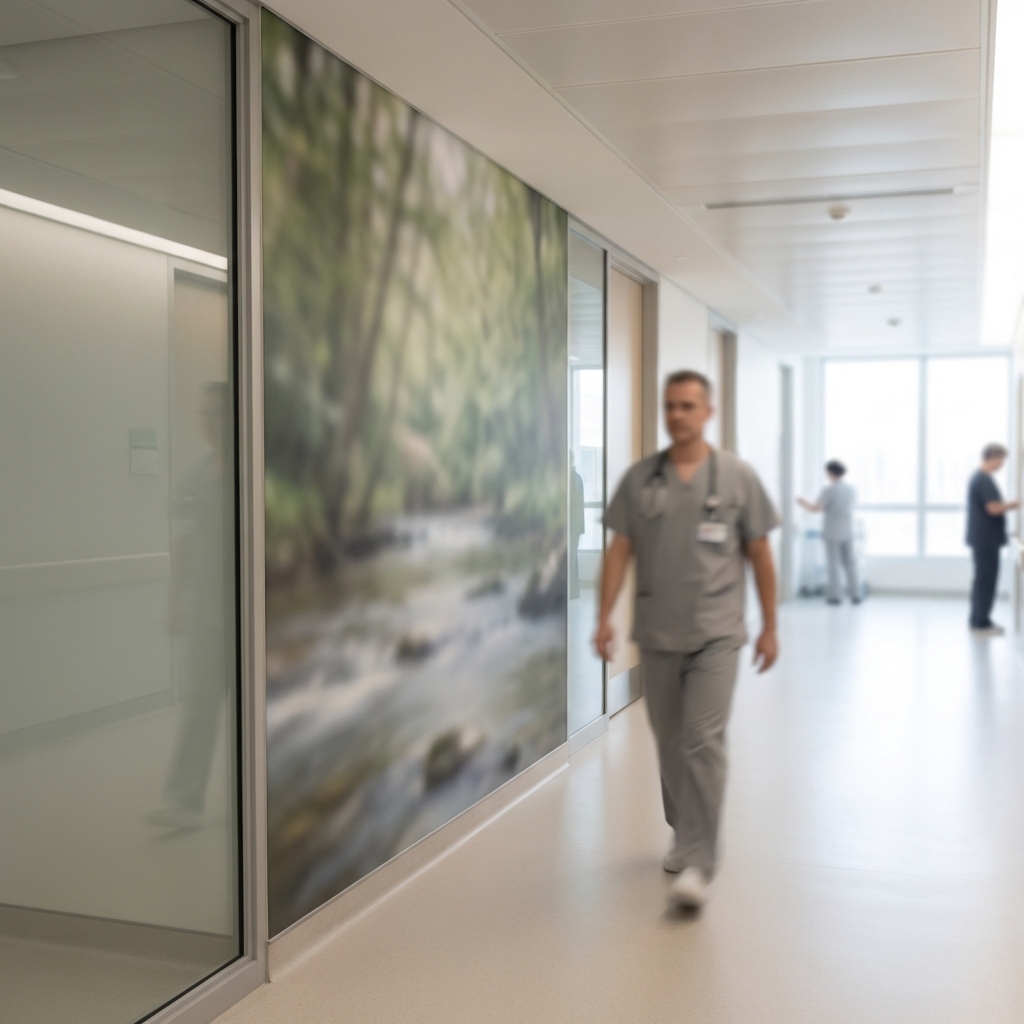
Image 2
Operational realities in healthcare demand high durability hospital murals that can be cleaned daily, resist abrasion, and won’t peel at edges. EastCoast MuralPros uses direct-to-wall printing to deliver photoreal imagery without vinyl, seams, or adhesives, reducing places for dirt to accumulate. Installations are completed with low disruption—often under five hours—and work on drywall, CMU, concrete, or brick, which is ideal for occupied units and back-of-house corridors.
For pediatric environments, story-driven medical facility wall graphics double as navigation. A color-coded “undersea journey” can guide families from registration to imaging, with icons that match wristbands and door decals. Growth-chart coral, distraction scenes near phlebotomy, and “breathing bubble” visuals in pre-op create positive focus points. Crisp, high-resolution details from EastCoast MuralPros make characters and textures engaging from a stretcher, wheelchair, or child’s eye level.
Recovery areas benefit from calm, biophilic photography, soft gradients, and local vistas that provide positive distraction without overstimulation. Clinical environment wayfinding can be integrated directly into the art—room numbering, zone colors, and gentle safety reminders—reducing signage clutter around headwalls and nurse stations. Because prints are paint-over-ready, facilities can adapt units as programs change; a subscription model enables seasonal or research-driven refreshes without demolition or permit cycles.
Planning tips for clinical teams and designers:
Select matte, low-glare finishes to support acuity and reduce reflections on polished floors.
Validate disinfectant compatibility and cleanability against your EVS protocols.
Use continuous graphics to bridge expansion joints and uneven CMU while avoiding seam buildup.
Build color and icon libraries that align with brand standards and patient literacy levels.
Pilot a high-traffic corridor, measure wayfinding questions and HCAHPS comments, then scale.
For systems managing multiple campuses, EastCoast MuralPros offers consistent execution and on-site printing that eliminates shipping delays and fabrication errors. The result is sustainable interior branding with a smaller material footprint than wallpaper or vinyl and a lifecycle-efficient path to keep environments current. Full-campus rollouts maintain visual standards from lobby to ICU while meeting tight turnover windows.
Integrated Digital Wayfinding Graphics for Large-Scale Medical Campuses
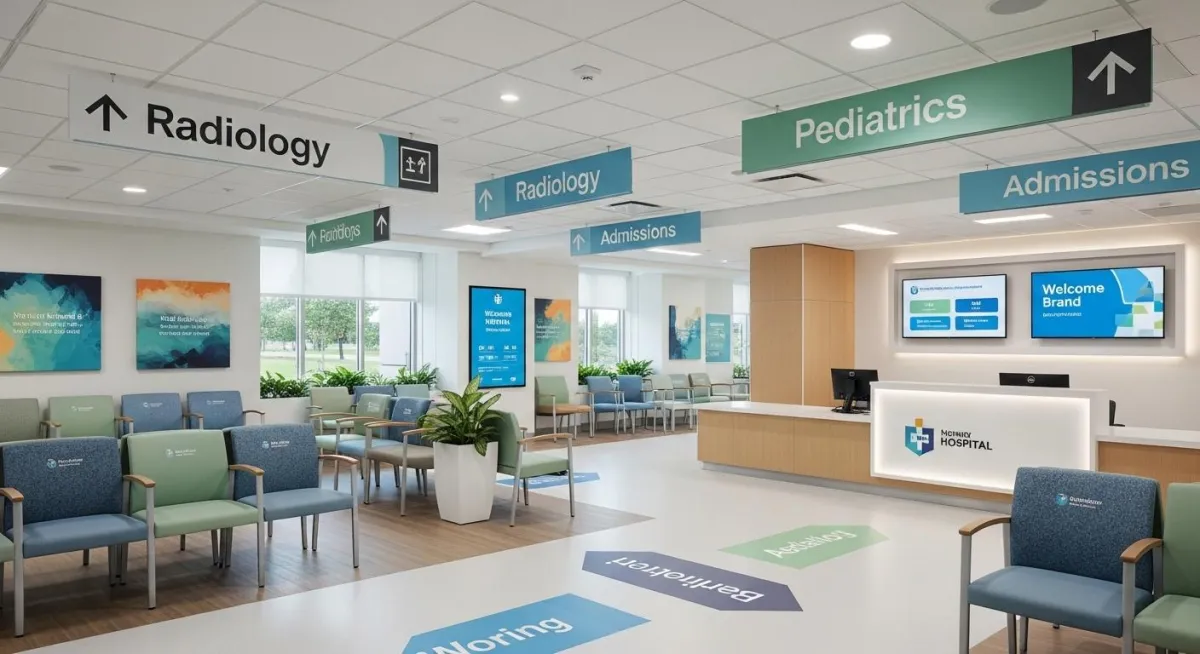
Large medical campuses function like small cities, and patients often arrive stressed, short on time, and unfamiliar with the layout. Hospital interior branding solutions that integrate wayfinding into walls, floors, and portals reduce decision points and visual noise while reinforcing brand standards. Instead of competing signs and temporary stickers, directional cues and identity elements become part of the architecture, improving clarity without clutter.
Direct-to-wall printing brings clinical environment wayfinding directly onto corridors, elevator lobbies, stair cores, and department thresholds—at architectural scale and with crisp, photoreal detail. Color-coded service lines, universally recognizable pictograms, and floor identities can be produced as high durability hospital murals that are cleanable and built for high-traffic use. Designs are planned for legibility at clinical distances and to align with ADA contrast and character-height best practices.
Because printing occurs on-site, installations are fast, quiet, and low-disruption—often completed overnight or within a single shift. The process works on finished and unfinished surfaces, including drywall, CMU, concrete, and sealed brick, and is paint-over-ready for future program changes. Compared to vinyl or wallpaper, this is a more sustainable interior branding approach that eliminates adhesives, reduces waste, and avoids frequent replacements.
Practical applications for medical facility wall graphics include:
Elevator cores: large floor numbers, color bands, and destination callouts
Corridor junctions: arrows with department icons and bilingual labels
Stairwells: level markers, “you are here” maps, and step-count motivators
Emergency departments: color paths guiding to triage, fast-track, and imaging
Pediatrics: friendly iconography and themed zones that remain clinically appropriate
Visitor entries and parking connectors: zone identification and QR codes to mobile maps
Safety and instructional graphics: hand hygiene prompts and restricted-access markers integrated without signage clutter
System-wide hospital networks benefit from consistent color, typography, and icon sets that scale across multiple sites. EastCoast MuralPros provides collaborative tools for designers and facility teams, ensuring repeatable execution from pilot corridors to full-campus deployments. A subscription model supports scheduled refreshes—seasonal campaigns, new service lines, or regulatory updates—without construction or long lead times.
As a performance-based alternative to vinyl, EastCoast MuralPros delivers direct to wall printing with high-resolution results, durable and cleanable finishes, and rapid installation. The team’s on-site printing eliminates shipping delays and fabrication errors, helping hospitals roll out cohesive wayfinding quickly and predictably across complex facilities.
Comparing Maintenance and Lifecycles of Modern Wall Covering Technologies
When evaluating hospital interior branding solutions, maintenance and lifecycle behaviors often matter as much as initial visual impact. In clinical environments, finishes must withstand daily disinfection, rolling equipment, and policy-driven updates without creating downtime or waste. The best medical facility wall graphics balance durability, cleanability, and ease of refresh so facilities teams can keep spaces compliant and on-brand.
Traditional vinyl wall coverings and wallpaper can deliver strong color, but seams and edges are common failure points under aggressive cleaning and high traffic. Peeling, bubbling, and corner lift become maintenance calls, especially in humid areas or along high-touch rails where carts brush surfaces. Adhesive-backed products also add removal labor and landfill waste when a refresh is due, stretching schedules during renovation or tenant turnover.
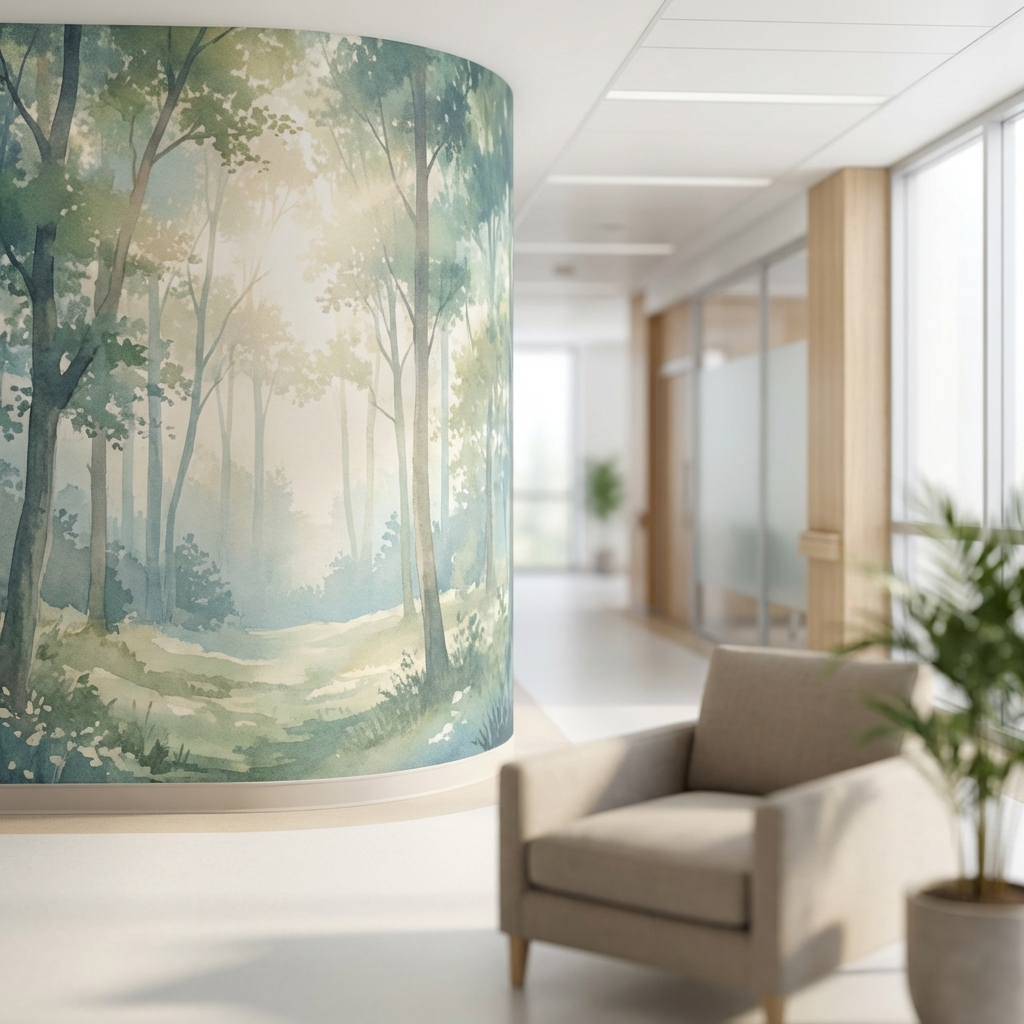
Image 3
Hand-painted murals fare better on adhesion, yet they typically require clear coats to resist abrasion and disinfectants—and touch-up labor accumulates as scuffs and chips appear. Printed rigid panels are durable and wipeable, but they introduce standoffs, hardware, and edge joins that can collect dust and complicate clinical cleaning routines. In corridors where stretchers and carts routinely impact walls, panel dings or fastener failures trigger replacement rather than simple repair.
Direct to wall printing changes the lifecycle calculus by eliminating seams, adhesives, and separate substrates. The ink system is cured onto prepared surfaces—drywall, CMU, concrete, or brick—creating high durability hospital murals that stand up to routine disinfection protocols while remaining paint-over ready when programs change. For clinical environment wayfinding, that means crisp, photoreal graphics integrated into the architecture without signage clutter, and a sustainable interior branding path that avoids removal waste.
What this looks like operationally across technologies:
Daily cleaning: Vinyl/wallpaper require seam vigilance; panels add edge and hardware cleaning; direct to wall printing is a continuous surface with no edges to trap soil.
Periodic repairs: Vinyl sees seam and bubble fixes; panels need hardware checks and impact replacement; painted murals need touch-ups; direct to wall printing typically needs only spot cleaning or a quick overprint/paint-over.
Refresh cycles: Vinyl/panels involve removal, patching, and reinstall; direct to wall printing enables fast reprints or full paint-and-reprint without demolition or shipping delays.
EastCoast MuralPros delivers direct-to-wall printing tailored to healthcare—fast installs often under five hours per zone, cleanable, seam-free outputs, and consistent execution across campuses and networks. Their on-site process reduces disruption for occupied units, supports integrated wayfinding and safety graphics, and offers a subscription model for planned refreshes—making sustainable interior branding practical at system scale.
Selection Guide for Healthcare Facilities Managers and Capital Project Teams
When evaluating hospital interior branding solutions, prioritize clinical performance alongside aesthetics. Focus on options that install quickly with minimal disruption, withstand intensive cleaning protocols, and support clear wayfinding without adding clutter. Direct-to-wall printing platforms, like those used by EastCoast MuralPros, remove vinyl and adhesives entirely, reducing seams and failure points that can harbor grime or peel under hospital-grade disinfectants.
Key selection criteria for medical facility wall graphics:
Cleanability and durability: Specify finishes that tolerate daily quats and diluted bleach without ghosting or edge lift; target high durability hospital murals for corridors, lobbies, and staff areas.
Health and safety: Require low-odor, low-VOC processes and confirm applicable fire/smoke performance (for example, ASTM E84) with your AHJ.
Seam-free execution: Ensure crisp, photoreal, high-resolution imagery printed directly onto drywall, CMU, concrete, or brick to feel integrated with the architecture.
Speed with low disruption: Favor solutions that can complete zones in under five hours, support off-hours work, and operate in occupied buildings with controlled dust and noise.
Clinical environment wayfinding: Integrate large numerals, color bands, icons, and floor arrows directly on walls to reduce signage clutter, while maintaining code-required life-safety and ADA signage.
Change management: Choose paint-over-ready finishes and consider subscription refreshes to update departments, campaigns, or donor walls without demolition—supporting sustainable interior branding.
Risk mitigation: Pilot a high-traffic corridor, review test prints under hospital lighting, and document QA checkpoints for multi-phase or multi-site rollouts.
Lifecycle economics matter. Vinyl and wallpaper often bubble at seams, scuff near handrails, and degrade under disinfectants, triggering frequent replacements and room closures. Direct to wall printing eliminates adhesive layers and seams, improves cleanability, and avoids shipping delays by producing on site—lowering total cost across install, maintenance, and decommission.
For multi-location networks, consistency is critical. EastCoast MuralPros offers calibrated color management, version control for artwork, and standardized execution across campuses, plus on-site printing that reduces fabrication errors and transit risk. Their low-disruption workflow aligns with infection prevention measures and off-hours scheduling common to clinical environments.
Practical use cases include pediatric wings with calming, photoreal nature scenes; emergency departments with bold, color-coded destinations for rapid orientation; and staff corridors that embed instructional graphics at eye level. On painted CMU block, direct-to-wall printing delivers architectural-scale visuals without panels, keeping corridors clear and cleanable. In waiting rooms, a subscription model enables seasonal refreshes while remaining paint-over-ready for future program changes.
Implementation checklist:
Survey substrates and wall conditions; remediate coatings as needed.
Engage facilities, infection prevention, and risk management early.
Define wayfinding hierarchy and color standards with EGD partners.
Approve a pilot area and performance criteria before scaling.
Document cleaning protocols and touch-up procedures.
Plan for end-of-life: paint-over scope, timelines, and budgets.
EastCoast MuralPros can support each step with field assessments, test prints, and a direct-to-wall printing workflow tuned to hospital operations.