A Comprehensive Checklist for Campus-Wide Graphics Procurement and Institutional Budgeting Strategies
Introduction to Large-Scale Campus Branding and Environmental Graphics
For institutions managing dozens of buildings and stakeholders, campus-scale branding is as much about governance and repeatability as it is about design. A Campus Graphics Procurement Checklist helps facilities, procurement, and design teams align scope, standards, and timelines before any install crew arrives. The goal is to translate brand and wayfinding intent into durable, code-aware, low-disruption executions that work across academic, clinical, residential, and public zones.
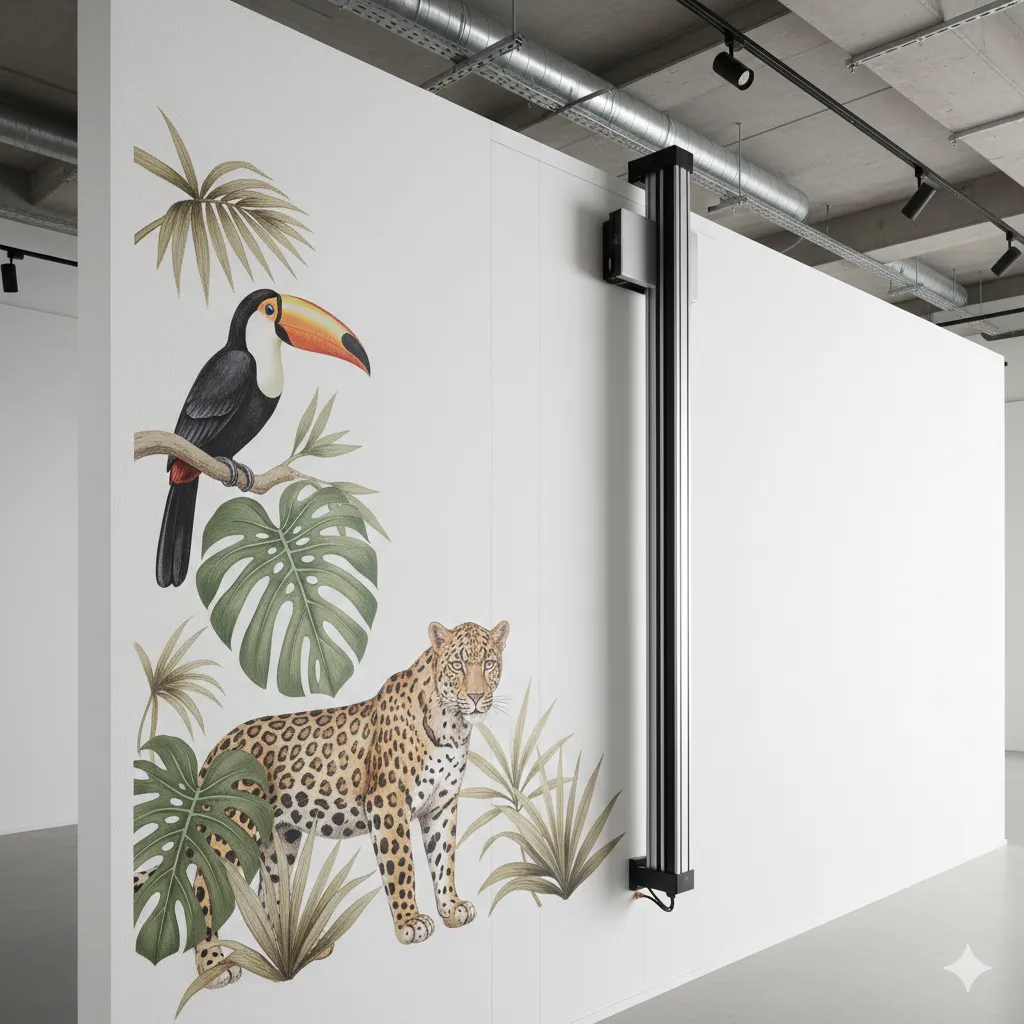
Commercial interior budget planning should account for institutional wall branding costs beyond first install—maintenance, refresh cadence, and removal or repainting. That’s where direct-to-wall printing benefits compound: no vinyl or adhesives to fail, faster installs in occupied spaces, and paint-over-ready finishes when programs change. EastCoast MuralPros delivers seam-free, high-resolution graphics on finished and unfinished surfaces (drywall, CMU, concrete, brick) with on-site printing that eliminates shipping delays and fabrication errors. The result is predictable schedules and lifecycle savings without construction-heavy interventions.
A Campus Graphics Procurement Checklist should, at a minimum, cover:
Asset inventory and mapping: walls by building/floor/zone, plus doors, tables, and standees for ancillary branding.
Surface audit: substrate types, coatings, moisture exposure, and remediation needs prior to printing.
Performance specs: durability/cleanability targets, abrasion and UV resistance, low-VOC/IAQ requirements, and paint-over-ready criteria.
Wayfinding and code: ADA contrast/typography guidance, fire/life safety adjacency rules, and integration of instructional graphics to reduce signage clutter.
Schedule and access: install windows in occupied areas, typical per-wall durations (<5 hours), after-hours or infection-control protocols.
Color and brand control: proofing, color profiles, campus standards, and on-wall sample approvals.
Lifecycle and sustainability: total cost of ownership vs vinyl/wallpaper, facility signage lifecycle management, decommission plan, and sustainable interior graphics solutions.
Vendor qualifications: multi-location consistency, warranties, safety training, and direct-to-wall capabilities to reduce risk.
Pilot a building or floor, then scale with documented methods and metrics. EastCoast MuralPros supports full-campus solutions for schools and hospitals, along with subscription refresh models that keep wayfinding and branding current with minimal disruption. If you’re evaluating how to rebrand at scale while preserving capex, consider approaches that modernize facilities without capital expenditure and build a repeatable standard for the next rollout.
Assessing Facility Needs: Identifying High-Traffic Zones and Wayfinding Requirements
Begin your Campus Graphics Procurement Checklist by mapping traffic patterns across the week. Prioritize entries and lobbies, registrar/admissions, main corridors between transit nodes, elevator and stair cores, cafeterias, clinics, and athletic facilities. Note decision points where people hesitate or ask for directions—these walls are ideal for durable wayfinding, safety, and instructional graphics that reduce bottlenecks and service calls. This early mapping sharpens commercial interior budget planning by focusing spend where graphics will measurably improve flow.
During the survey, capture specifications that drive cost, durability, and compliance:
Surface type and condition (painted drywall, CMU, sealed concrete, brick), plus moisture/temperature exposure
Wall dimensions, obstructions, and required clearances around life-safety devices, windows, and doors
Cleanability standards and chemicals used; scuff and cart traffic zones
Accessibility and code (ADA contrast ratios, sightline height, egress markers)
Content lifecycle: permanent identity vs. semester/program updates and expected refresh cadence
These details inform installation windows, performance criteria, and lifecycle-cost modeling across buildings.
Define a clear wayfinding hierarchy before design: campus identity, building/floor color coding, zone labels, room numbering, and “micro-wayfinding” at intersections and elevator lobbies. Pair safety and instructional messages with navigation to avoid sign clutter while improving compliance. For spaces with high churn—temporary clinics, seasonal events, or rotating exhibits—plan for rapid refreshes and version control so updates roll out consistently across sites. This reduces misdirection, reprints, and staff time spent redirecting visitors.
To manage institutional wall branding costs, evaluate total cost of ownership against vinyl and framed signage. EastCoast MuralPros delivers direct-to-wall printing benefits—seam-free, high-resolution graphics completed in under five hours per zone, adhesive-free application in occupied buildings, and cleanable, paint-over-ready finishes that simplify future changes. On-site production eliminates shipping delays and fabrication errors, enabling consistent execution across multi-building or multi-campus programs. For facility signage lifecycle management and ESG goals, their no-PVC approach aligns with sustainable interior graphics solutions, and subscription refresh options keep wayfinding accurate as programs evolve.
Understanding Procurement Cycles: Aligning Graphics Projects with Fiscal Planning
Successful campus graphics programs start with the fiscal calendar. Map your project to when budgets are built, approved, and encumbered, and tie scope to the right funding bucket (CapEx vs. OpEx/FF&E). For many universities and K–12 districts (July 1 fiscal year), design and estimating in January–March supports approvals in April–May and installation during summer turns. Hospitals and public owners often prefer rolling approvals; reserve weekend or swing-space windows to reduce disruption and avoid premium labor.
Bake procurement constraints into your Campus Graphics Procurement Checklist. Note competitive bid thresholds, cooperative purchasing options, insurance requirements, and lead times for artwork approvals. Example: a district converting two corridors before orientation can issue a task order in May, lock designs by mid-June, and complete direct-to-wall printing in under five hours per zone during teacher in-service days. Year-end “use-it-or-lose-it” funds can also cover pilot corridors that scale into a FY plan.
Clarify how institutional wall branding costs flow through commercial interior budget planning. Direct-to-wall printing often fits O&M or FF&E lines because it avoids construction trades, adhesives, and demolition. Model lifecycle savings versus vinyl by comparing refresh cycles, cleaning labor, and failure risk as part of facility signage lifecycle management. If your program is seasonal or message-driven, a subscription model smooths spend and supports sustainable interior graphics solutions with paint-over-ready finishes.

Image 2
Checklist items to align scope with fiscal planning:
Inventory surfaces (drywall, CMU, concrete, brick) and confirm readiness.
Prioritize high-traffic zones and wayfinding gaps with measurable outcomes.
Select procurement path (RFP, MSAs, or co-ops) and set acceptance criteria.
Define phasing, access, infection control, and after-hours constraints.
Lock artwork, color management targets, and maintenance standards.
Set refresh cadence, warranty, and cleaning protocols.
EastCoast MuralPros supports pre-bid scoping, art reviews, and schedule certainty with on-site, adhesive-free, direct-to-wall printing. The team delivers consistent execution across campuses and multi-location networks, helping facilities and procurement hit timelines while minimizing downtime.
Evaluating Total Cost of Ownership: Direct-to-Wall Printing vs. Traditional Vinyl
When you build a Campus Graphics Procurement Checklist, evaluate total cost of ownership, not just price per square foot. Vinyl’s initial bid can look attractive, but adhesives, seams, prep, and replacement cycles often drive higher institutional wall branding costs over time. Direct-to-wall printing shifts costs toward speed, reliability, and low disruption—key advantages for commercial interior budget planning in occupied hospitals, schools, and multi-building campuses.
Compare line items across the full lifecycle:
Wall prep and patching, including priming for adhesives vs paint-ready substrates
Installation labor, off-hours staffing, and security escorts in sensitive areas
Downtime and space closures that impact patient flow, classes, or revenue
Quality control, reprints, shipping risk, and damage during handling
Cleaning, abrasion, and edge-failure maintenance on high-traffic walls
Changeouts for brand, wayfinding, or seasonal content
End-of-life removal, adhesive residue remediation, and repainting
Sustainability factors: PVC, adhesive waste, and landfill fees vs low-waste, sustainable interior graphics solutions
In practice, a 200-foot hospital corridor wrapped in vinyl can require staged closures, seam alignment, and lift time; later, edge lifting near handrails triggers call-backs and spot replacements. Direct-to-wall printing delivers seam-free imagery in-situ, reducing failure points and finishing most zones in a single shift, which can eliminate weekend premiums. If your wayfinding updates every 18–24 months, the ability to print over existing paint and simply repaint for decommissioning can materially reduce lifecycle labor.
EastCoast MuralPros’ direct-to-wall printing benefits include fast, on-site execution typically completed in under five hours per zone, high-resolution output at architectural scale, and durable, cleanable finishes designed for high-traffic environments. Paint-over-ready surfaces simplify facility signage lifecycle management and avoid adhesive removal costs, while on-site printing eliminates shipping delays and fabrication errors during multi-location rollouts. For campuses planning recurring refreshes, their subscription model aligns budgets with predictable updates and reduces replacement cycles across schools, clinics, residence halls, and public spaces.
Technical Specifications and Compliance for Institutional Safety Standards
Compliance starts with life safety, accessibility, and health. As you build your Campus Graphics Procurement Checklist, require verifiable test data for the “system” (substrate + primer/paint + printed coating), not just the printer or ink. Align documentation with your authority having jurisdiction (AHJ) to avoid late-stage redesigns and reprints.
Fire and smoke: Require Class A flame spread and low smoke development per ASTM E84 for the complete wall assembly, or written confirmation that the printed coating does not alter the substrate’s rating under NFPA 101.
ADA accessibility: Specify non-glare finishes and compliant contrast for visual characters; graphics do not replace tactile/Braille signs unless built to ADA 703.2–703.5. Establish typography sizes and placement for legibility in corridors and patient areas.
Indoor air quality: Request Safety Data Sheets, VOC content, curing profiles, and any third-party emissions testing. Plan for low-odor, occupied-building installs.
Infection control: Validate cleanability with quats, bleach solutions, and alcohols (e.g., ASTM D4828/D2486 scrub/washability or equivalent). Seam-free surfaces reduce harborage in healthcare and education.
Durability: Specify abrasion, stain, and impact resistance (e.g., Taber abrasion, graffiti removers compatibility) and paint-over readiness for quick tenant or program changes.
Egress and visibility: Maintain required clearances and avoid reflective finishes that impair wayfinding, especially in stairwells and exit pathways.
Substrates and environments: Confirm print compatibility with sealed drywall, CMU, concrete, and brick; require moisture and pH testing for masonry; define operating temperature/humidity for installation.
Color and consistency: Require ICC color management, signed drawdowns, and campus-wide color targets for brand-critical imagery.
For commercial interior budget planning, tie each spec to lifecycle risks and maintenance tasks to control institutional wall branding costs. Direct-to-wall printing benefits—no vinyl, no adhesives, fewer seams, and on-site execution—lower change-order exposure and reduce waste, supporting sustainable interior graphics solutions and facility signage lifecycle management. EastCoast MuralPros can provide system-level submittals, mockups, and standardized specs for multi-site rollouts, delivering photoreal, high-resolution results with low disruption across campuses.
Streamlining Installation: Reducing Operational Downtime During Campus Upgrades
Reducing downtime starts in procurement. Use your Campus Graphics Procurement Checklist to plan install windows around classes, clinical hours, and events, and to preclear access, staging, and escorts. Lock in approvals and artwork sequencing early so high-priority wayfinding and safety graphics land first, with brand murals following in low-traffic windows.
Direct-to-wall printing benefits are substantial for occupied campuses. EastCoast MuralPros prints on-site without vinyl or adhesives, eliminating shipping delays, off‑gassing, and panel seams, and projects are often executed in under five hours per zone with minimal disruption. The result is crisp, photoreal wall graphics that are cleanable and durable, compatible with drywall, CMU, brick, and concrete, and paint-over-ready for future changes.
To streamline installation and maintain operations, build these items into the checklist:

Image 3
Pre-install survey noting wall materials, moisture issues, and repair needs
Surface prep responsibilities (patch, skim, paint) and cure times
Power access, lift permissions, and equipment paths to each zone
Infection control, air quality, and noise limits for healthcare and labs
Security clearance and after-hours escort procedures
Phased schedule: overnight, weekend, or break-week blocks by floor or building
Content batching: life-safety and wayfinding first, then experiential branding
Stakeholder notifications and detour plans for critical corridors
Contingency time for weather, exams, or emergent clinical use
Closeout: as-built imagery, cleaning guidance, and paint-over specs
Downtime has a cost, so tie institutional wall branding costs to commercial interior budget planning. On-site printing removes shipping buffers and re-fab risk, while lifecycle-efficient, paint-over-ready finishes reduce future decommissioning and replacement spend. For facility signage lifecycle management, consider a subscription model with EastCoast MuralPros to schedule seasonal wayfinding updates and strategic refreshes without new procurement.
Example: a university phases three residence halls over two weekends—wayfinding done Friday night, floor identity Saturday morning, student-facing murals Sunday—no RA move-ins displaced. A hospital updates corridor navigation after hours, leveraging cleanable, seamless graphics that meet infection-control requirements and avoid signage clutter, keeping clinical throughput intact.
Long-Term Maintenance and Lifecycle Management of Wall Graphics
Long-term performance starts with a Campus Graphics Procurement Checklist that anticipates cleaning, refresh cycles, and end-of-life handling. Traditional vinyl often introduces failure points—seams, adhesives, and edge peel—that drive repeat service calls and premature replacement. Direct-to-wall printing benefits include seam-free, high-resolution visuals and fewer failure modes, which simplifies facility signage lifecycle management and reduces institutional wall branding costs over time.
Set clear maintenance standards up front. Specify approved cleaning agents and frequencies for high-traffic zones, and require vendors to provide finish data and testing that supports infection-control or custodial protocols. Paint-over-ready finishes let facilities decommission or rebrand spaces without tear-outs or adhesive remediation—an advantage when a hospital wing, student center, or retail unit changes programming. In practice, this means a simple scuff sand and repaint, not days of demo and patch.
Build a practical lifecycle plan your operations team can own:
Asset inventory with locations, install dates, inks/finish specs, and artwork version control
Quarterly condition assessments and a standardized punch list for touchups or reprints
Cleaning SOPs aligned with custodial schedules and approved chemistries
Trigger points for refresh (brand update, safety code change, tenant turnover)
End-of-life process: paint-over vs. removal, surface repair steps, and schedule impacts
Warranty terms tied to environment type (corridor, cafeteria, patient room)
For commercial interior budget planning, model total cost of ownership across 3–7 years: installation, routine cleaning labor, change-order frequency, and decommission costs. Sustainable interior graphics solutions that avoid vinyl and adhesives typically reduce waste, shipping, and fabrication errors. EastCoast MuralPros prints on-site in under five hours per area, delivers durable, cleanable surfaces, and supports multi-location consistency—lowering downtime and lifecycle risk. Their subscription model spreads refresh costs predictably and streamlines campus-wide updates, especially for integrated wayfinding, safety, and instructional graphics without signage clutter.
Conclusion: Scaling Visual Communications Through Efficient Procurement Strategies
Treat your Campus Graphics Procurement Checklist as an operational tool, not a design wish list. When it captures scope, standards, schedule, and lifecycle metrics, facilities teams can scale programs across buildings with less risk and more speed. Tie every line item to outcomes such as downtime windows, cleanability, and facility signage lifecycle management to keep projects on time and on budget.
To close out procurement confidently, memorialize the following in your RFP or master agreement:
Program goals by space type (branding, wayfinding, safety, instructional) and performance requirements
Surface inventory by substrate (drywall, CMU, brick, concrete) with finish conditions and access constraints
Visual standards: seam-free targets, resolution specs, gloss level, and paint-over-ready expectations
Operational KPIs: install duration per zone, acceptable disruption windows, warranty, and refresh cadence
Commercial interior budget planning categories (design, production, install, protection, cleaning, refresh)
Contracting path (IDIQ/JOC/cooperative), pilot-to-scale protocol, and no-vinyl/no-adhesive printing requirements
Budget decisions should quantify institutional wall branding costs over the full lifecycle, not just day-one install. Include labor downtime avoided, maintenance cycles, failure rates for corners and seams, and disposal impacts. The direct-to-wall printing benefits—fast, on-site execution, no shipping or panels, and reduced failure points—often shift projects from high-CapEx to predictable OpEx through subscriptions and planned refreshes.
For institutions seeking sustainable interior graphics solutions, EastCoast MuralPros offers seam-free, high-resolution results printed directly to finished or unfinished walls without vinyl or adhesives. Typical installations complete in under five hours per zone, enabling weekend hospital wing updates or overnight residence hall refreshes, and paint-over-ready finishes simplify future changes. On-site printing reduces fabrication errors and ensures consistency across multi-location rollouts, while cleanable, durable surfaces meet high-traffic demands. If you’re standardizing specifications or piloting a campus-wide system, invite EastCoast MuralPros to review your surfaces, validate print tests, and provide a lifecycle-based estimate aligned to your procurement strategy.